Information
Landmark: Copenhagen Fire TowerCity: Copenhagen
Country: Denmark
Continent: Europe
Copenhagen Fire Tower, Copenhagen, Denmark, Europe
Overview
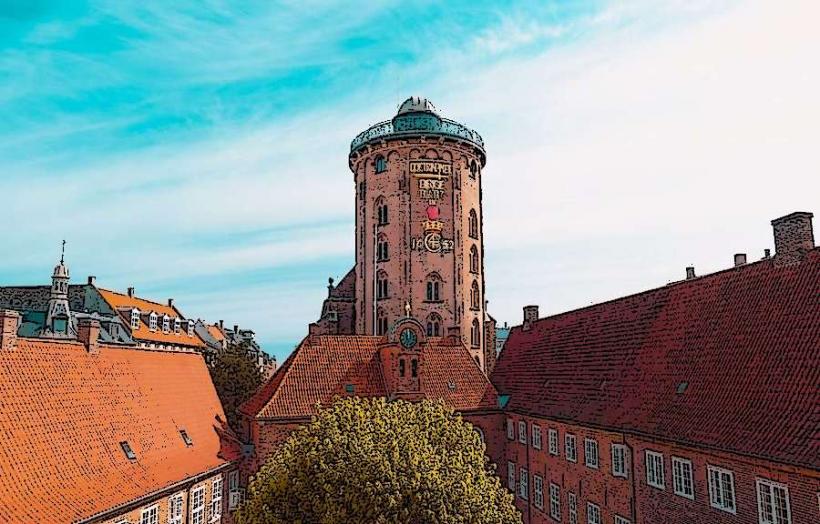
Rising in the center of Copenhagen, the Copenhagen Fire Tower (Københavns Brandtårn) stands as a historic landmark, its weathered brick catching the afternoon light, on top of that the tower once stood at the heart of the city’s firefighting efforts, its bell warning of danger, but today it’s cherished as a striking emblem of Copenhagen’s architecture and history.The Copenhagen Fire Tower, or Københavns Brandtårn, rises 34 meters above Købmagergade 43 in the heart of Copenhagen, after that built in 1690 under King Christian V, its Renaissance and Baroque design once gave watchmen a sweeping view of the city’s rooftops as they scanned for smoke.The tower served as the city’s watchful eye, giving fire-watchers a high perch where they could spot the first curl of smoke rising between the rooftops, likewise if a fire broke out, the fire-watchers rang the heavy bronze bell, its clang echoing through the streets to warn both the city’s firefighters and its people.Back then, Copenhagen’s wooden houses stood shoulder to shoulder, and the narrow streets made the city an easy target for frequent fires, furthermore the Fire Tower stood as a key part of the city’s defense against flames, joined by watchtowers and deep stone reservoirs ready to fight the frequent, ruinous fires.It stayed a working part of the city’s fire-fighting system right up until the late 1800s, when bucket brigades still rushed through smoky streets, subsequently the Fire Tower blends Renaissance grace with Baroque flair, its solid stone base rising steadily before giving way to an octagonal wooden section that catches the light like warm honeyed oak.Rising 34 meters, it was among the tallest buildings in Copenhagen when it went up, moreover its octagonal wooden top, capped with a steep conical roof, gives the tower its unmistakable profile.A large clock once kept time for fire-watchers and townsfolk alike, its hands and gears visible from the street so anyone could tell the hour, meanwhile above it hung a heavy bell that rang out sharply to warn the city of fire.I think, They rang the bell hard enough to rattle the air, warning everyone of danger, and it stayed a vital part of firefighting and emergency calls, what’s more the Fire Tower stands in Copenhagen’s historic center, just steps from the Round Tower and other landmark buildings.Perched high above the streets, it gave fire-watchers a clear, sweeping view of the rooftops and hills beyond, and for more than two hundred years, the tower stood at the heart of the city’s firefighting efforts, simultaneously back when fires broke out often and could gut whole blocks in minutes, the Fire Tower boosted the city’s speed in fighting them and stopping the flames from spreading.Once a fire watchtower, Copenhagen’s Fire Tower now stands as one of the city’s most striking landmarks, its red brick catching the light on a clear morning, after that shaping the city’s growth for generations, it stands as a key piece of Copenhagen’s architectural legacy, its worn brick still catching the afternoon light.Public access to the Fire Tower means you can step inside and wander through its museum, where displays trace Copenhagen’s firefighting history-from the clang of classical brass alarms to the charred helmets of past crews, while the museum showcases rich displays on the tower’s history, antique firefighting methods-like brass-handled pumps-and the city’s long journey toward better fire prevention and safety.Not surprisingly, Today, the Copenhagen Fire Tower serves as a miniature museum, where visitors can explore the city’s fire safety history and even perceive the gleam of classical brass helmets, at the same time you can explore how firefighting techniques evolved, discover the tower’s role in the city’s history, and observe the shift from leather buckets to modern equipment.Exhibits showcase ancient helmets, charred relics from the great fires of the 1700s, and the rise of today’s fire departments, consequently climb to the top, and the whole of Copenhagen stretches out beneath you.From this high perch, you can watch Copenhagen stretch out in every direction, its modern glass towers rising beside centuries-heritage spires, as well as it’s the perfect setting for anyone curious about the city’s history and architecture.The Fire Tower welcomes visitors year-round and is easy for tourists to reach, along with climbing to the top of the tower means tackling a long, winding staircase, which can be tough for visitors with mobility challenges, maybe Along the way, you can peer at the intricate clock gears and bell mechanism, a real treat for anyone curious about the tower’s technical past, alternatively from time to time, the space comes alive with events-lectures, hands-on workshops, and talks on fire safety or Copenhagen’s historic architecture.The Copenhagen Fire Tower welcomes visitors from Tuesday through Sunday, in turn the tower sometimes closes on holidays, so check its hours before you go-especially in quieter seasons when schedules can change.Admission is generally affordable, with lower prices for students, seniors, and kids, though special exhibits or events might cost extra, as well as you’ll find the Fire Tower in the heart of Copenhagen, just a short stroll from landmarks like the Rundetårn and the bustling square at Kongens Nytorv.You can get there quickly by bus, metro, or even on a rented bike, and it’s just a short meander from Strøget, the bustling pedestrian shopping street-perfect for adding to a day’s stroll through Copenhagen, in turn the Copenhagen Fire Tower stands as a key historic landmark, offering a vivid behold at the city’s past and the fierce fires it fought to survive.The Fire Tower now works as a museum, offering visitors a spot to learn and a proud reminder of Copenhagen’s resilience and inventive spirit, standing tall against the city’s shifting skies, on top of that with its bold architecture, intriguing exhibits, and sweeping views of the skyline, it’s a spot every history lover should witness when exploring the city’s past.
Author: Tourist Landmarks
Date: 2025-09-04