Information
Landmark: Dhowa Rock TempleCity: Badulla
Country: Sri Lanka
Continent: Asia
Dhowa Rock Temple, Badulla, Sri Lanka, Asia
Overview
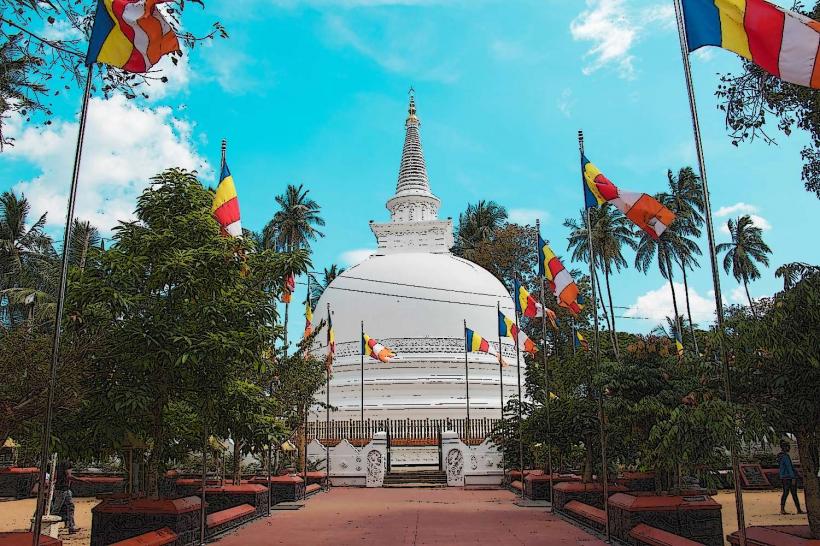
Mind you, In Sri Lanka’s Badulla District, the Dhowa Rock Temple stands as both a historic treasure and a spot of quiet devotion, its weathered stone walls cool to the touch, and this ancient temple draws visitors with its intricate rock carvings, deep ties to Sri Lankan Buddhism, and the quiet stillness that hangs in the warm afternoon air.The Dhowa Rock Temple stands out as a landmark where towering stone walls meet centuries of history and quiet spiritual devotion, what’s more first.The temple stands in Dhowa, a quiet village about 14 kilometers-roughly a 20-minute drive-east of Badulla in Sri Lanka’s Uva Province, at the same time you can reach the temple from Badulla in just a short drive, making it perfect for a day trip.The Dhowa Rock Temple, carved into the cliff, has stood here since the 1st century BCE, alternatively historians think it was built during King Walagamba’s reign, a time when he championed Buddhism after hiding in cool, shadowy caves and rock shelters while enemies invaded.The temple dates back to Sri Lanka’s cave-dwelling era, when Buddhist monks lived and meditated in the cool hush of natural stone chambers, subsequently among its most remarkable sights are the rock carvings that define the Dhowa Rock Temple.The temple is famous for a massive Buddha statue carved deep into the rock face, its smooth stone folds and calm gaze a true masterpiece of Sri Lankan rock art, subsequently towering 15 meters high, the Buddha statue is carved straight into the rock face, its stone folds catching the sun, and it ranks among the largest in Sri Lanka.This statue stands as a revered religious and artistic landmark, and the temple’s entrance rises in a graceful stone arch, its curves cut deep into the cool, weathered rock, likewise the temple’s intricate design showcases the skill of its ancient builders, adding beauty to its walls and pillars.Scattered around the complex, modest cave shrines once offered monks a quiet, cool space for meditation and prayer, also inside these caves, faded yet vivid frescoes tell stories from the life of Lord Buddha, offering a glimpse into Sri Lanka’s earliest Buddhist artistry, more or less The temple’s centerpiece is the towering 15-meter Buddha statue, carved into the rock and catching the sun on its calm stone face, then carved deep into the flank of a towering rock outcrop, it stands as one of Sri Lanka’s most breathtaking rock-hewn statues, its stone face catching the late-afternoon sun, somewhat The Buddha sits in a calm, meditative pose, hands resting gently in his lap, a quiet symbol of peace and serenity, and scholars believe it was carved in the Anuradhapura period, though it underwent careful restoration in the 19th century.The Buddha’s calm face seems to glow with quiet peace, drawing devotees who come to the temple to light incense, bow their heads, and meditate, alternatively the Dhowa Rock Temple holds deep religious and cultural significance as a key destination for Buddhist pilgrims, sort of Locals often come to the temple for religious ceremonies, from chanting poojas with the scent of incense in the air to quiet evening meditation sessions, likewise amid quiet gardens, the towering Buddha statue invites calm reflection and a sense of spiritual connection, while the temple itself-rooted in the early spread of Buddhism in Sri Lanka-stands as a proud piece of Uva Province’s rich cultural heritage.Not surprisingly, The rock carvings and faded frescoes stand as priceless treasures of Sri Lanka’s ancient art and architecture, and you can reach Dhowa Rock Temple by car-just a short 14‑kilometer drive from the bustle of Badulla town, in conjunction with you can reach it quickly by taking the Badulla–Haputale Road, where tea fields roll past your window, moderately It’s about a 20‑minute drive, with the road winding past the Uva region’s luminous green hills and tea fields, equally important from Colombo, expect a 5–6 hour trip by car, though traffic can stretch that time.If I’m being honest, After reaching Badulla, you can drive on to Dhowa, as a result the ideal time to discover the Dhowa Rock Temple is the dry season, from December to April, when the air feels warm and the skies stay clear for exploring outdoors.Believe it or not, In the soft gold of morning, the temple and its surrounding hills seem to glow, along with skip the rainy season from May to November-though it’s open year-round, the trails turn slick and muddy.While you’re in the area, Badulla Town is worth a stop for its classical railway station, the Muthiyangana Raja Maha Vihara, and the misty sweep of Dunhinda Falls, subsequently if you’re visiting the Dhowa Rock Temple, you’ll find plenty worth exploring nearby.About an hour from Badulla, Ravana Falls tumbles in a white rush of water, drawing crowds with its beauty and calm, consequently a 30–60 minute trip brings you to Ella Rock, where hikers climb for sweeping mountain views.Closer to Dhowa, Haputale’s rolling tea plantations stretch green and fragrant against the highland sky, and two highlights in the area are the Dambatenne Tea Factory and Lipton’s Seat.Wear sturdy, comfortable shoes-the path to the temple winds uphill over a rocky trail to the main shrine, equally important and, as in all Buddhist temples, dress modestly out of respect.Wear long pants and keep your shoulders covered, and show respect for the temple’s religious importance by moving quietly and keeping your voice low, the way you might in a library.You can usually take photos, but always ask first if a ritual or ceremony is underway, as a result the Dhowa Rock Temple blends towering natural stone with intricate, centuries-heritage Buddhist carvings, not entirely A towering Buddha, stone walls etched with delicate carvings, and an air so still you can hear the wind through the trees make it a must-detect for anyone drawn to Sri Lanka’s deep Buddhist heritage and history, in addition blending sacred meaning, rich history, and the lush green slopes of its hillside, the site stands as one of the Badulla District’s most treasured cultural landmarks.
Author: Tourist Landmarks
Date: 2025-09-12