Information
Landmark: Dorothy Quincy HomesteadCity: Quincy MA
Country: USA Massachusetts
Continent: North America
Dorothy Quincy Homestead, Quincy MA, USA Massachusetts, North America
Overview
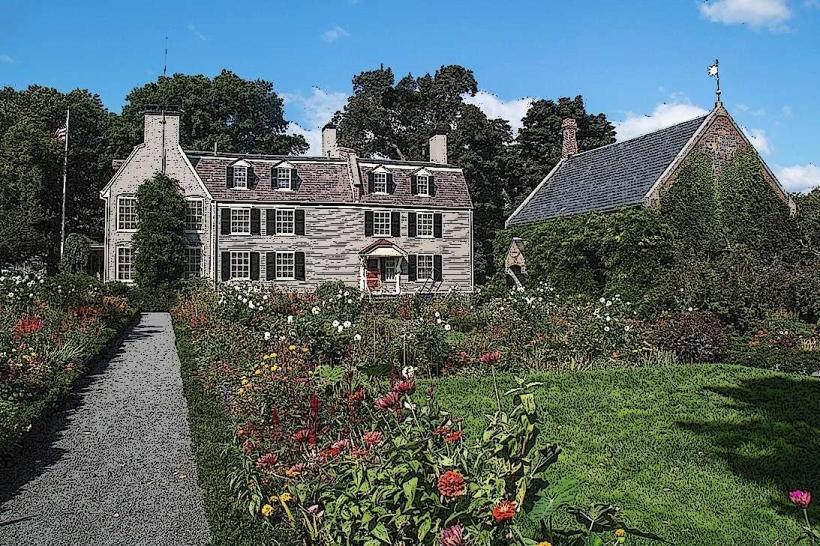
At 34 Butler Road in Quincy, Massachusetts, the Dorothy Quincy Homestead stands as a National Historic Landmark, carrying more than three centuries of American history, rich architecture, and the heritage of one of innovative England’s most influential families, its white clapboard walls holding stories from generations past, alternatively the homestead holds architectural importance and is tightly bound to the political and social life of early America, once echoing with the voices of Quincy family gatherings, whose descendants helped shape the nation’s founding and government.In 1686, Edmund Quincy II built the house, planting the roots of a family home that would shelter the Quincy line for generations, equally important the family boasted notable names: Josiah Quincy, a colonial lawyer and patriot; Samuel Quincy, who played a role in the Revolutionary War; John Quincy Adams, the nation’s sixth president; and Dorothy Quincy Hancock Scott, the homestead’s namesake and wife of John Hancock, the first to sign the Declaration of Independence and president of the Second Continental Congress, whose bold signature still leaps off the page.Dorothy Quincy spent her childhood in this house, and when she married Hancock, the family became entwined with some of the defining events of America’s past-moments that echoed like the rattle of musket fire, consequently the homestead doubled as a gathering spot for patriots-Benjamin Franklin, John Adams, and others-where voices rang late into the night, shaping its area as a lively center of political and social life before the Revolution.The Dorothy Quincy Homestead is a layered record of American domestic design, its walls tracing a story from the late 1600s to the 1800s, after that the earliest part, built in 1686, shows the plain, sturdy lines of a First Period Colonial home, where wide wooden beams once framed the hearth, loosely This era stands out for its timber framing, steep roofs that shed snow quickly, and tall chimneys rising from the heart of the house, simultaneously georgian additions in 1706 and 1737 brought balanced facades, tall sash windows, paneled doors, and fine decorative touches-the kind of polished style wealthy colonists favored, with sunlight glinting off the glass.Later updates wove in Victorian touches, from intricate wood trim to refreshed interiors that mirrored the shifting tastes of the 19th century, likewise the way the homestead’s layers stack over time makes it a rare window into changing building methods, evolving styles, and everyday life-spanning more than three centuries, from worn oak beams to weathered stone walls.To be honest, In 1904, the Massachusetts Society of Colonial Dames of America took ownership of the homestead, determined to safeguard its history and welcome visitors through its classical wooden doors, along with the Commonwealth of Massachusetts agreed to a cooperative arrangement, taking on the job of keeping the building’s exterior in good shape and the grounds neat, right down to trimming the grass along the walkway, a little From what I can see, The MSCD takes care of everything inside-from the worn oak chairs and preserved artifacts to telling the story of the homestead’s past, to boot inside, the house still holds its original furniture, worn paintings, and carefully chosen artifacts, giving visitors a vivid behold at life in colonial and post‑colonial times.They’ve restored and curated the interior with precision and a strong sense of story, offering guided tours and educational programs that bring the past to life-like the faint scent of aged wood in a historic room, alternatively the homestead sits on about two acres, where a formal parterre garden spreads out in classic colonial style, its neat, symmetrical beds filled with period plants and heritage blooms that recall the soft colors and scents of the 18th century.Honestly, Tall, mature trees sway above native plants that burst with seasonal color, offering food and shelter for songbirds and butterflies, meanwhile shaded paths wind through the grounds, leading to benches where visitors can linger, watch the leaves stir, and take their time soaking in the view, fairly Mind you, The gardens deepen the sense of history, showing how carefully planned landscapes once framed colonial estates, signaling wealth with trimmed hedges while blending beauty and purpose, in addition at the Dorothy Quincy Homestead, now a museum and cultural landmark, visitors can join guided tours led by passionate volunteers and local historians, who weave vivid stories of the Quincy family, Dorothy’s life, and the home’s area in America’s past-right down to the creak of the ancient pine floors beneath your feet.Programs bring colonial life to the forefront-its creaking floorboards, weathered buildings, family lineages, and the drama of the American Revolution, therefore from time to time, the site hosts special events-colonial reenactments with crackling fire pits, lively lectures, and wandering garden tours.Most tours run in the summer, and the house welcomes the public on Saturdays from 11 a.m, meanwhile to 2 p.m, somewhat Please treat the historic property with care, and remember-there’s no restroom, just the creak of ancient floorboards under your feet, besides you’ll find the homestead at 34 Butler Road, Quincy, Massachusetts 02169, tucked into a quiet residential street with clear signs and a smooth drive right up to it.You can park just a short stroll away, near the row of maple trees, moreover you can roam your dog on the grounds if it’s on a leash, but don’t take it inside the house.We suggest a donation for entry, and it helps keep the site preserved and the educational programs running-like the guided nature walks that happen every weekend, at the same time the Dorothy Quincy Homestead is a storied landmark where the sweep of American architecture meets the intimate tales of a family woven into the nation’s founding-its vintage oak door still creaks with history.By preserving its grounds and hosting lively public programs, the homestead draws visitors into the bustle of colonial contemporary England, the fervor of the Revolution, and the enduring story of Dorothy Quincy Hancock Scott, also it’s necessary not just for its bricks and weathered timber, but for the stories of the people and moments that helped shape the young United States.
Author: Tourist Landmarks
Date: 2025-10-06