Information
Landmark: Fantoft Stave ChurchCity: Bergen
Country: Norway
Continent: Europe
Fantoft Stave Church, Bergen, Norway, Europe
Visual Characteristics
The church is constructed primarily of dark brown, tarred wood, featuring multiple steeply pitched roofs culminating in a central spire. Dragon heads adorn the gables, and the exterior walls display intricate carvings typical of stave church architecture. Its height is approximately 20 meters, characterized by its tiered rooflines and vertical stave construction.
Location & Access Logistics
Access to the Fantoft Stave Church is via Fantoftvegen. It is situated approximately 6 kilometers south of Bergen city center. Limited street parking may be available on adjacent roads. Public transport options include the Bybanen (Bergen Light Rail) Line 1 to the Fantoft station, followed by a short walk of approximately 0.5 kilometers.
Historical & Ecological Origin
The original Fantoft Stave Church was constructed in Fortun, Sogn, around 1150. It was relocated to Fantoft in 1883 by consul Fredrik Georg Gade. The church was destroyed by arson in 1992 and subsequently rebuilt as an exact replica, completed in 1997, serving as a monument to medieval Norwegian craftsmanship.
Key Highlights & Activities
Visitors can observe the distinctive exterior architecture, including the carved dragon heads and stave construction. The interior, when accessible, showcases the structural elements and historical design. Photography of the exterior is permitted.
Infrastructure & Amenities
Restroom facilities are not available directly on site. The area provides natural shade from surrounding trees. Cell phone signal (4G/5G) is generally strong. No dedicated food vendors are present at the immediate location.
Best Time to Visit
The optimal time for photography is during the morning or late afternoon hours for softer, angled light. The months of June through August offer the most favorable weather conditions for visiting. No specific tide requirements apply.
Facts & Legends
The church gained international notoriety when it was deliberately set on fire in 1992, an act of arson that led to its complete destruction. The current structure is a faithful reconstruction, built using traditional methods and materials to replicate the original 12th-century design.
Nearby Landmarks
- Fantoft Studentboliger: 0.3km North
- Gamlehaugen (Royal Residence): 2.5km North-West
- Troldhaugen (Edvard Grieg Museum): 3km South-East
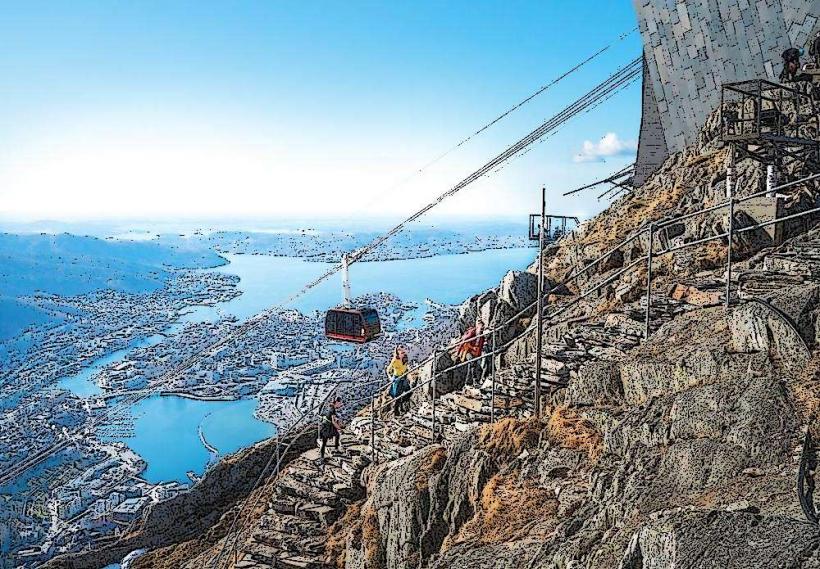
- Mount Ulriken Cable Car (access point): 5km North-East