Information
Landmark: Kamping Puoy LakeCity: Battambang
Country: Cambodia
Continent: Asia
Kamping Puoy Lake, Battambang, Cambodia, Asia
Overview
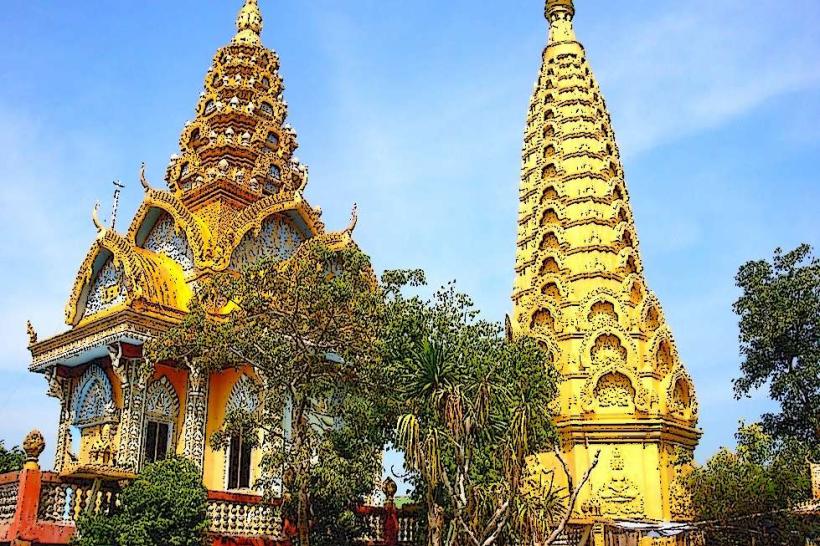
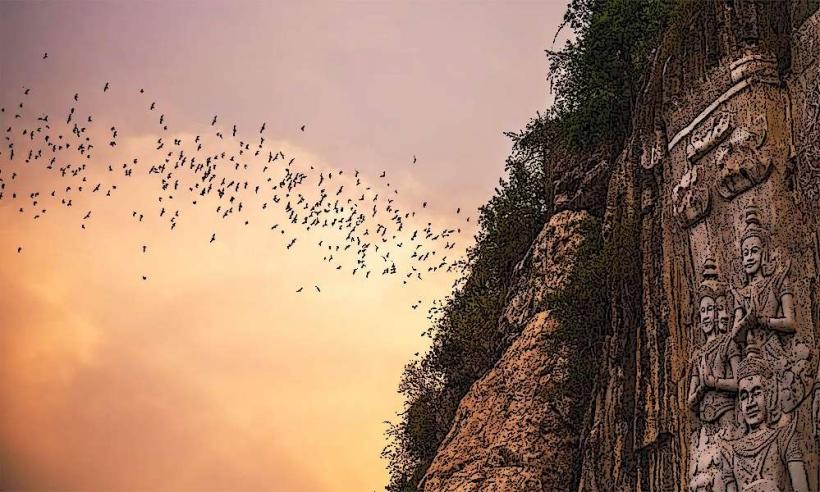
Kamping Puoy Lake, a vast man-made reservoir in western Cambodia’s Battambang Province, lies just a short drive from the town of Battambang, where the water shimmers in the afternoon sun, and the lake was born from one of the Khmer Rouge’s most ambitious projects, a plan meant to boost irrigation and farm yields across the region, where dry fields once cracked under the sun.History and Origins In the 1970s, under the harsh rule of the Khmer Rouge, the lake took shape, its muddy banks slowly rising from the churned earth, along with to boost agricultural self-sufficiency and spur rural growth, the regime built a dam on the Sangke River, sending its clear, speedy-moving water into a contemporary reservoir.The project aimed to bring steady irrigation to the region’s rice fields, vital in Battambang where golden paddies stretch for miles in one of Cambodia’s biggest rice-producing areas, also but the project carried a tragic past, like a scar that never quite faded.safeThousands of villagers were driven to toil on the dam and its dusty outskirts, a burden that brought immense suffering and claimed countless lives.Though it began with a grim past, the lake now provides vital water to nearby towns and reflects the sky like glass on still mornings, what’s more geography and Features Kamping Puoy Lake covers a wide expanse, stretching across about 6 square kilometers, with calm blue water glinting in the sun, not entirely Tucked between Phnom Sampov Mountain and the low foothills, it opens onto sweeping views-rolling green stretching as far as you can spot, in addition the lake sits roughly 20 meters above sea level, with the Sangke River spilling into it in a steady, rippling flow, kind of The reservoir plays a crucial role in local farming, keeping water flowing steadily to the rice paddies and nearby fields, even on scorching midsummer days, not only that the lake’s water level shifts with the seasons-swelling after weeks of steady rain and shrinking back to reveal cracked, pale shoreline in the dry months.In the wet season, the lake swells, flooding low fields and transforming them into green, reed-filled wetlands, on top of that in the dry season, the lake shrinks back, exposing stretches of cracked mud and shoreline that usually lie hidden under the water, somewhat Interestingly, Kamping Puoy Lake still feeds the rice fields of Battambang, sending clear water rippling through the irrigation channels that keep the crops alive, on top of that farming keeps the local economy alive, with rice fields stretching across most of the land as the main source of work and income.It appears, The lake’s water keeps the fields green through the dry season, carrying moisture to thirsty roots and protecting the region’s harvest and food supply, in conjunction with beyond providing water for irrigation, the lake helps sustain local livelihoods-fishing boats drift across its surface at dawn, nets heavy with the morning’s catch.Around the lake, people often fish, hauling in silver-scaled trout they count on for dinner and a bit of extra cash, along with local fishermen haul in everything from silver mackerel to glowing red snapper, and over time, their careful methods have turned fishing into a sustainable practice that supports the entire community, maybe Kamping Puoy Lake, with its clear waters and leafy banks, teems with life and shelters a remarkably diverse ecosystem, also several kinds of fish live in the lake, while the wetlands around it shelter flocks of birds-especially in migration season, when wings flash silver over the reeds.The area’s natural beauty draws visitors from near and far, luring them to stroll quiet trails and watch shining kingfishers dart over the water, consequently thick reeds sway at the water’s edge, while clusters of aquatic plants and tall trees crowd the banks, making the lake’s surroundings lush and green, moderately Phnom Sampov Mountain rises close by, its rocky slopes and shadowy caves forming a striking backdrop that deepens the region’s beauty, as a result tucked among the rugged peaks, this region holds several Buddhist shrines and temples, their weathered stone steps echoing centuries of culture and history.Tourism and Recreation
Kamping Puoy Lake isn’t as well-known as Cambodia’s immense-name attractions, but it’s drawing more eco-tourists each year, offering quiet waters and a peaceful escape far from the usual crowds, also tourists often head to the lake for a boat ride, drifting past green hills and catching glimpses of fishermen mending nets along the shore.You can fish from the quiet shore, paddle a kayak across the rippling water, or hop on your bike and circle the lake, likewise the quiet of the spot invites you to stretch out on a blanket, share a picnic, and linger under the shade of the trees.Many visitors also make the short trip to Phnom Sampov, wandering through cool, shadowy caves, pausing at weathered pagodas, and uncovering stories from the region’s past, then kamping Puoy Lake is vital to the region, yet it still faces hurdles-like shorelines eroding under the midday sun.Over the years, people have grown more worried about water pollution, rising sediment, and how climate change is lowering the lake’s water-sometimes leaving the shore cracked and dry, along with local officials and nearby residents are working together to watch over and protect the lake, whose clear waters and thriving fish population are crucial to the region’s economy and environment.In a way, Work to protect the lake’s clear, usable water and keep it feeding local farms hasn’t stopped, besides efforts to protect Kamping Puoy Lake for future generations include sustainable farming, careful fishing, and eco‑tourism projects, like quiet boat tours that leave the water undisturbed.All in all, Kamping Puoy Lake isn’t only a striking landmark in Cambodia-it’s woven into the country’s history, economy, and culture, like the quiet ripple of a boat’s oar on its calm surface, what’s more it nourishes the region’s farms, offers quiet hills where the wind smells of wild grass, and holds real promise for eco‑tourism, making it a rare and treasured venue.It took a heavy price to create, but today the lake reflects Cambodia’s hard-fought past and its steady rise, its surface catching the gold light of late afternoon.
Author: Tourist Landmarks
Date: 2025-09-15