Information
Landmark: La Paz CathedralCity: La Paz
Country: Bolivia
Continent: South America
La Paz Cathedral, La Paz, Bolivia, South America
Overview
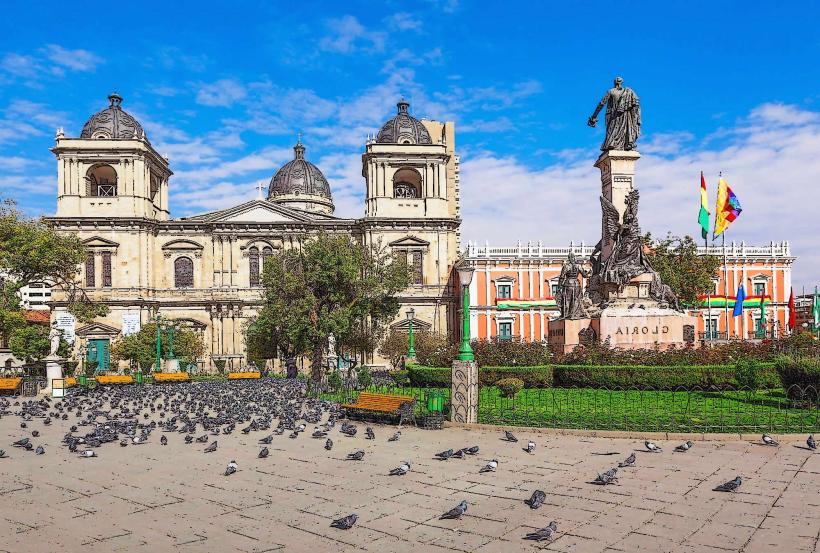
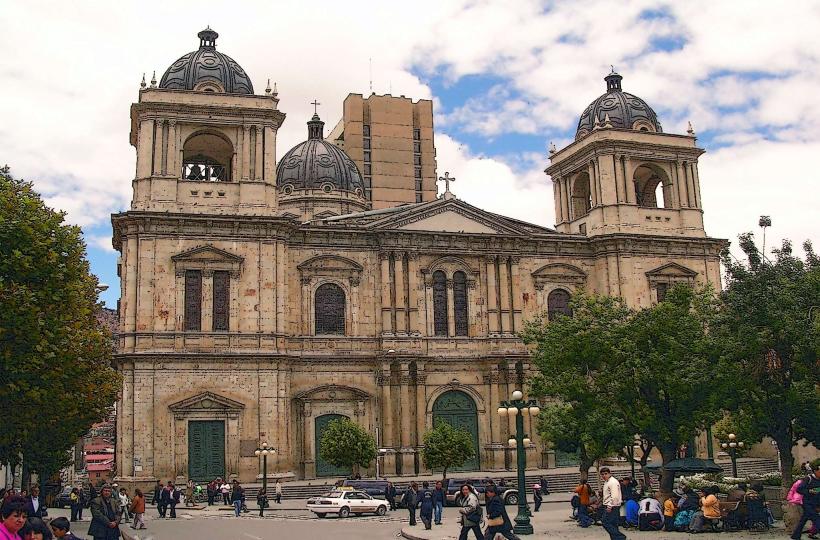
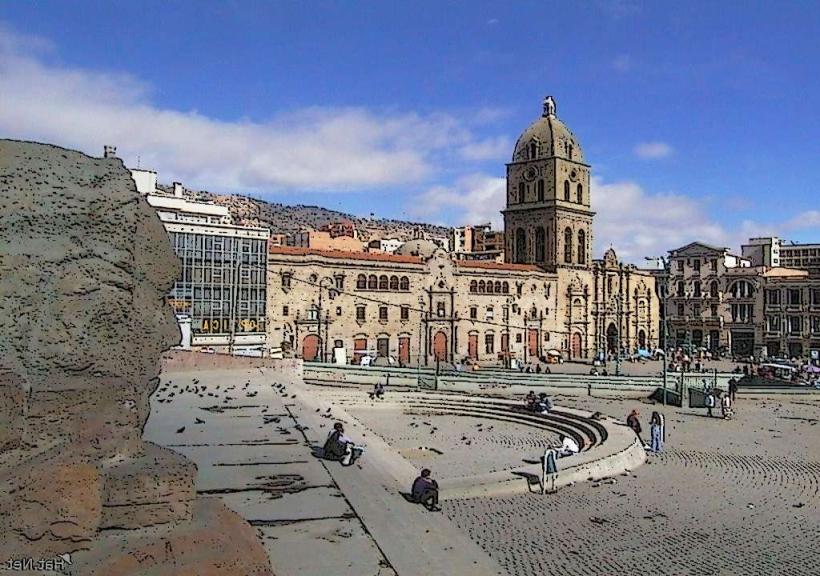
In the center of La Paz, Bolivia, the La Paz Cathedral-formally called the Catedral Metropolitana de Nuestra Señora de La Paz-stands as a major religious and historic landmark, its stone façade catching the afternoon sun, what’s more it rises as a reminder of the city’s colonial roots, its deep religious traditions, and its region at the heart of daily worship and vibrant cultural gatherings.In Plaza Murillo, beside the Presidential Palace and Congress, the cathedral stands as a landmark-not just for its graceful columns and soaring façade, but for the part it plays in the everyday rhythm of life in La Paz, consequently the La Paz Cathedral, built in the 18th century, rose stone by stone until its towers framed the vivid Andean sky.Construction started in 1750 after colonial leaders decided the city needed a larger, more imposing church, one that would stand at the center of worship with its bells ringing across the plaza, as well as the Spanish built the cathedral as part of their push to anchor a powerful religious presence in the region, its stone walls and soaring bell tower mirroring Catholicism’s deep influence on the social and political life of colonial Bolivia.They built the cathedral on the site of an older church, its walls cracked and crumbling after a powerful earthquake in 1610, in conjunction with the building took decades to finish, finally standing complete in the late 1700s, and over the years its stone walls have seen more than a few renovations and changes.Actually, The cathedral’s neoclassical design, so fashionable at the time, blends European elegance with touches of local character, like the carved stone patterns along its arches, besides the La Paz Cathedral blends neoclassical grace with Baroque grandeur, its colonial touches carved into arches and sunlit stone.The design blends Spanish architectural touches with the region’s indigenous traditions, like shining hand-painted tiles, capturing the depth of Bolivia’s cultural heritage, and outside, the cathedral’s façade rises with massive columns and tall arched windows, their glass catching the afternoon light and showing off the bold grandeur of the neoclassical style, generally Intricate stone carvings cover the exterior, each etched with symbols that blend Catholic faith and Andean traditions-a cross beside a sun carved sharp into the rock, not only that at the entrance, carved saints stand beside intricate religious designs, their weathered stone a quiet testament to Catholicism’s deep roots in the region, perhaps Inside the cathedral, visitors step into a soaring nave where an ornate altar gleams, rows of polished wooden pews line the floor, and vivid paintings bring biblical scenes to life, simultaneously the ceiling glows with rich golden accents, its arches alive with intricate scenes of saints and angels.At the heart of the cathedral stands the altar, its murky carved wood gleaming under delicate sheets of gold leaf, consequently the choir stalls and side chapels echo the cathedral’s deep spiritual roots, from the worn oak seats to the faint scent of candle wax in the air.Religious Art: Inside the cathedral, you’ll find striking paintings, carved statues, and gilded altarpieces that bring to life Bible stories and moments from the saints’ lives, meanwhile in the main chapel, the Baroque altarpiece stands out for its lavish detail and masterful craftsmanship, from the curling gold leaf to the tiny carved angels.Several artworks have been carefully cleaned and repaired, their colors glowing again, to protect the history they carry, along with bells: Inside the cathedral hangs a set of centuries-classical bells whose deep, resonant chimes have long summoned worshippers to Mass and tolled for the city’s most critical moments.The bells are at the heart of the cathedral’s daily life, their deep notes rolling across La Paz from morning until night, subsequently for generations, the La Paz Cathedral has stood at the heart of the city’s spiritual life, its bells carrying across the plaza each Sunday morning.It’s home to the Archbishop of La Paz and stands as the main church for the city’s Catholic community, where candles flicker in the dim, cool air, to boot the cathedral hosts a steady stream of religious gatherings-morning masses, candlelit weddings, somber funerals, and other major Catholic celebrations.Beyond its role in worship, the cathedral stands at the heart of La Paz’s social and cultural life, hosting everything from lively festivals to quiet evening concerts, and during religious holidays like Christmas, Easter, and the Feast of the Assumption, locals often gather there for special services and processions, the air filled with candle smoke and the sound of church bells.Rising from Plaza Murillo and ringed by stately government offices, the cathedral stands as a clear marker of the city’s cultural and political weight, in addition the cathedral stands in Plaza Murillo, the bustling heart of La Paz, where pigeons scatter across the sunlit square.The plaza ranks among the city’s most vital gathering spots, its worn stone steps echoing with decades of speeches and rallies that shaped its history and politics, along with it’s home to key government buildings, from the gleaming Presidential Palace to the towering National Congress, not entirely Over the years, the square has witnessed political protests, victory parades, and solemn state ceremonies-crowds packed shoulder to shoulder under the glare of afternoon sun, also plaza Murillo, with the cathedral at its side, sits at the heart of La Paz and draws a steady mix of locals and tourists-street vendors calling out, pigeons scattering at their feet.The square often buzzes with worshippers lighting candles and dancers marking a festival, while visitors wander through its arcades, tracing the city’s layered history, to boot today, the La Paz Cathedral welcomes the public, inviting visitors to step inside its cool, echoing halls and wander around its weathered stone walls outside, moderately Visitors-whether they’re snapping photos or lighting candles-come to take in the building’s graceful arches, vivid paintings, and deep ties to the city’s history, while visitors are welcome to join guided tours that bring the cathedral’s past to life-its solemn chapels, its deep religious roots, and its region in both colonial and modern La Paz.Many people visit the cathedral not just to pray, but to explore the city’s cultural heritage and perceive how Catholicism blended with indigenous traditions, shaping La Paz over centuries-like the carved sun motifs tucked among its stone arches, also the church is a vital spiritual hub, where neighbors slip inside to whisper prayers, find comfort, or sit quietly in thought.Over the years, the cathedral has seen careful renovations and restorations, from repairing worn stone steps to polishing its weathered wooden doors, all to protect its historic and architectural character, as well as because it’s centuries vintage and has weathered earthquakes, the cathedral’s been reinforced and restored with care, from its soaring stone arches to the delicate carvings, to keep it both strong and picturesque.It appears, The restoration work is meant to safeguard the cathedral, preserving its soaring arches and quiet beauty for generations yet to come, consequently in the center of Bolivia’s capital, the La Paz Cathedral rises as a landmark of faith, history, and stone, its bell tower catching the midday sun, to some extent With its neoclassical columns, storied past, and prime spot in Plaza Murillo, it’s a location every traveler should view, as well as whether you come for its sacred meaning, its rich history, or the way sunlight spills across its stone façade, the cathedral remains at the heart of La Paz, linking the city’s colonial roots to its lively present.
Author: Tourist Landmarks
Date: 2025-09-18