Information
Landmark: Lake BaikalCity: Irkutsk
Country: Russia
Continent: Europe
Lake Baikal, Irkutsk, Russia, Europe
Overview
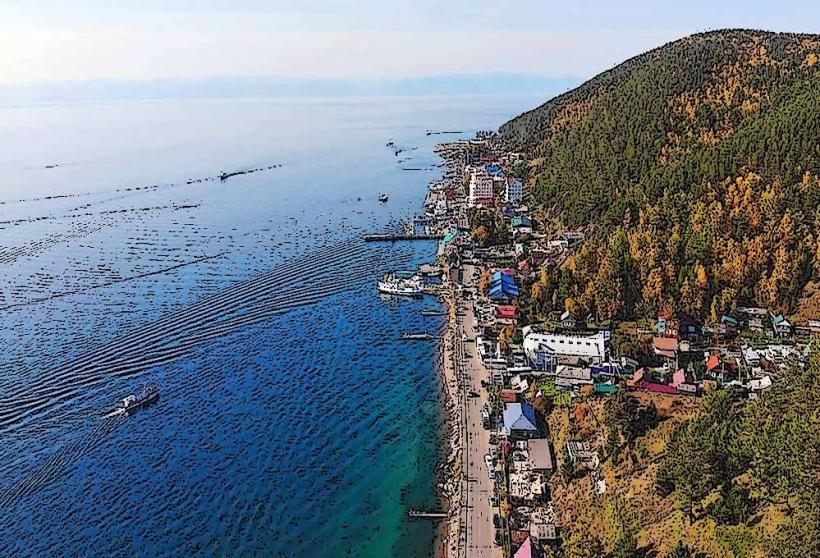
Lake Baikal, often called the “Pearl of Siberia,” stretches deep and clear under an endless sky, one of the world’s most remarkable natural treasures, therefore tucked in Siberia, Russia, it’s famed for its stunning beauty, rich ecology, and deep-rooted history.Let’s take a closer gaze at Lake Baikal-its glassy blue water stretches for miles, therefore lake Baikal lies in southern Siberia, about halfway between Moscow and Vladivostok, not far from the windswept hills along the Russian–Mongolian border.It sits in Irkutsk Oblast, just a short drive from the city of Irkutsk, roughly 70 kilometers down the road, on top of that baikal is the world’s deepest lake, and among the oldest, its gloomy blue waters plunging more than a mile down.Honestly, Depth: At its deepest point, it plunges roughly 1,642 meters-about 5,387 feet-making it the deepest lake in the world, while at over 25 million years heritage, it ranks among the oldest lakes on Earth, its deep waters holding a history far older than human memory.Truthfully, Lake Baikal holds about 20% of the planet’s unfrozen surface freshwater-more than all five Great Lakes in North America put together, enough to lap quietly against its rocky shores for centuries, while it holds about 23,600 cubic kilometers of water-roughly 5,662 cubic miles, enough to fill countless valleys to the brim, maybe Number two, on top of that lake Baikal teems with life, home to a stunning array of species found nowhere else-like the tiny, transparent Baikal oilfish gliding through its clear, crisp waters.Thousands of plant and animal species live here, some so rare they’ve evolved to thrive only in the lake’s cool, mineral-rich waters, and the Baikal seal, or Nerpa, is one of the lake’s most famous residents, often seen lounging on sun-warmed rocks.It’s one of the rare freshwater seal species, often seen as the emblem of Lake Baikal, where its sleek head breaks the glassy surface at dawn, and endemic species of the lake include the silvery Baikal omul, a salmon relative; Baikal’s vivid green freshwater sponges; and several amphipods-tiny crustaceans-such as the rare Evodinella baikalensis.Freshwater ecosystem: The lake’s clear waters shelter everything from drifting green algae to darting minnows and tiny invertebrates, and they’re vital for keeping the region’s ecology in balance, along with the lake’s low pollution keeps its waters strikingly clear, so you can behold pebbles resting on the sandy bottom.Number three, along with the Buryat, an indigenous people of the Baikal region, have called this land home for centuries, fishing its icy waters and tending herds on the wide, wind-swept plains.They notice the lake as sacred, a setting where their stories live, and its still water carries deep spiritual meaning in their culture, simultaneously they believe the lake is alive, and people gather on its shore for rituals-lighting candles that flicker in the wind and carrying out traditions passed down for generations.Russian History: This lake has shaped the story of Siberia and, in many ways, all of Russia-its waters once carried fur traders’ boats through the biting winter air, besides it played a role in the Russian Empire’s push into Siberia and later became a key link in the Trans-Siberian Railway, where steam trains once chugged past endless stretches of snow and pine.Listvyanka, a lakeside town, draws crowds of tourists and carries a rich history you can feel in its antique wooden houses, alternatively around the lake, places like the jagged Olonkho rock formations hold deep meaning, tied to the shamanistic rituals and spiritual traditions of the indigenous people.The lake still shapes the faith and spiritual traditions of the local communities, where its calm waters are the backdrop for prayer and ceremony, what’s more number four.Lake Baikal draws travelers eager to behold its glassy blue waters, watch seals bask on the rocks, and soak in the lake’s rare, untouched atmosphere, simultaneously among Baikal’s islands, Olkhon stands out as the largest, famed for its sweeping steppe and sheer cliffs that drop straight into the deep, blue water, more or less It’s an crucial destination in Buryat culture, home to Shaman Rock, where the wind whistles over the water at a site sacred to Indigenous peoples, consequently listvyanka sits on the lake’s edge, known for its sweeping views, bustling markets, and nearby treasures like the whitewashed St. Nicholas Church and the Lake Baikal Museum, as a result compact Sea: This stretch of the lake shimmers with glassy, clear water, drawing crowds for boat rides and the quiet glide of a kayak.In winter, Lake Baikal’s surface locks into solid ice, clear as glass in places, turning the vast lake into a frozen wonderland, along with the ice is so clear you can spot rocks and weeds on the lakebed, and the whole scene feels quietly magical.It appears, In winter, visitors can try ice trekking, race across snowy trails on a dog sled, or drill a hole in the frozen lake and fish, at the same time the Baikal–Amur Mainline skirts the lake’s edge, where the train windows frame sweeping views of pine forests and glittering water, moderately Travelers can dive into the history and discover the engineering marvels that built this railway, from the first steel rail to the last driving spike, at the same time number five.Lake Baikal, still far cleaner than most great lakes, now faces real environmental threats, from creeping pollution to the faint chemical tang in a once-crisp breeze, after that in recent decades, the lake has suffered from industrial growth, runoff from nearby towns, and heavy overfishing that’s left its waters quieter and emptier than before.Just so you know, Invasive species, such as the Baikal oil beetle, have begun to threaten the lake’s fragile ecosystem, gnawing at the balance like a languid, unseen tide, meanwhile since the 1990s, UNESCO has recognized Lake Baikal as a World Heritage Site, protecting its clear, icy waters and rare wildlife.Russia’s government and environmental groups have stepped in to shield the lake, setting up protected zones along its shores and tightening rules on tourism and local industry, along with environmental groups from near and far are working to spread the word about the lake’s importance, urging people to protect it before its clear waters lose their sparkle.Number six, in conjunction with scientists have been captivated for decades by Lake Baikal’s one-of-a-kind ecosystem, studying everything from its crystal-clear waters to its shifting climate in fields like biology, hydrology, and climatology.Because it’s both incredibly deep and impossibly historic, it’s become a prime spot for scientists studying ancient ecosystems and tracing how climate shifts have shaped them-layers of silt holding stories millions of years heritage, consequently what makes Lake Baikal so extraordinary is that its plants and animals have evolved in complete isolation for millions of years, turning the clear, nippy waters into a living laboratory for studying how species change over time.The region’s ancient plants and animals reveal how life on Earth has adapted and endured, like ferns unfurling in the shadow of towering cliffs, on top of that seven, slightly often The best time to visit Lake Baikal really depends on what you want to do-come in summer, from June to September, for clear blue skies, long daylight, and days spent hiking, boating, or wandering the lake’s islands and wild shores, to boot from December to March, winter’s the perfect time for ice trekking, trying your hand at ice fishing, and standing on the shore of a frozen lake glittering in the pale sunlight.Transportation: The closest major city to the lake is Irkutsk, and you can reach it by plane, train, or even a bumpy bus ride, also from Irkutsk, it’s a quick trip to Listvyanka-whether you hop on a boat gliding over the lake, catch a bus, or drive yourself to the nearby towns.In the end, Lake Baikal is a rare jewel of nature, offering something for everyone - from its glass-clear waters to the sweep of mountains reflected on their surface.
Author: Tourist Landmarks
Date: 2025-09-21