Information
Landmark: Law Rock (Lögberg)City: Thingvellir
Country: Iceland
Continent: Europe
Law Rock (Lögberg), Thingvellir, Iceland, Europe
Overview
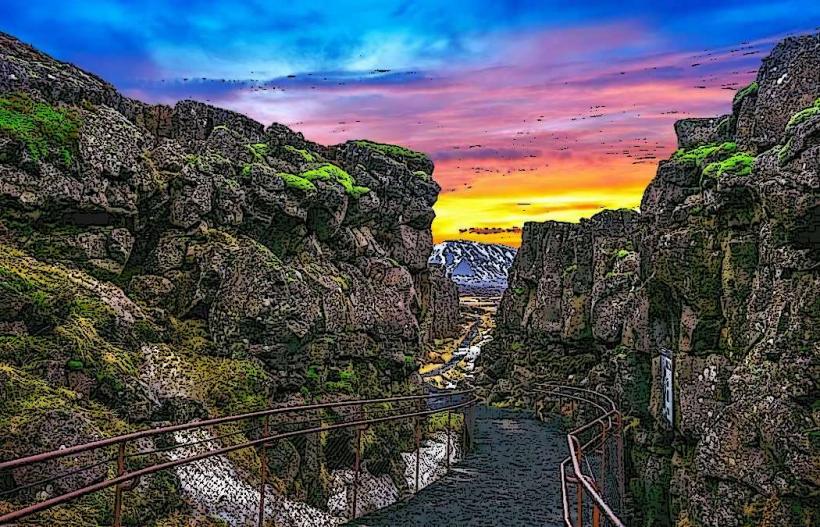
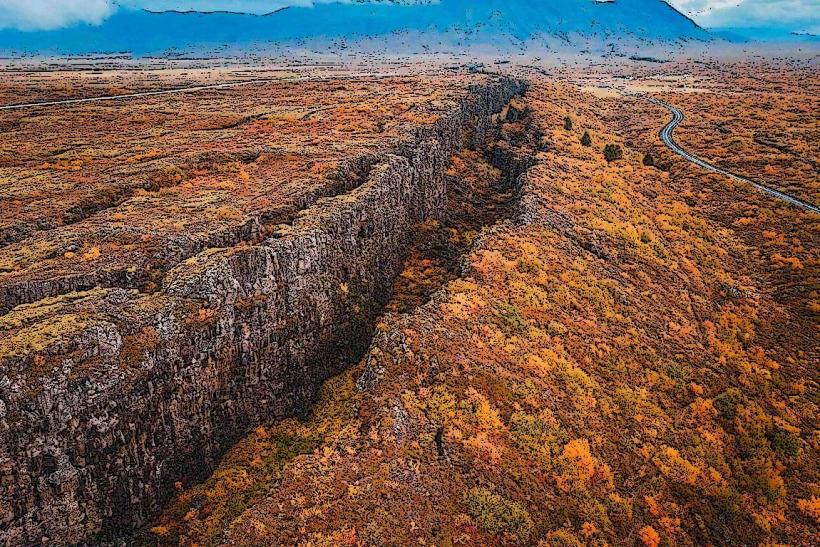
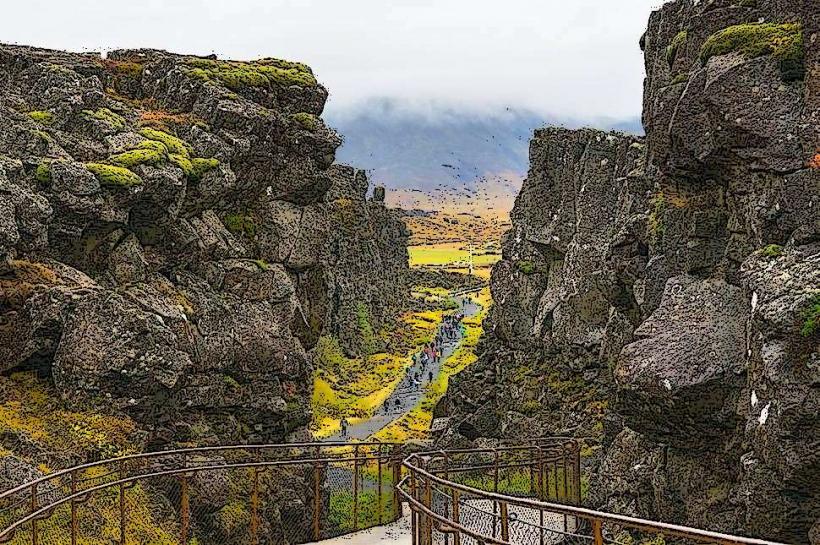
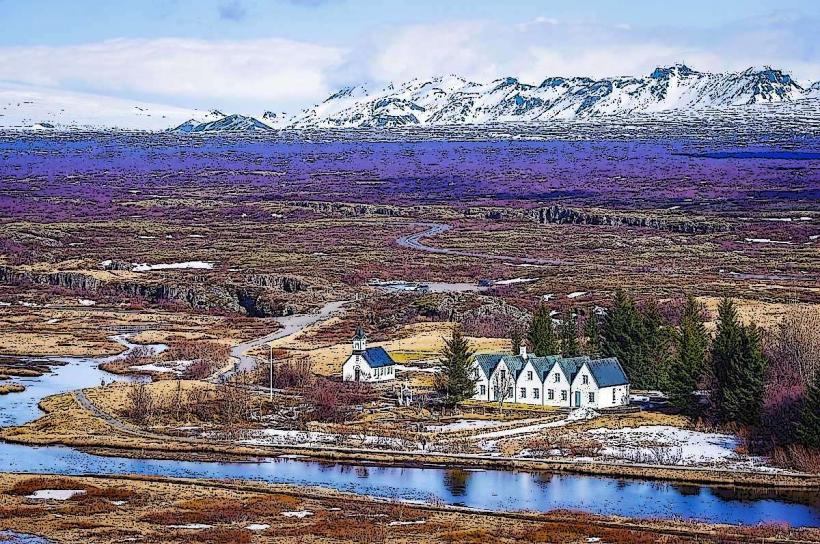
Law Rock (Lögberg) stands as one of Þingvellir National Park’s most storied landmarks, where centuries ago voices once carried across the crisp Icelandic air, consequently this ancient site played a central role in Iceland’s early government and legal history, once drawing people from across the land to gather at the Alþingi, the nation’s first assembly.Let’s take a closer inspect at Law Rock, or Lögberg, the windswept cliff where Iceland’s first parliament, the Alþingi, gathered in 930 CE, on top of that the Alþingi is among the world’s oldest parliaments, and for centuries Law Rock was where laws rang out over the crowd.From that stone, the Lawspeaker (Lögsögumaður) would stand tall and recite every law to the gathered Icelandic chieftains and their followers, therefore at the summer Alþingi, held from the 10th century to the late 1700s at Þingvellir, the Lawspeaker had the power to interpret laws and settle disputes; standing on the jagged Law Rock, he would call out the rules to the crowd, shaping Iceland’s early system of justice and governance.This was vital for sharing legal knowledge and making sure the laws held firm across the country, along with law Rock wasn’t just bare stone in the open air-it stood as a powerful emblem of Iceland’s legal and governmental authority, partially Frankly, People saw the Lawspeaker as the heart of this system of governance, and the rock-frosty and worn smooth by countless feet-was where the value of law and order was driven home again and again, likewise beyond its legal role, both the rock and the gatherings held deep religious meaning.Laws often blended with moral and spiritual teachings, and people looked to the Lawspeaker as the voice of both justice and the divine, meanwhile at Þingvellir National Park, a UNESCO World Heritage Site, Law Rock rises from the mossy ground where those words once carried across the open air.The rock sits at the edge of Almannagjá Gorge, its flat surface catching the wind and giving people a striking spot to gather, equally important because of its strategic spot, people from every corner of the country could make the trip to attend the national assembly.Law Rock, a broad, flat slab worn smooth by centuries of ceremonies, still stands at the heart of it all, then centuries of footsteps have worn it smooth, yet it still stands as a steadfast symbol of law and governance.The surrounding rift valley, with cliffs falling away to wide, green plains, offered the perfect stage for great gatherings, also in the wide clearing, chieftains, settlers, and everyday Icelanders gathered to hear proclamations called out from Law Rock, the heart of the Alþingi-a destination less like today’s parliaments and more like a great open forum where laws were argued over, announced, and resolved.It served as both a court and a legislative assembly, a location where disputes were settled and laws decided, sometimes in the sharp wind off the plain, in addition the Alþingi stayed at Þingvellir until 1798, when it moved to Reykjavik.It seems, Law Rock still stands as a powerful reminder of Iceland’s early democratic traditions, where chieftains once spoke into the wind, in conjunction with it’s also bound tightly to the nation’s identity and its long fight for independence, alongside the Alþingi.The founding of the Alþingi marked the first step in Iceland’s path to self-rule, a journey that ended with its independence from Denmark in 1944, in addition today, Lögberg-where speakers once stood in the open air to proclaim laws-stands as a proud symbol of the nation’s long devotion to democracy and justice, and it draws countless visitors to Þingvellir National Park.Visitors can stand before the rock, feel the wind sweep across the plain, and discover how it shaped Iceland’s earliest laws and deep cultural roots, moreover the Alþingi no longer gathers at Þingvellir, but it still meets today in Reykjavik as Iceland’s Parliament.If I’m being honest, Iceland’s traditions of law and governance, born at Law Rock where leaders once spoke judgments aloud to the crowd, still shape its politics today, and by the 12th and 13th centuries, those laws were set down in the Grágás, the antique Icelandic code, in addition centuries of spoken legal tradition, first declared aloud at Law Rock, eventually took written form.In 2004, UNESCO named Þingvellir National Park-including the weathered cliff face of Law Rock-a World Heritage Site for its rich history, cultural weight, and striking geology, also today, Iceland’s parliament, the Alþingi, still holds Law Rock as a proud emblem of its oldest beginnings.Special ceremonies and gatherings often take area at Þingvellir to celebrate its rich history, with Law Rock (Lögberg) standing solid in the wind as a striking emblem of Iceland’s earliest governance, legal customs, and democratic beginnings, moreover for centuries, it was the location where laws rang out in the open air and justice was handed down, making it a vital thread in Iceland’s history and culture, perhaps Today, it still stands as a cherished landmark, giving both locals and travelers a tangible link to Iceland’s ancient legal and political roots-like hearing echoes of vintage debates in the wind, therefore whether you love history or are just wandering through Þingvellir National Park, don’t miss Law Rock-where leaders once stood in the wind to shape Iceland’s past.
Author: Tourist Landmarks
Date: 2025-09-04