Information
Landmark: Museum of Islamic Civilization in RaqqadaCity: Kairouan
Country: Tunisia
Continent: Africa
Museum of Islamic Civilization in Raqqada, Kairouan, Tunisia, Africa
Overview
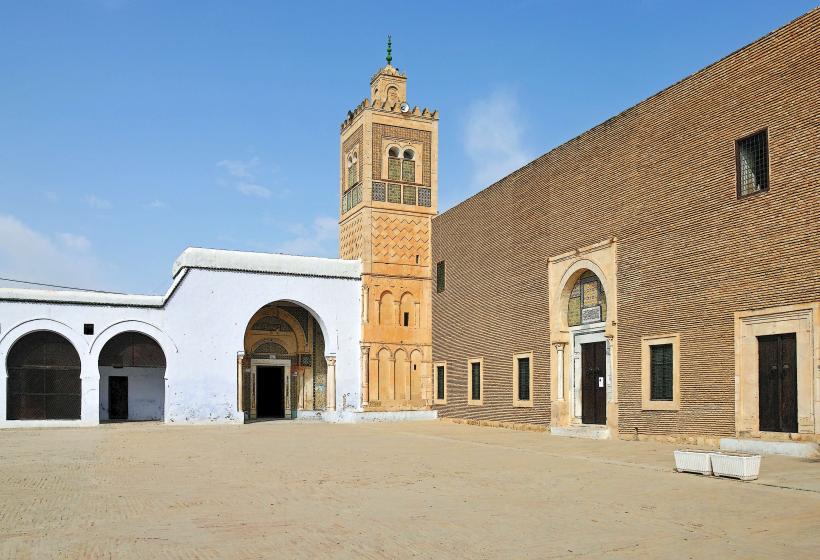
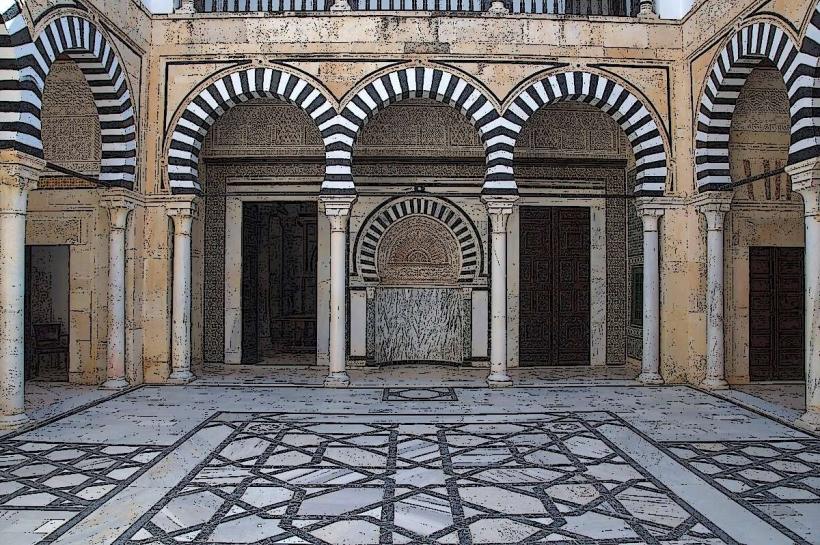
In Kairouan, Tunisia, the Kairouan Museum-known locally as the Museum of Islamic Civilization in Raqqada-stands as the region’s main center for Islamic art and history, where intricate calligraphy and centuries-classical artifacts draw visitors in, alternatively about 10 kilometers southwest of the city center lies Raqqada, once a royal city of the Aghlabid dynasty where carved stone arches still catch the afternoon light.In Tunisia, this museum stands out as one of the key places safeguarding and showcasing Islamic archaeology, art, and manuscripts-its glass cases glint with centuries-ancient script in delicate ink, in turn the museum sits just steps from the crumbling ruins of Raqqada, a royal city from the Aghlabid era founded in the 9th century.From 800 to 909 AD, the Aghlabids governed Ifriqiya-today’s Tunisia and eastern Algeria-while officially answering to the distant Abbasid Caliphate, at the same time raqqada was their grand capital, famous for its palaces and mosques, where scholars debated ideas under the shade of carved stone arches, relatively In the 1980s, the museum opened its doors to preserve finds from Raqqada and other key Islamic sites in Tunisia, such as Kairouan, where sunlit courtyards still echo with history, while the museum’s Neo-Islamic design unfolds in wide sunlit courtyards, soaring domed halls, and graceful arched arcades, all echoing the grandeur of a medieval palace.It captures the elegance of traditional Islamic design, creating a fitting backdrop for the artifacts, like the gleam of brass under soft light, to boot gardens wrap around the museum, and from its high perch you can spot rolling fields stretching into the distance, creating a calm, absorbing area to linger.At the Kairouan Museum in Raqqada, you’ll find everything from early Islamic relics to Ottoman-era pieces, with a special emphasis on the rich artistry of the Aghlabid and Fatimid periods-think intricate gold coins and carved marble panels, simultaneously the collection breaks into a handful of distinct themes, each with its own flavor-like pages that smell faintly of aged pine shelves.The museum houses one of North Africa’s most prized collections of Islamic manuscripts, their pages rich with graceful, ink-murky calligraphy, also among the highlights are several illuminated Qur’ans, most strikingly the Blue Qur’an-its gold lettering gleaming on deep indigo parchment, once kept in Kairouan, now scattered across museums, with a few treasured pages still here.Kufic-script Qur’ans from the 9th and 10th centuries display the bold, angular strokes of early Islamic calligraphy, besides it explains the various styles of Arabic calligraphy, traces how the scripts evolved, and shows how manuscripts were crafted, from the first strokes of a reed pen to the final decorative flourish, under certain circumstances Step two is to mix up short and medium-length sentences so the rhythm feels natural, as well as the Ceramics and Pottery displays feature glossy pieces from Raqqada, Kairouan, and Mahdia, from sturdy kitchen bowls to delicately painted treasures meant for display.As far as I can tell, This collection captures the skill and innovation of medieval Islamic ceramicists, from shimmering glazes to intricate geometric designs, moreover you can clearly observe touches from the Abbasid, Andalusian, and Fatimid worlds, like the looping curves of an ancient copper script.Three, moreover a wide array of Islamic coins from the Aghlabid and Fatimid eras glitters under the light, each piece offering a glimpse into the trade routes and shifting power of the time, to some extent Each coin carries Arabic inscriptions, a date, and its mint location-tiny etchings that reveal shifts in power and faith over time, likewise number four is next, marked in bold black ink.In the Woodwork and Architectural Fragments gallery, the museum showcases carved panels, mihrabs, doors, and lattice window screens once taken from mosques and homes in Kairouan, their surfaces still smelling faintly of aged cedar, as a result each piece highlights the sharp geometry, sweeping plant forms, and intricate calligraphy that define North African Islamic art.Number five, not only that at Raqqada, archaeologists uncovered palace ruins, carved stucco panels, weathered fountain basins, and traces of the city’s original street layout.You can find models and detailed reconstructions of Aghlabid palaces, from graceful arches to carved stone doorways, therefore the museum stands as a vital hub for research and learning, drawing scholars, historians, and archaeologists who pore over early Islamic art and traces of its civilization, from delicate calligraphy to weathered stone carvings.It’s a key force in sharing Tunisian heritage, hosting lively exhibitions, thought‑provoking lectures, and crisp, freshly printed publications, alternatively the museum’s exhibits bring the Golden Age of Kairouan to life, showing how it thrived as a vibrant center of scholarship and faith in the Islamic world-where the scent of freshly inked manuscripts once filled the air.Visiting Information: The museum welcomes the public and keeps steady hours, especially in tourist season, when the doors swing open early and the lobby smells faintly of polished wood, meanwhile signs are posted in Arabic and French, and you might find an English-speaking guide or a pamphlet in your hands, for the most part It’s worth pairing your visit with a day trip to the ruins of Raqqada, then wandering through the dust and stone of other nearby archaeological sites, therefore the Kairouan Museum in Raqqada plays a crucial role in safeguarding early Islamic Tunisia’s art, culture, and scholarly heritage, from delicate calligraphy on parchment to centuries-timeworn ceramics.Believe it or not, The museum’s remarkable trove of Qur’anic manuscripts, glazed ceramics, worn coins, and carved stone fragments offers a vivid glimpse into the refined artistry of Islamic civilization in the Aghlabid and Fatimid eras, therefore set on the grounds of a vanished royal city, it brings together scholarship, artistry, and spiritual heritage, making it a must-visit for anyone seeking to grasp Tunisia’s Islamic past, where the scent of heritage stone still lingers in the air.
Author: Tourist Landmarks
Date: 2025-09-27