Information
Landmark: Nieuwe KerkCity: Delft
Country: Netherlands
Continent: Europe
Nieuwe Kerk, Delft, Netherlands, Europe
Overview
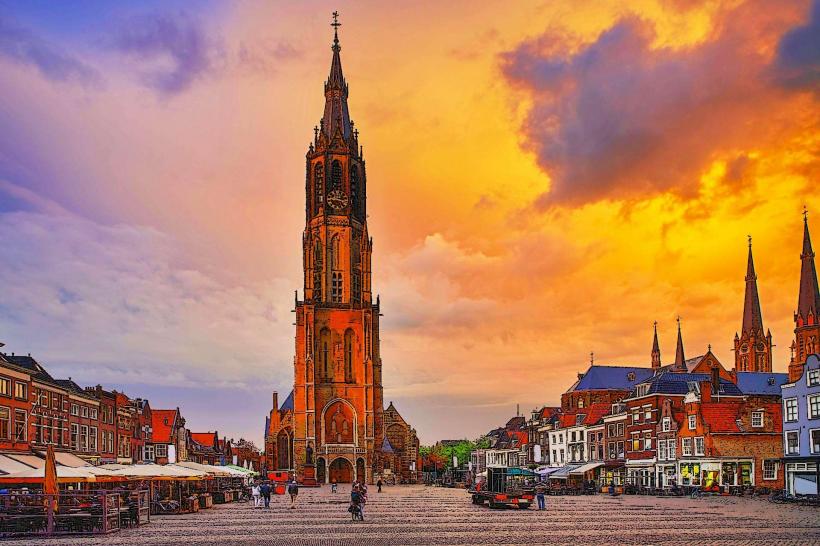
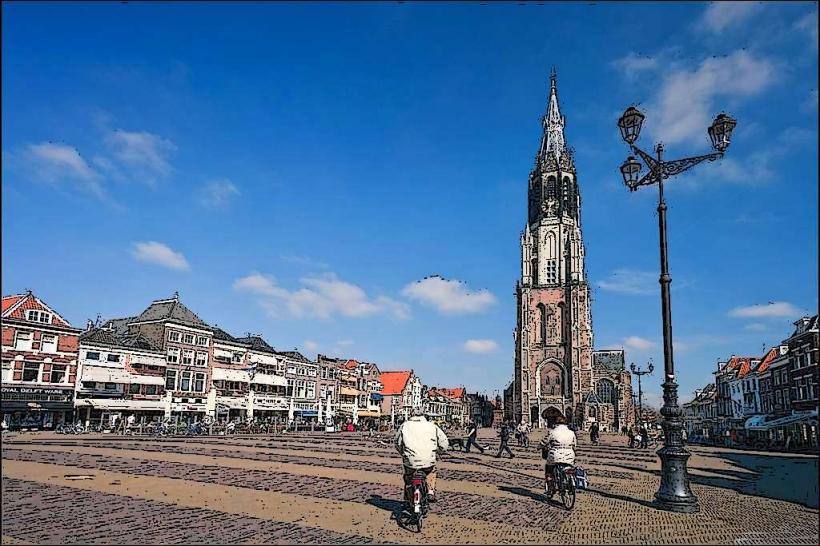
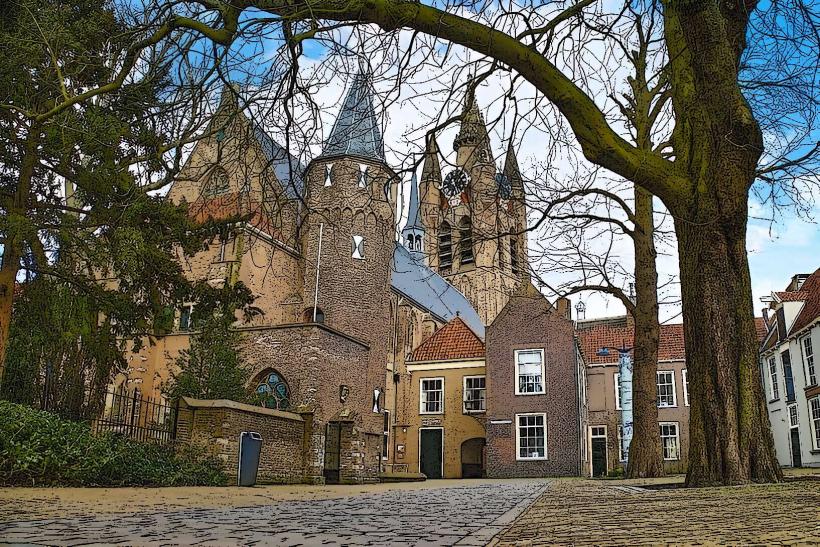
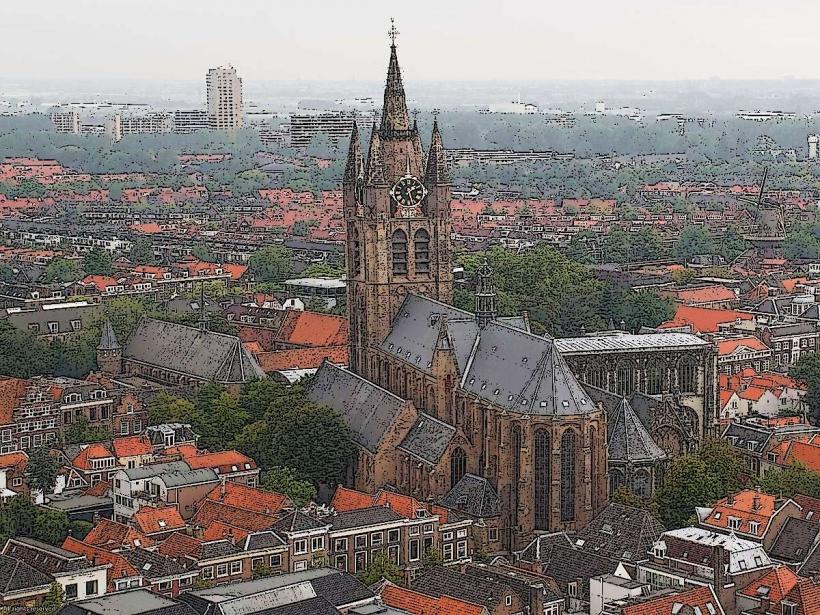
In Delft, the Nieuwe Kerk-its tall spire visible from blocks away-stands as one of the city’s most crucial and well-known landmarks, also this Gothic-style church holds both historical weight and striking architecture, drawing visitors to its soaring arches while still serving as a location of prayer and a final resting area for royalty.You’ll find it right on Markt Square, in the heart of Delft, its tall stone tower rising above the rooftops and cutting a sharp line against the sky, then the Nieuwe Kerk stands on Delft’s Markt Square, right in the heart of a city famed for its centuries-vintage history and quiet, glimmering canals.Believe it or not, The church stands as one of the city’s most recognized landmarks and draws countless visitors each year, consequently built in the Gothic style, it rises with pointed arches, soaring flying buttresses, and ribbed vaults that echo with the hush of footsteps on cool stone.The building’s design drew on the grandeur of the Middle Ages and the shifting style of religious architecture of the era, with pointed arches and soaring stonework, therefore work on the Nieuwe Kerk began in the 14th century and wrapped up in the 15th, leaving a striking example of Gothic craftsmanship from that period.Work on the Nieuwe Kerk began in 1396 under the Duchy of Burgundy, and its towering design proved so intricate that builders labored for decades, hauling stone and shaping arches high above the square, alternatively they built it on the same spot as the heritage church, which had grown too cramped for Delft’s swelling population.The church was meant to stand as both a magnificent region of worship and a proud emblem of the city’s wealth at the time, therefore over the centuries, it grew and changed-walls pushed outward, stone freshly cut-until the tower, finished in the 16th century, rose high above the rooftops as its most striking feature.One of the Nieuwe Kerk’s most notable distinctions is its deep connection to the royal family, consequently for generations, the Dutch Royal Family has laid its members to rest in the church, where cool stone floors echo softly underfoot.In 1584, William of Orange-Willem van Oranje-the leader of the Dutch Revolt and founder of the royal family, was laid to rest here beneath the cool stone floor, while his tomb, a towering stone monument, still stands as one of the church’s most striking features, sort of As far as I can tell, The church also holds the remains of many royals, among them King Willem II and Queen Emma, in conjunction with steeped in history, the Nieuwe Kerk is closely tied to the Dutch Republic and the House of Orange-Nassau, the nation’s royal family.The Nieuwe Kerk has seen its share of history, from royal funerals draped in black to solemn state ceremonies, equally important it played a pivotal part in the Dutch Reformation, marking the shift from Catholicism to Protestantism, and it remains deeply tied to the nation’s monarchy.Its tower, completed in 1521, rises 108 meters into the Delft skyline, a pale stone spire you can spot from nearly anywhere in the city, as a result climb the tower and you’ll observe the city stretch out to the horizon, with green fields rolling away beyond it.The historic carillon still chimes, its glowing notes drifting over Delft’s rooftops, likewise inside, the Nieuwe Kerk’s soaring arches and stonework showcase Gothic design at its finest.The church rises with vaulted ceilings that seem to stretch into shadow, its stained-glass windows casting jeweled light across stone carved in delicate detail, alternatively the wide nave opens straight to the high altar and the royal tombs at its front.Both the pulpit and organ stand out, richly wrought and steeped in the history of countless services, subsequently above all, the Nieuwe Kerk is known for the royal tombs in its chancel.William of Orange’s tomb, often called the resting destination of the Dutch nation’s father, stands as one of the church’s most famous sights, its pale stone cool to the touch, in addition a grand mausoleum marks his tomb, topped with an equestrian statue that captures him mid-stride.In the Nieuwe Kerk, you’ll also find the resting places of King Willem II, Queen Emma, and several other members of the Dutch royal family, alternatively the tombs are often decorated with intricate monuments, lifelike sculptures, and carved inscriptions that honor the royal heritage of the Netherlands.In the church, sunlight filters through vivid stained-glass windows, some glowing with colors first set in region in the 15th century, meanwhile these windows show vivid scenes-saints in flowing robes, moments from the Bible, and flashes of long-ago history.Sunlight pouring through the stained glass floods the church with color, deepening its quiet, spiritual atmosphere, what’s more in the Nieuwe Kerk, the pulpit-carved with intricate detail-stands beside the organ, often drawing every eye during services.The pulpit, carved with delicate biblical scenes like vines curling around a chalice, stands at the heart of the church, meanwhile nearby, the deep, resonant organ holds its own venue of honor.It’s been around for years and has earned a reputation for rich, clear sound, while the organ fills the church with deep, resonant notes during services and concerts, adding warmth to its rich acoustics.Today, the Nieuwe Kerk still welcomes worshippers, holding regular services each week, in conjunction with the church belongs to the Protestant Church in the Netherlands (PKN) and plays an active role in Delft’s spiritual life.Beyond Sunday services, the Nieuwe Kerk fills its halls with concerts, art exhibitions, and the hum of special events, what’s more tied to centuries of Dutch royal history, it’s a favorite spot for commemorations and formal ceremonies.The Nieuwe Kerk welcomes visitors for guided tours, where they can wander beneath its soaring vaulted ceiling while hearing stories of its past, its architecture, and its royal ties, consequently the Nieuwe Kerk is a cornerstone of Delft’s heritage, drawing both locals and visitors.Step inside and you can climb the narrow tower stairs for a sweeping view of red rooftops, explore the royal tombs, and delve into its rich past through detailed displays, after that throughout the year, the church hosts royal commemorations, exhibits, and concerts, keeping it alive as a vibrant cultural and historical hub.It’s usually open daily, but check the official website for current hours, and note that there’s an admission fee for tourists, meanwhile the fee keeps the church in good repair and funds its cultural programs, from choir rehearsals to candlelit concerts.You might find discounts for children, students, or groups, as well as the Nieuwe Kerk is easy enough to explore for most visitors, though the steep, narrow tower stairs can be tough for anyone with mobility concerns.
Author: Tourist Landmarks
Date: 2025-08-27