Information
Landmark: Old Port of GonaïvesCity: Gonaives
Country: Haiti
Continent: North America
Old Port of Gonaïves, Gonaives, Haiti, North America
Overview
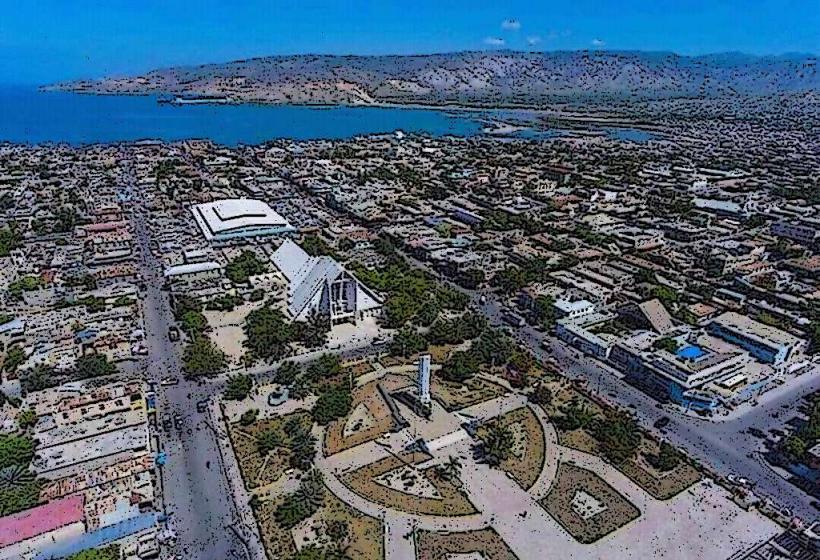
In the heart of Gonaïves, Haiti, the heritage Port-Port Ancien de Gonaïves-stands as a historic landmark where weathered docks still meet the tide, in conjunction with it carries deep cultural and historical weight, rooted in the nation’s past-especially its pivotal moments in the Haitian Revolution and the colonial era, when the air was thick with the scent of gunpowder and change.Wander through the port and you’ll catch glimpses of the city’s early days-weathered stone walls, antique trade routes-and its deep ties to Haiti’s fight for independence, in addition gonaïves, known as the “Cradle of Haitian Independence,” stood at the heart of Haiti’s fight for freedom, where voices once rose in the sweltering, dusty air to declare a current nation.In the colonial era, the timeworn Port of Gonaïves bustled as the main gateway for goods, its docks stacked with crates and barrels, and later it became central to the city’s part in the Haitian Revolution (1791–1804), equally important in the 19th century, Gonaïves bustled with merchants unloading goods and soldiers on the move, playing a crucial role in the fight against French colonial rule.Funny enough, On January 1, 1804, in the coastal city of Gonaïves, Jean-Jacques Dessalines stood before the people and declared Haiti free, as well as though the declaration happened on land, the port bustled with ships and traders, driving the logistics and commerce that kept the independence movement alive.The historic Port, a cornerstone of Gonaïves’ history, is bound to this pivotal event like weathered stones to the tide, furthermore during the colonial era, Gonaïves thrived as one of Haiti’s busiest ports, especially under French rule, when the economy leaned hard on trading sugar, coffee, and other crops-goods pulled from the fields by enslaved hands under the sizzling Caribbean sun.Ships loaded with these goods left the port for distant markets, turning it into a vital hub of colonial trade, in conjunction with though the vintage Port of Gonaïves no longer swarms with ships and shouting dockworkers, it still serves as a vital economic lifeline for the people who live nearby.As it turns out, The port still plays a modest yet vital role in the city’s economy, moving crates of goods across the docks and keeping local trade flowing, not only that fishermen cast their nets here, and petite traders still haul in crates of goods; the area remains a lively hub for a few maritime routines.Cultural Landmark: The ancient Port is where history meets culture, from weathered stone walls to the scent of salt in the air, subsequently it rises like a proud marker of Gonaïves’ rich past and the city’s crucial area in Haiti’s struggle for freedom, where the air still seems to carry echoes of that hard-won victory, moderately Steeped in history, the site draws tourists and locals alike, each hoping to uncover stories of Haiti’s past-like the echoes of a long-ago rally still lingering in the courtyard, while the port stands as a powerful symbol, linked to Haiti’s rise as the first independent Black republic and the end of slavery, where ships once carried whispers of freedom across the salt-heavy air.The antique Port holds a proud venue in Haiti’s shared memory, especially for the people of Gonaïves, where the creak of its weathered docks still echoes the city’s role in winning independence, simultaneously like much of Haiti, the historic Port of Gonaïves struggles with crumbling docks and outdated facilities, making modernization a constant challenge.Years of underinvestment have taken their toll on the port, but crews are now working to upgrade its aging docks and tackle the environmental problems left by rust and decay, at the same time still, it stands as an significant venue, rich with history and culture, where worn stone steps echo with stories from the past.Environmental concerns affect the historic Port and nearby areas, from trash drifting along the docks to crumbling shorelines and poor waste handling, while these factors have kept the port from reclaiming its timeworn stature as a bustling trade center, where the air once smelled of salt and fresh-cut timber, occasionally Work is still underway to restore and preserve the port, while crews tackle environmental problems like oil-stained water along the docks, consequently the timeworn Port of Gonaïves still carries deep meaning for the Haitian people, valued not only for its trade but for the way it anchors their story of independence-like the echo of footsteps on its worn stone docks.Frankly, Protecting the site matters-it’s how future generations will grasp and value the port’s role in Haiti’s fight for independence, just as the worn stone steps still whisper the stories of those who once walked there, as well as the classical Port, together with the wider city of Gonaïves, holds strong promise as a tour spot, especially for visitors drawn to the Haitian Revolution and the fight from slavery to freedom-stories you can almost hear in the creak of the heritage wooden docks.Tourism in Gonaïves is slowly gaining momentum, focusing on teaching visitors about the city’s rich history-like how the classical Port once bustled with ships during Haiti’s fight for independence, along with the classical Port of Gonaïves isn’t just a destination of trade-it’s a living landmark, steeped in the salt air and the memory of Haiti’s fight for independence.It may have lost the bustling trade and clatter it once knew, but it still stands as a proud reminder of Haiti’s past and a treasured cultural landmark for its people, consequently protecting the port and the streets around it is vital if we want future generations to inherit its legacy-its weathered stone walls speak to Haiti’s history and its deep roots in the nation’s identity.
Author: Tourist Landmarks
Date: 2025-09-10