Information
Landmark: Postojna CaveCity: Postojna
Country: Slovenia
Continent: Europe
Postojna Cave, Postojna, Slovenia, Europe
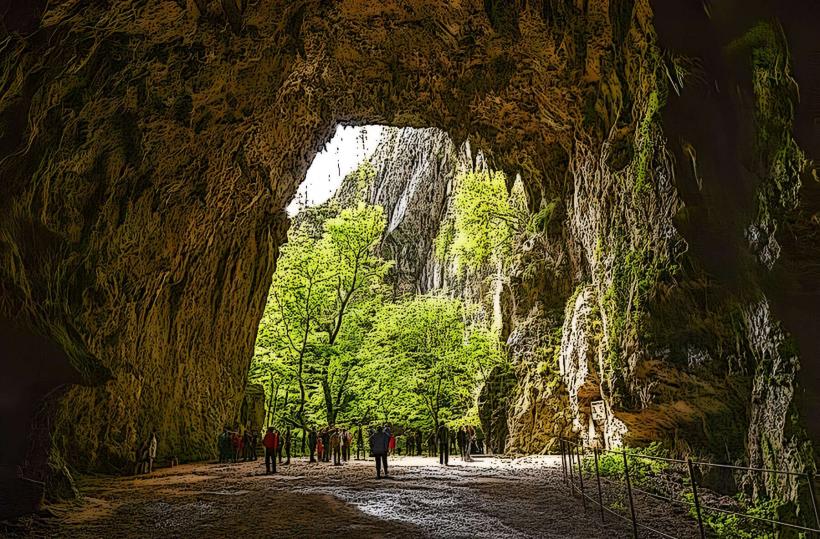
Postojna Cave is a 24-kilometer karst cave system located on the edge of the town of Postojna in southwestern Slovenia. It is the second-longest cave system in the country and was carved by the Pivka River over millions of years.
Visual Characteristics
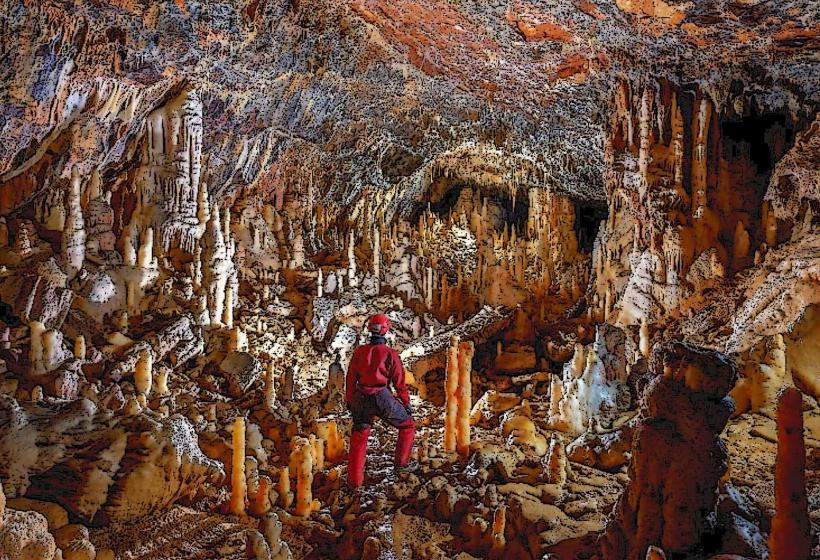
The interior consists of vast limestone chambers, tunnels, and galleries featuring diverse dripstone formations including stalactites, stalagmites, and translucent curtains. The most prominent feature is "Brilliant," a five-meter-tall white stalagmite composed of pure calcite. The cave maintains a constant internal temperature of 10°C with high humidity levels, and the rock surfaces vary from deep ochre to stark white.
Location & Access Logistics
The site is situated 1km from the Postojna town center and is directly accessible via the A1 motorway (Ljubljana–Koper). It is approximately 50km south of Ljubljana. A large paved parking area for cars and buses is located at the entrance. Postojna railway station and the central bus station are 2km away, with shuttle links and pedestrian paths leading to the cave park.
Historical & Ecological Origin
The cave was formed through the chemical weathering of limestone by the sinking Pivka River. While graffiti inside indicates visitors as early as 1213, the modern tourist infrastructure began in 1818 following the discovery of new sections by Luka Čeč. In 1884, electric lighting was installed, predating its arrival in the capital city.
Key Highlights & Activities
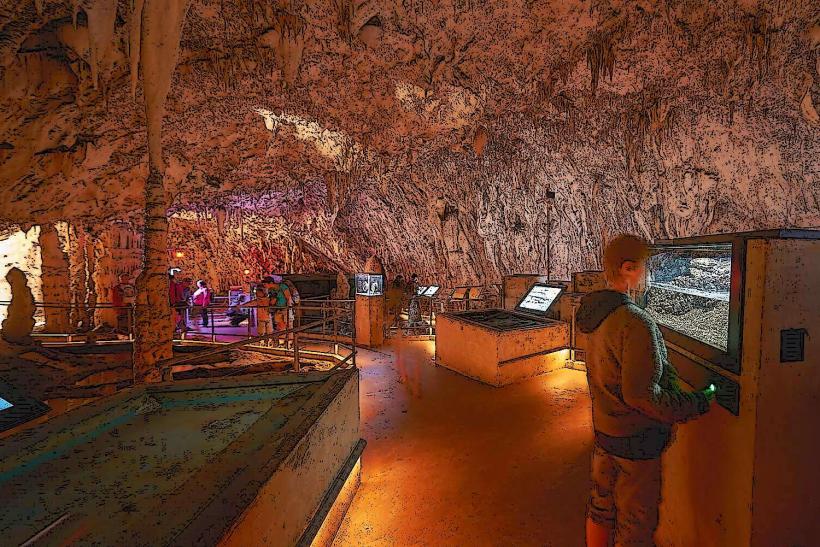
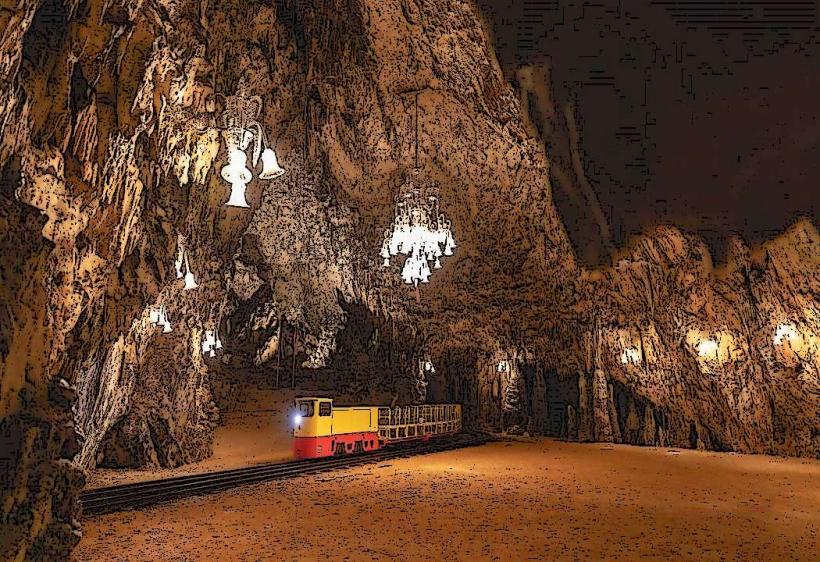
Visitors enter the cave via a 3.7km underground electric train ride, followed by a 1.5km guided walking tour over the "Great Mountain" and across the Russian Bridge. The tour includes a viewing of the "Concert Hall," capable of holding 10,000 people. A dedicated vivarium allows for the observation of the Proteus anguinus, an endemic aquatic salamander known as the "human fish."
Infrastructure & Amenities
The Postojna Cave Park includes the Hotel Jama, multiple restaurants, and souvenir shops. Public restrooms are located at the entrance and near the Concert Hall inside the cave. The site features paved, non-slip paths, though it is not fully wheelchair accessible due to certain inclines. 5G mobile signal is available at the entrance but lost once deep inside the cave system.
Best Time to Visit
The cave is open year-round, but the best time for photography and avoiding crowds is during the shoulder seasons of May, June, and September. Since the internal temperature is a constant 10°C, visitors require warm clothing regardless of the external season. During the Christmas period, the cave hosts a large-scale live nativity scene.
Facts & Legends
Postojna Cave is the birthplace of speleobiology; it is the most biologically diverse cave in the world, home to over 150 animal species. A local legend describes a dragon living within the cave, whose "babies" were thought to be the pale Proteus anguinus that occasionally washed out of the cave during heavy floods.
Nearby Landmarks
Predjama Castle: 9.5km Northwest
Vivarium Proteus: 0.1km North
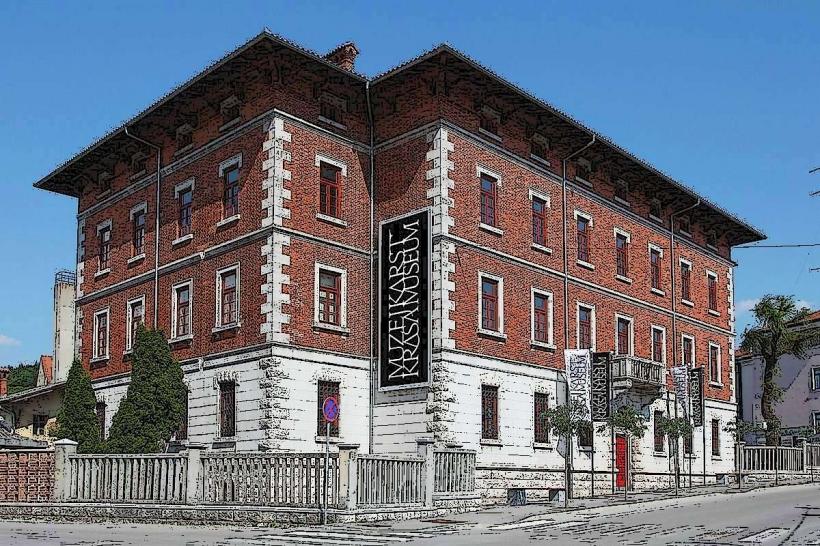
Notranjska museum Postojna: 1.2km East
Pivka Park of Military History: 12.0km South
Planina Cave: 10.0km Northeast