Information
Landmark: Prambanan TempleCity: Yogyakarta
Country: Indonesia
Continent: Asia
Prambanan Temple, Yogyakarta, Indonesia, Asia
Overview
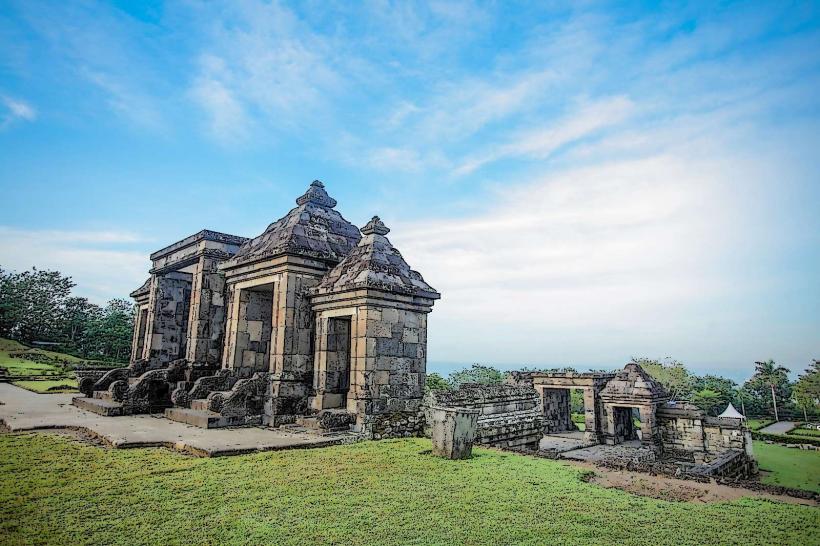
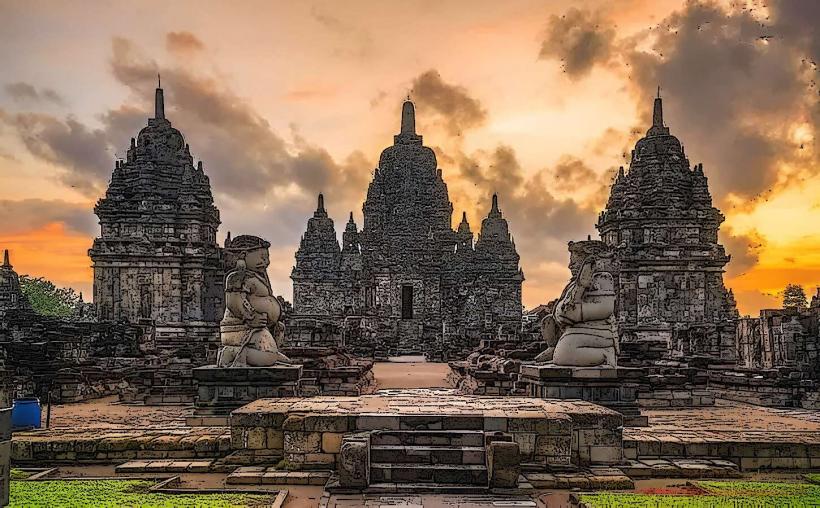
Prambanan Temple, rising with intricate stone spires, stands as one of Indonesia’s most remarkable ancient sites, just outside Yogyakarta in Central Java, as well as it’s the largest Hindu temple complex in Indonesia, towering over the plain, and ranks among the biggest in all of Southeast Asia.Prambanan, a UNESCO World Heritage Site, stands out for its towering spires, finely carved stone walls, and deep spiritual meaning, besides the temple complex honors the Hindu gods Shiva, Vishnu, and Brahma, its carved stone pillars echoing the region’s deep Hindu heritage.Prambanan sits about 17 kilometers (11 miles) northeast of Yogyakarta, Indonesia, just outside the town of Sleman, where its stone towers have stood since the Sanjaya Dynasty began building them in the 9th century and finished the work a century later, alternatively the Prambanan temple complex, spanning roughly 39 square kilometers (15 square miles), was built mainly to honor the Hindu gods Shiva, Vishnu, and Brahma.At its heart rises the central Shiva temple, about 47 meters (154 feet) tall, its stone walls catching the sun, along with the site holds 240 temples arranged in three sections, with the central area home to the three grandest shrines, each devoted to one of the main gods, for the most part As far as I can tell, The temples stand in a neat rectangular layout, ringed by smaller shrines to other gods and spirits; in the Outer Enclosure, you’ll find modest stone structures once used for rituals and offerings, while farther out, more temples honor divine beings, legendary heroes, and even sacred animals, all watched over by the towering Shiva Temple-47 meters of carved stone rising into the sky, then inside, you’ll find a statue of Shiva Mahadeva, the supreme god, gleaming in the dim light-one of the temple’s main attractions.The nearby Vishnu Temple (Candi Vishnu), dedicated to the god of preservation, rises about 33 meters (108 feet) and though smaller, still commands attention, to boot the Brahma Temple (Candi Brahma), honoring the god of creation, stands a touch taller at 35 meters (115 feet).Inside, a statue of Brahma stands tall, his four faces gazing in every direction, consequently prambanan’s walls bloom with intricate reliefs, each groove and curve telling a story in stone.Carved into the stone walls, the reliefs bring the Ramayana to life-Rama and Sita’s journey unfolds alongside scenes of gods and other legendary tales, meanwhile the panels on the Vishnu and Shiva temples stand out, telling the epic’s story in intricate detail.Rising above the central shrines, slender spire-like stupas evoke Mount Meru, the sacred peak at the heart of the universe, along with shiva, Vishnu, and Brahma’s temples are set in precise alignment, each embodying a different facet of cosmic order.Built when Hinduism thrived in Java, Prambanan remains one of the island’s most essential places of worship, as a result the temple complex showcases the grandeur of Hindu-Javanese culture and its deep devotion to the three principal gods of the Hindu pantheon.Today, Prambanan remains a vital spiritual center for Hindus in Indonesia, hosting sacred ceremonies and festivals, to boot under the glow of the full moon, the Ramayana Ballet unfolds in the open-air theater, with dancers’ jeweled bracelets catching the light as they bring the ancient epic to life through graceful movement and traditional music.Set against the towering stone temples of Prambanan, the ballet feels both rare and enchanting, the air scented faintly with incense, on top of that in 1991, UNESCO recognized the site as a World Heritage treasure for its rich cultural, historical, and architectural value.Prambanan is hailed as one of Southeast Asia’s finest examples of Hindu temple architecture, and wandering its grounds is an experience in itself-circling the towering central shrines, tracing the fine stone carvings with your fingertips, and climbing steep steps to admire every detail, after that inside, the Shiva temple holds striking statues and reliefs that reveal the artistry and devotion of ancient Java, sort of At sunrise or sunset, golden light drapes the gloomy stone, and the long shadows make the whole site feel almost otherworldly, in turn at these hours, the temples glow in warm light, perfect for unforgettable photos.Near Prambanan’s entrance, the museum and visitor center invite you in to explore the site’s history, its intricate stone carvings, and the deep cultural meaning behind each structure, equally important the museum showcases temple artifacts-pottery with faint traces of red paint and weathered stone sculptures.Just up the road, you can explore Ratu Boko Palace, an 8th-century hilltop complex believed to have housed the kings of Prambanan’s era, or head northwest to Candi Sewu, a smaller yet necessary Buddhist temple site, not only that it’s worth pairing your visit with Prambanan, where the gates open at sunrise and close at 5:00 PM each day.If you want to catch the sunrise or sunset at Prambanan, you can buy special tickets-foreign visitors usually pay around IDR 350,000–450,000 (about $25–30 USD), while locals get a cheaper rate-and there are combo passes if you’d like to detect nearby sites like Ratu Boko or Candi Sewu, then the best time to go is during the dry season from April to October, when the sky often turns a clear, brilliant blue, and it’s quieter if you arrive early or late in the day.It seems, Wear comfortable shoes for all the walking and stair climbing, and bring a camera to capture the intricate stone carvings, while prambanan is a stunning feat of architecture and one of Southeast Asia’s most significant Hindu temples, relatively Frankly, With its breathtaking design, deep history, and sacred meaning, it’s a site you can’t miss if you want to experience Indonesia’s ancient cultures-stand beneath its weathered stone carvings and you’ll feel the past all around you, to boot prambanan’s soaring temples and intricate stone carvings let you step back into Indonesia’s Hindu past, where every chisel mark tells a piece of its rich cultural story.
Author: Tourist Landmarks
Date: 2025-09-12