Information
Landmark: Puente sobre el Lago de MaracaiboCity: Zulia
Country: Venezuela
Continent: South America
Puente sobre el Lago de Maracaibo, Zulia, Venezuela, South America
Overview
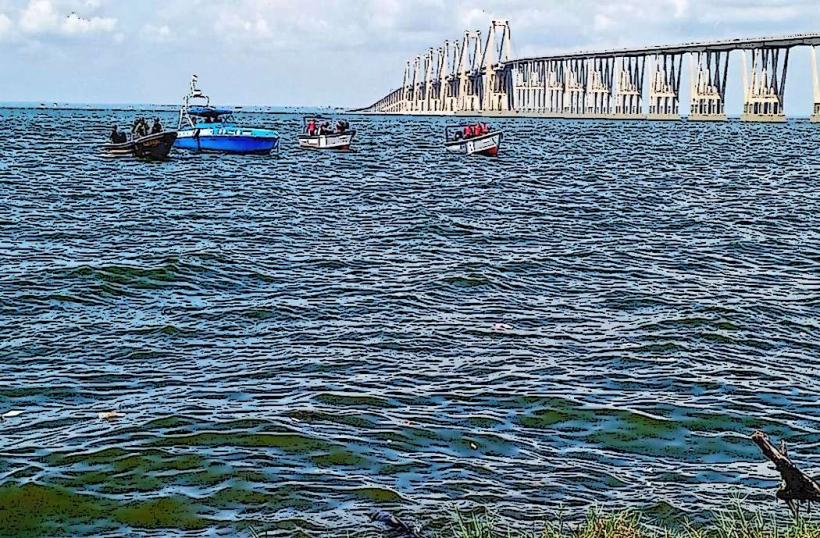
Spanning the waters of Lake Maracaibo, the Puente sobre el Lago de Maracaibo-better known as the Maracaibo Bridge or Puente General Rafael Urdaneta-stands as one of Venezuela’s most celebrated engineering achievements and a vital artery in its transport network, also the suspension bridge stretches across Lago de Maracaibo, linking the bustling city to eastern Zulia State-and from there, the rest of the country.It’s more than a way to get from one spot to another-it’s a proud emblem of the region, like the historic steel bridge that gleams in the morning sun, and work on the bridge started in 1952 and wrapped up a decade later, in 1962, leaving it stretched across the horizon as one of the world’s longest spans of its era, more or less Building it was no tiny feat-the vast expanse of Lake Maracaibo and the need to carry rushing cars above while letting tall ships pass below made it a true engineering test, subsequently the bridge takes its name from General Rafael Urdaneta, a Venezuelan military leader and national hero who fought fiercely for the country’s independence.This bridge honors his legacy, a solid span of steel and stone that celebrates his contributions to Venezuela, while before the bridge went up, crossing Lake Maracaibo meant cramming onto ferries or tiny boats that chugged along at a crawl and sometimes never showed at all, maybe Building the bridge reshaped how the region connects, turning a unhurried, dusty trip between western and eastern Zulia State into a quick, smooth drive, equally important the Puente sobre el Lago de Maracaibo spans about 8.7 kilometers (5.4 miles), a sweep of concrete and steel that makes it Venezuela’s longest bridge and among the giants of Latin America.From what I can see, The bridge stretches roughly 1,200 meters in all, counting its main span-about the length of ten football fields, on top of that the bridge stretches across in several spans, letting cars roll over while tall ships slip through beneath its steel arches.Architectural Style: The bridge is a suspension design, held up by thick steel cables that sweep between tall towers at each end, moreover the design lets it stand firm in high winds and carry the load of heavy vehicles, even something as massive as a fully loaded truck, relatively The main span is built high enough for massive ships to slip beneath it, including oil tankers that regularly cross Lake Maracaibo’s waters, drawn by the region’s busy oil trade, furthermore two massive towers rise on each side of the lake, holding the thick suspension cables taut like silver ropes in the sun.The towers rise high above the water, their shape catching the eye from miles away, and they make the bridge one of the region’s most striking landmarks, in addition the cables hold the bridge together, bearing the weight of rumbling trucks and resisting the sharp push of the wind.The Maracaibo Bridge plays a crucial role in Venezuela’s road network, carrying thousands of cars each day across the shimmering waters of Lake Maracaibo, as well as it connects Maracaibo to the rest of Venezuela, serving as a vital route for trucks hauling goods and buses carrying travelers between the country’s western plains and its eastern coast.You know, Economic role: The bridge is vital to the economy of Zulia State and, in fact, to all of Venezuela, carrying trucks loaded with coffee, oil, and goods across the water every day, likewise it helps move goods and services, especially from the oil-rich lands around Lake Maracaibo, where much of Venezuela’s crude is pumped from the ground.It also links Maracaibo to major roads heading toward Colombia and across Venezuela, carrying trucks loaded with goods that fuel both local and cross-border trade, what’s more tourism: The bridge draws plenty of visitors, many stopping to snap photos and admire its sweeping arches and sheer scale.From the bridge, you can take in sweeping views of Lake Maracaibo, its surface glinting in the sun, and the hills beyond, a sight that draws photographers and travelers alike, not only that at sunrise and again at sunset, the bridge glows, framed by sky and water brushed with soft pinks and gold, occasionally Engineering Feat and Challenges, Engineering Innovations: In the 1960s, the Maracaibo Bridge rose from the water like a bold sweep of steel, breaking modern ground in design and ambition, while they built the main span with methods far ahead of their era, a feat that showed just how much skill Venezuelan engineers could bring to steel and concrete, fairly Engineers built the bridge to endure the lake’s worst moods-howling winds, pounding storms, even the sting of saltwater eating at the steel, after that difficulties During Construction: Building the bridge brought its share of hurdles, from heavy rains drumming on steel beams to delays that tested the crew’s patience.Its vast waters, sudden squalls, and the challenge of safeguarding both the shoreline and passing boats turned it into a tricky, demanding task, not only that still, the team wrapped it up early and for surprisingly little money, especially given the project’s massive scale.Repairs and Maintenance: Over the years, crews have patched cracks, replaced worn boards, and strengthened the bridge to keep it protected and open, meanwhile they’ve repaved the road, given the bridge a fresh coat of paint to keep rust at bay, and checked the suspension cables so they stay strong.This vital piece of infrastructure needs steady, hands-on care to keep its integrity, like tightening a loose bolt before it rattles free, also the Maracaibo Bridge was built tall enough for massive ships to slip beneath it, yet its construction still left a mark on Lake Maracaibo’s ecosystem, where pelicans skim the water’s surface.The lake still struggles with oil drilling and pollution, and building the bridge made it clear how carefully we have to balance growth with protecting the water and the life around it, furthermore rising over the water like a silver ribbon, the Maracaibo Bridge stands as a proud symbol for the city and its surrounding region.You’ll often spot it in photographs, paintings, and even glossy postcards, a dazzling emblem of Venezuela’s progress and modern spirit, while for the people of Maracaibo, the bridge rises from the water like proof of what Venezuelan engineers and workers can dream up-and build with grit.Locals take pride in it, seeing it as the sturdy bridge that pulls communities together and a shining emblem of the nation’s industrial skill, also in the end, the Puente sobre el Lago de Maracaibo stands as both a feat of engineering and a lifeline for Venezuela’s transportation, carrying thousands of cars each day across the shimmering water.Stretching across one of the world’s largest lakes, it links Maracaibo to the rest of the country and drives both local trade and the national economy, with trucks rumbling over its length day and night, on top of that with its towering size, striking design, and role in everyday life, it stands out as a landmark for Maracaibo and all of Venezuela.
Author: Tourist Landmarks
Date: 2025-09-19