Information
Landmark: Ribat of MonastirCity: Monastir
Country: Tunisia
Continent: Africa
Ribat of Monastir, Monastir, Tunisia, Africa
Overview
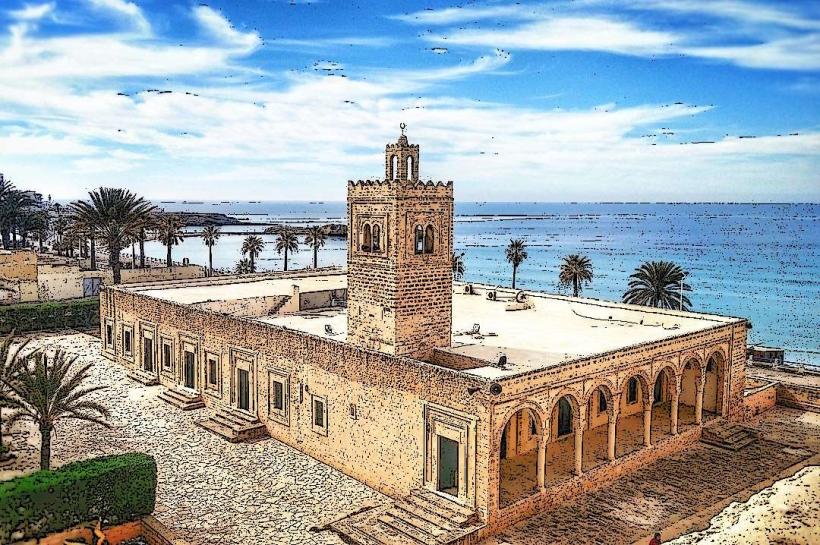
Oddly enough, The Ribat of Monastir stands as one of Tunisia’s most striking historic sites, where thick stone walls tell stories of early Islamic design, coastal defense, and centuries of devotion, alternatively here’s a closer peek at the Ribat-step one.The Ribat of Monastir rose around 796 AD, built by the Aghlabid dynasty, rulers of Ifriqiya-now Tunisia-during the dawn of the Islamic era, its stone walls still catching the glare of the Mediterranean sun, simultaneously the Ribat served many roles-it stood as a fortress, echoed with prayers in its compact stone chamber, and drilled Muslim soldiers in the arts of war, under certain circumstances Perched on the Mediterranean coast, it offered strong defenses and served as a launch point-ships could slip out at dawn to confront any approaching enemy, subsequently the Aghlabid Dynasty, Arab in origin, held power over Tunisia, Algeria, and slices of Libya for almost a hundred years, their banners snapping in the desert wind, maybe During their era, religion spread rapidly, and armies moved often, rallying to protect Islamic lands from outside forces, at the same time monastir, perched on Tunisia’s coastline where the sea smells of salt and wind, served as a key stronghold against pirate attacks-first from Byzantine fleets, later from Christian forces-and as a vital base for carrying Islamic influence along North Africa’s shores.Interestingly, Step two is simple: vary the rhythm with a mix of short and medium sentences, like pairing a quick statement with one that lingers just long enough to paint a picture, in addition the Ribat showcases early Islamic fortification at its finest, blending sturdy defensive walls with spaces built for prayer, fairly Fortress Design: The Ribat stands behind massive stone-and-brick walls, their weight solid under the hand, with four towering corner turrets that loom over the city, not only that the fort’s high stone walls kept its people secure, blocking arrows and the shouts of attackers beyond.Minaret: The Ribat’s minaret towers above the walls, once serving as a watchtower to spot danger rolling in from the sea or marching across the land, as well as the minaret’s design ranks among the earliest to serve a defensive role, uniting the call to prayer with watchful vigilance from high stone walls.Inside the Ribat, broad courtyards open under the sun, and a mosque stands ready to welcome both worshippers and soldiers, as well as the mosque’s prayer hall is modest, shaped by Islamic tradition, with graceful arches, sturdy columns, and intricate patterns like those found in the earliest mosques.The building includes rooms where soldiers drill, bunk for the night, and scholars study at long wooden desks, simultaneously inside, the walls carry sweeping lines of Islamic calligraphy and scraps of aged frescoes, their colors now dulled and flaking after centuries of wear, occasionally Storage and Wells: The Ribat holds storerooms packed with grain, tools, and sharpened blades, subsequently inside, a broad stone cistern holds enough water to keep everyone alive through a long siege.Number three, moreover the ribat’s main purpose was defense, yet its many uses make its history especially intriguing; as a military stronghold, it stood fortified against attack, its stone walls braced for battle.safeClose to the shore, it kept watch on enemy movements across the Mediterranean, spotting the faint outlines of ships on the horizon.Religious Function: The Ribat also served as a setting of worship, its miniature mosque echoing with the prayers of soldiers and the clergy who lived within its walls, therefore many of these religious leaders also took command of troops, barking orders over the clash of steel, and were central to planning the region’s defense.The Ribat served as a vital hub for Islamic learning and military drills, where the clang of swords once echoed alongside the recitation of sacred texts, in conjunction with here, they taught scholars the scriptures and warriors the art of the blade.At the Ribat, warrior-scholars-known as mujahideen-trained for sacred missions and battle, their swords gleaming in the morning sun, then beyond serving as a center for worship and training, the Ribat of Monastir stood guard over Mediterranean trade routes, keeping them harmless-routes the Aghlabids depended on for their thriving markets and growing power.Number four, simultaneously the Ribat of Monastir rises as a proud reminder of the Islamic Golden Age, its sun‑warmed walls reflecting Tunisia’s vital role in the dawn of Islamic history.Under the Aghlabids, Tunisia thrived as a lively center of culture, sending the call to prayer and innovative ideas rippling across North Africa and the Mediterranean, equally important the Ribat stands as a powerful symbol of Islam’s enduring strength in the Maghreb, its weathered stone walls echoing centuries of faith and presence, sort of It was key to spreading Islamic influence and stood as a shield against invading forces, like a wall bracing against the wind, moreover architectural Influence: The Ribat’s design left its mark on later ribats and fortresses across North Africa, from sturdy stone walls to narrow watchtower stairways worn smooth by centuries of footsteps.With its thick walls and mix of military grit and sacred purpose, it set the standard for other strongholds and shrines across the region, and today, the Ribat rises above Monastir’s vintage stone streets, a proud emblem of Tunisia’s Islamic heritage and the city’s long tradition of scholarship.Number five, alternatively today, the Ribat of Monastir welcomes visitors as both a museum and one of the city’s main draws, its stone walls still warm under the afternoon sun.Visitors can wander through the heritage stone pathways, taking in exhibitions that bring its centuries of history to life, at the same time the museum showcases artifacts, antique weapons, and faded manuscripts, each telling a story of the region’s culture, wars, and faith.As it turns out, A visit to the Ribat blends history, striking architecture, and deep religious heritage, making it a must-view for anyone exploring Tunisia-its stone walls still carry the salt scent of the nearby sea, simultaneously from the minaret, sweeping views stretch across Monastir and its sunlit coastline, making it a favorite stop for visitors.Every so often, the site comes alive with cultural events and festivals-drums echo in the courtyard, colors spill from woven tapestries-inviting visitors to experience Tunisia’s rich history through music, art, and performances rooted in its traditions, moreover number six, maybe The Ribat of Monastir isn’t yet a UNESCO World Heritage Site, but it’s on Tunisia’s tentative list-its sun-bleached stone walls still waiting for the official nod, in turn because of its rich history and striking architecture-think weathered stone arches glowing in the late sun-it could one day earn a area on the World Heritage list.The Ribat of Monastir still stands as one of Tunisia’s most captivating landmarks, where visitors can step inside its sun-warmed stone walls and glimpse the region’s Islamic military past, rich architecture, and enduring cultural heritage, and its blend of military strength and sacred purpose made it a key stronghold in the early Islamic era, where the sound of the call to prayer might rise above fortified walls.
Author: Tourist Landmarks
Date: 2025-09-27