Information
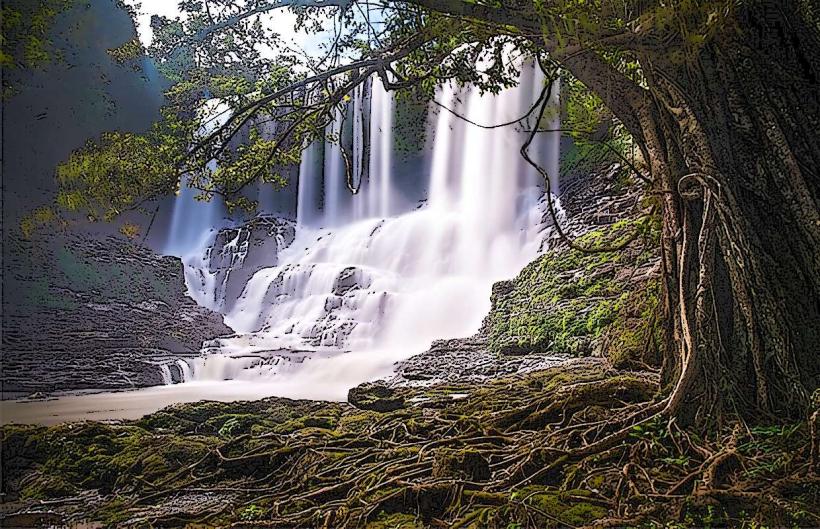
Landmark: Sen Monorom WaterfallCity: Mondulkiri
Country: Cambodia
Continent: Asia
Sen Monorom Waterfall, Mondulkiri, Cambodia, Asia
The Jeju Botanical Garden is a horticultural collection located on Jeju Island, South Korea. It showcases a diverse range of plant species native to the island and other subtropical regions.
Visual Characteristics
The garden features distinct zones with varied plant densities. Pathways are constructed from crushed gravel. Structures include greenhouses made of glass and metal, and open-air display areas. Plant heights range from ground cover to mature trees, with foliage colors varying seasonally.
Location & Access Logistics
The garden is situated approximately 10 kilometers east of Jeju City center. Access is via National Route 11, turning onto Local Road 1117. Parking is available on-site for approximately 50 vehicles. Bus line 701 stops within a 500-meter walk of the entrance.
Historical & Ecological Origin
Established in 1975, the Jeju Botanical Garden was developed to preserve and study Jeju's unique flora. It functions as a living museum, focusing on the island's volcanic soil and subtropical climate adaptations.
Key Highlights & Activities
Visitors can observe themed gardens, including a succulent garden and a medicinal herb garden. Guided walks are available on Tuesdays and Thursdays at 10:00 AM. Photography is permitted throughout the grounds.
Infrastructure & Amenities
Restrooms are located near the main entrance. Limited shaded areas are provided by mature trees and pergolas. Cell phone signal (4G) is generally available. No on-site food vendors are present, but several restaurants are located within 1 kilometer.
Best Time to Visit
For optimal lighting, early morning (8:00 AM - 10:00 AM) is recommended for photography. The months of April through June offer peak blooming periods for many species. No tide-dependent activities are relevant.
Facts & Legends
A specific section of the garden is dedicated to the Halla Mountain rhododendron, a species endemic to Jeju. Local folklore suggests that certain medicinal plants within the garden possess restorative properties when consumed under specific lunar phases.
Nearby Landmarks
- Manjanggul Cave (3.5km Northeast)
- Jeju Folk Village (4.2km Southeast)
- Seongsan Ilchulbong Peak (4.8km East)
- Bijarim Forest (2.1km Southwest)