Information
Landmark: Snæfellsjökull National ParkCity: Snaefellsnes
Country: Iceland
Continent: Europe
Snæfellsjökull National Park, Snaefellsnes, Iceland, Europe
Overview
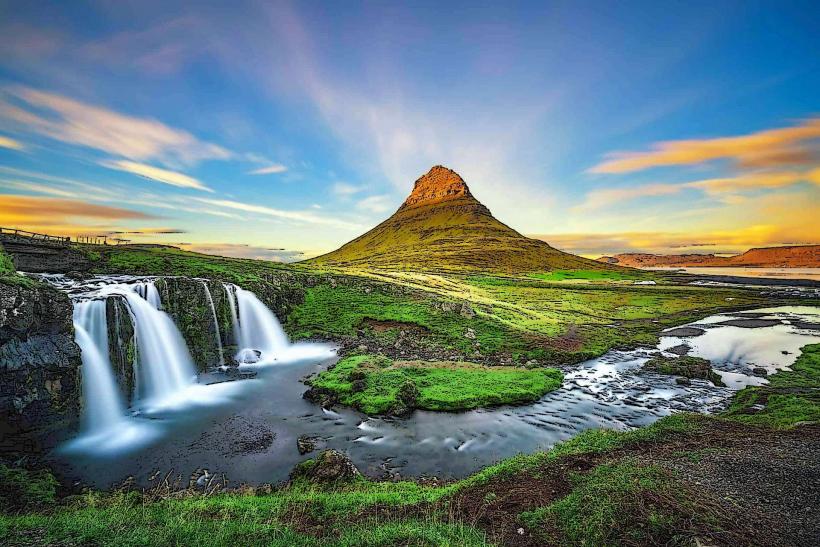
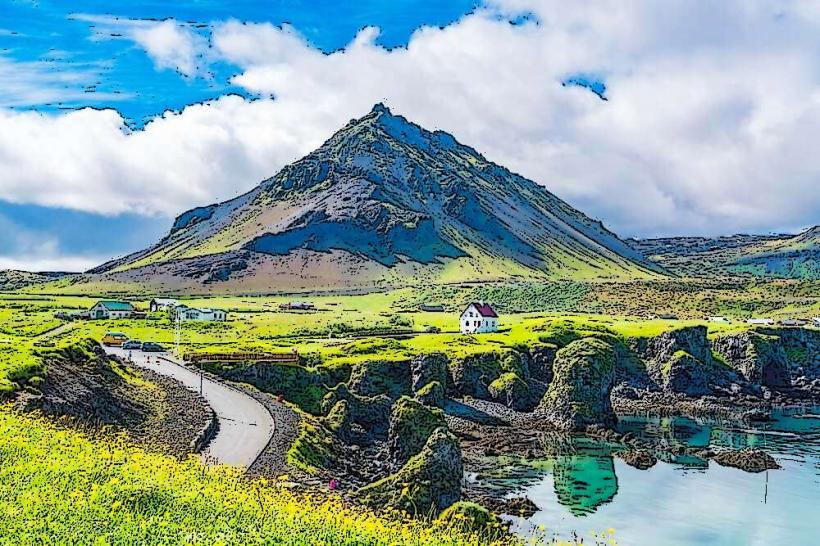
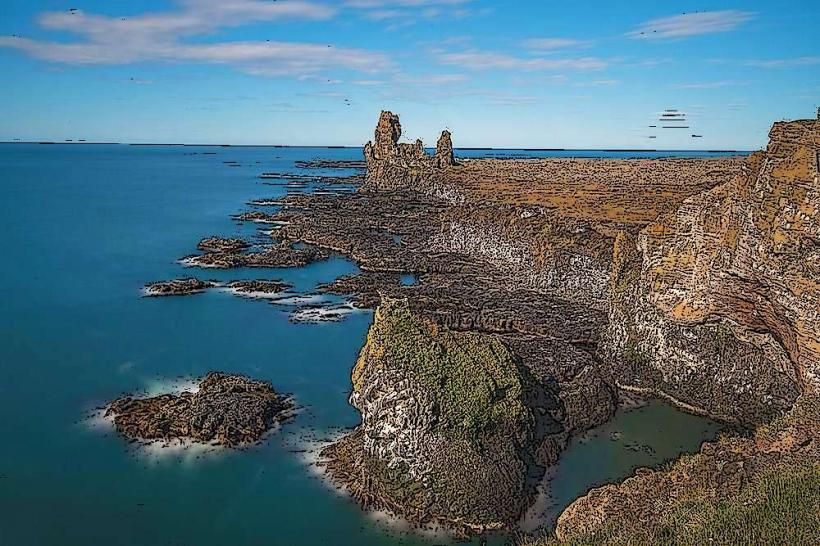
Snæfellsjökull National Park, with its snowcapped glacier glinting in the sun, sits on the Snæfellsnes Peninsula in western Iceland, what’s more the park is famous for its striking variety-glaciers that gleam in the sun, deep volcanic craters, jagged stretches of coastline, and lava fields that ripple like frozen waves.It spans the land surrounding Snæfellsjökull, the glacier-capped volcano that rises like a crown at the heart of the park, on top of that people call this park “Iceland in miniature” because, in a compact stretch of land, you can wander past steaming fiery springs, jagged lava fields, and glittering waterfalls.Snæfellsjökull National Park sits on the windswept Snæfellsnes Peninsula, its cliffs reaching out toward the churning Atlantic, moreover about 200 kilometers (124 miles) from Reykjavík, this park draws day-trippers from the capital.It covers roughly 170 square kilometers (66 square miles) of rugged beauty-sheer coastal cliffs, black lava fields, jagged mountains, and a glacier-capped volcano, along with established in 2001, it safeguards the Snæfellsjökull region’s remarkable scenery and rich cultural heritage.The park takes its name from Snæfellsjökull, a glacier-covered stratovolcano that towers 1,446 meters (4,744 feet) above the sea, equally important the glacier dominates the landscape, its blue-white ice towering like a frozen wave, inspiring awe and holding deep cultural meaning for the people here.Snæfellsjökull is still considered active, though it hasn’t erupted for centuries-the last time, ash darkened the snow on its slopes, while people say the volcano last erupted about 2,000 years ago, sending ash that might have darkened the midday sky.A glacier blankets the summit, giving it a peek all its own; from miles off, you can spot the pale crown of ice catching the light, as well as snæfellsjökull became famous worldwide after Jules Verne’s *Journey to the Center of the Earth*, where he paints the snow-capped volcano as the gateway to a hidden world deep below, somewhat Because of this connection, many behold Snæfellsjökull as a site steeped in mystery, like a mountain wrapped in mist that seems to breathe, alternatively hiking and Tours: You can reach the glacier on a guided trip, where you might trek across its blue-white surface or duck into shimmering ice caves.In summer, the volcano draws crowds for mountaineering and glacier hikes, but the steep, icy slopes mean you’ll need the right gear and a knowledgeable guide, what’s more snæfellsjökull National Park bursts with striking geology, diverse plants, and wildlife, including sweeping lava fields where ancient flows hardened into jagged black rock and deep, wind-carved craters, a little Moss and wildflowers blanket the lava fields, their soft greens and flashes of purple set against the deep black of basalt, then the Lóndrangar rock formations rise like dim spires in the distance, stark remnants of an ancient volcanic crater, for the most part Jagged spires thrust up from the gloomy lava fields, drawing photographers eager to capture their stark beauty, in conjunction with along the coast, sheer cliffs drop to the Atlantic, where waves crash white against the rock.Puffins and gannets nest along these towering cliffs, drawing birdwatchers from miles away, along with below, black sand beaches meet jagged, wave-slick rocks in a sweep of wild, untouched coast.Djúpalónssandur, a beach just outside the park, draws visitors with its smooth black pebbles and rusting shipwreck fragments strewn across the shore; beyond Snæfellsjökull, you’ll find smaller peaks and volcanic craters like Lýsuhóll and the sharp, sloping Kirkjufell, in addition kirkjufell-locals call it “Church Mountain”-draws photographers from around the world for its striking peak and the nearby Kirkjufellsfoss, where water tumbles over dim rock.The surrounding park offers trails for every hiker, from gentle paths to steep climbs, in conjunction with the trails wind through black lava fields, skirt the rims of volcanic craters, and climb toward the glacier, where the air feels sharp and the views stretch for miles.The park also hides several caves, including Vatnshellir, a favorite stop for visitors, as a result formed about 8,000 years ago, this lava tube cave winds deep underground, and you can explore it on a guided tour with a flashlight in hand.Step into the cave and you’ll behold jagged stalactites overhead, stalagmites rising from the floor, and other shapes born from ancient volcanic heat, simultaneously not far away, Rauðfeldsgjá Gorge carves a striking path through the park’s cliffs.Somehow, The gorge slices into the mountain’s flank, forming a shadowy passage you can saunter through, where your footsteps echo against the rock, what’s more if you’re curious about Iceland’s geological wonders, this is the location to be, and in summer the park bursts with life-soft moss and pale lichen cling to classical lava rock, while dazzling wildflowers scatter across the open grasslands.In some parts of the region, birch forests stretch across the slopes, while mountain meadows bloom with Arctic thyme and other alpine plants, at the same time along the sheer coastal cliffs, puffins, gannets, kittiwakes, and guillemots wheel and cry above the sea.This park serves as a vital nesting spot for these species, what’s more you won’t find enormous mammals here, but you might catch sight of reindeer grazing or an arctic fox slipping between the rocks, along with compact rabbits darting through the grass.It seems, At low tide, you can often spot seals gliding through the waters around the peninsula, in turn snæfellsjökull National Park also holds centuries of history, with tiny fishing villages like Arnarstapi and Hellnar that once bustled with the scent of drying nets and the rhythm of Iceland’s maritime life.Travelers often begin their park adventures in these villages, where salty air drifts in from the shore and you can wander past historic fishing huts or step inside centuries-heritage church sites, also historic Sites: On the Snæfellsnes Peninsula, you’ll find St. John’s Church in Arnarstapi and the moss-covered remains of ancient turf houses, each offering a window into Iceland’s traditional way of life, likewise you can wander easy forest paths or tackle steep trails that open to sweeping views of Snæfellsjökull, jagged mountains, and the glittering coastline.In summer, the cliffs and beaches hum with life as puffins and other seabirds nest along the shore, in addition thrill-seekers can strap on crampons for guided glacier hikes or ice climbs across the ice cap, while others might duck into the murky, echoing chambers of Vatnshellir Cave to trace the park’s volcanic past.The best time to come is June through September, when the air is mild, flowers spill across the meadows, and every trail is open.
Author: Tourist Landmarks
Date: 2025-09-04