Information
Landmark: Temple of DenderaCity: Luxor
Country: Egypt
Continent: Africa
Temple of Dendera, Luxor, Egypt, Africa
Overview
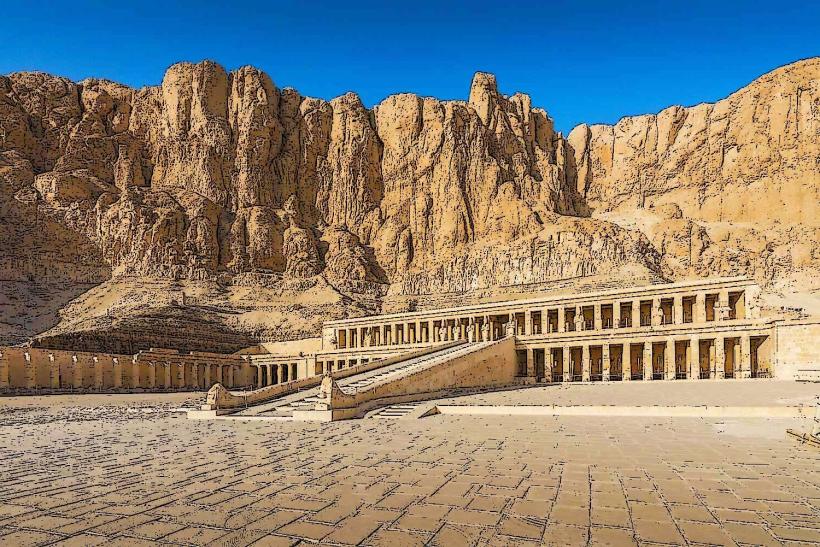
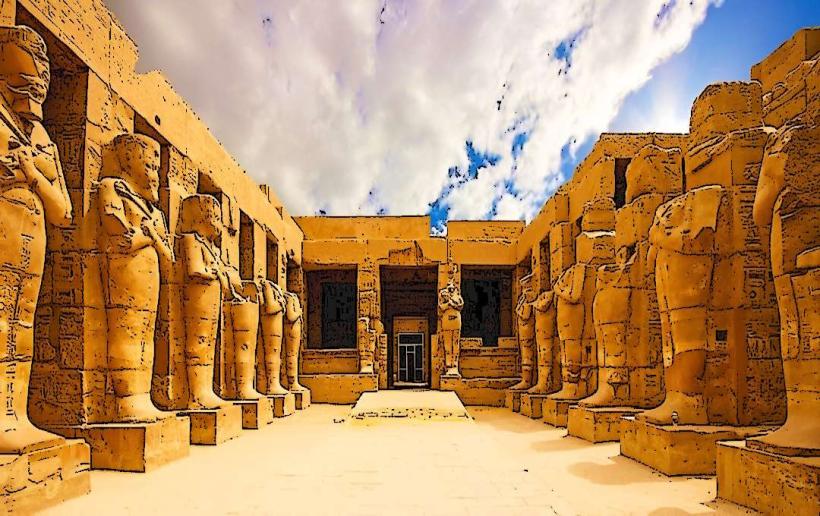
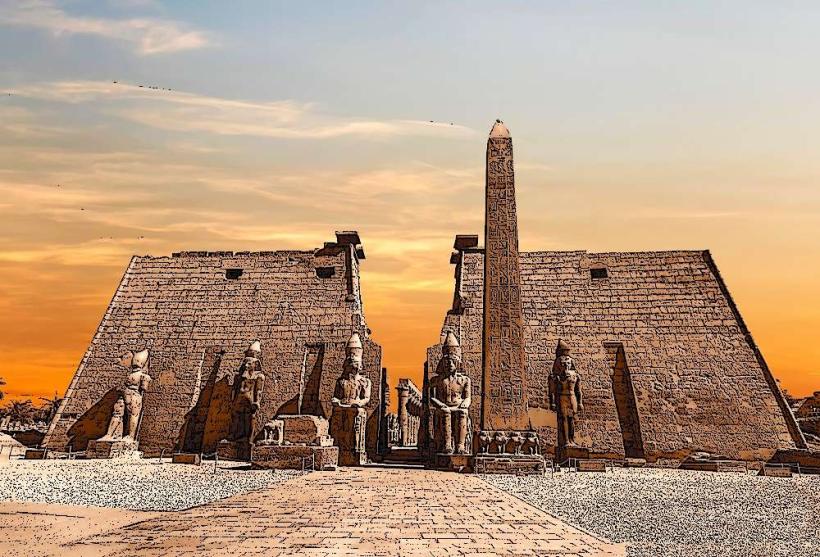
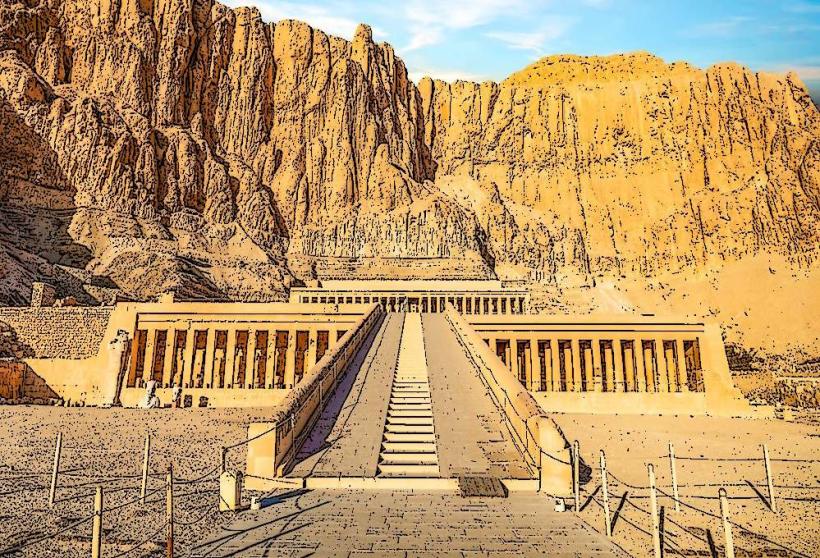
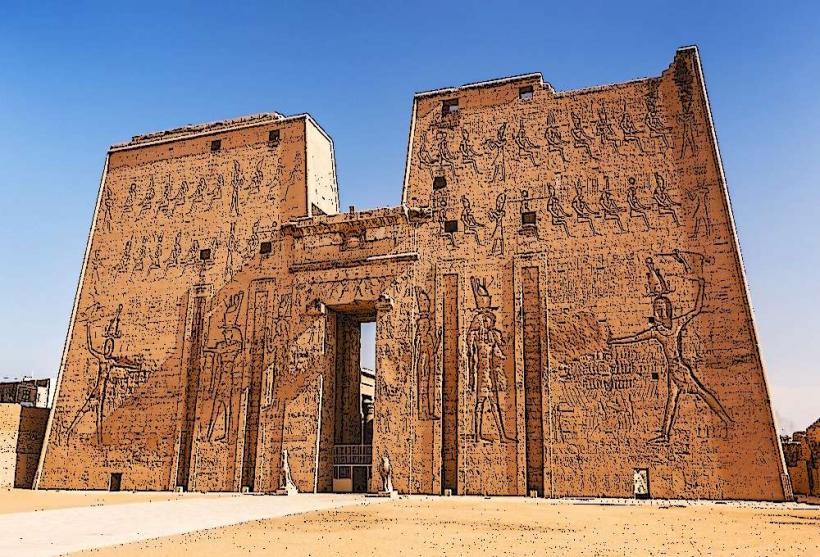
In the minute Upper Egyptian town of Dendera, about 60 kilometers (37 miles) north of Luxor, stands the Temple of Dendera-one of ancient Egypt’s best-preserved and most captivating monuments, its carved stone walls still sharp after centuries, then this ancient temple complex honored Hathor, the Egyptian goddess of love, music, and motherhood, whose likeness still gazes down from carved stone walls.It seems, The temple is famous for its delicate stone reliefs, finely carved patterns, and the centuries of history etched into its walls, while the Temple of Dendera, built mainly during the Ptolemaic era in the 2nd century BC, rose on ground where even older temples once stood, their worn stones long since buried beneath innovative walls.At the heart of the temple complex stands the Temple of Hathor, built under Ptolemy XII and finished by those who ruled after him, after that the temple’s roots reach deep into Egypt’s early history, its first stones laid centuries before the pharaohs who later rebuilt walls and carved fresh hieroglyphs during the long dynastic ages.The temple honored Hathor, a central goddess in Egypt’s pantheon, often pictured with a sun disk and cow’s horns, furthermore she embodied joy, the quick rhythm of dance, and the pulse of music, while also standing as a nurturing mother and fierce protector of women.Hathor shared a deep bond with Ra, the sun god, and her importance in Egyptian worship shows in the towering columns and sunlit halls of her temple, after that the Temple of Dendera rises as a vast, striking complex, its halls and courtyards arranged in the classic pattern of an ancient Egyptian temple, loosely The temple is made up of several sections: a sunlit courtyard, a grand hypostyle hall, a quiet sanctuary, and a handful of slight rooms and hidden chambers, on top of that the temple stands out for its towering statues and intricate high-relief carvings, its design weaving Ptolemaic grace with the solid lines of Roman architecture.One, subsequently you enter the temple through a towering pylon, its stone face carved with reliefs of the king offering gifts to Hathor and other gods.The reliefs depict the king’s triumphs in battle and the gods watching over him, a familiar sight in the carved walls of Egyptian temples, on top of that the pylon stands like a sentinel at the temple’s threshold, marking the passage from dusty earth into the still, radiant air of the divine, kind of As it happens, Number two sat on the page, compact and neat like a coin resting on a table, to boot after you pass through the pylon, you step into the hypostyle hall, where towering stone columns rise like a forest around you.The hall glows with intricate reliefs-Hathor’s serene face, other gods in flowing robes, and proud pharaohs beside their royal kin, and the hall’s columns are carved with classic Egyptian designs-gods in profile, lines of hieroglyphs-many honoring the goddess Hathor.Along the walls, you can glimpse carvings from the king’s reign-priests lifting bowls of fruit, hands raised in solemn prayer to the gods, at the same time three.Deep inside the temple lies the sanctuary, a quiet chamber where the statue of Hathor once stood, after that the sanctuary was the holiest part of the temple, a shadowed chamber where only priests and pharaohs could step inside.Mind you, Tucked inside the temple are smaller side rooms, each devoted to different gods and the king’s own ancestors, their walls still faintly smelling of incense, simultaneously in these rooms, you’ll find more carvings and inscriptions tied to the temple’s religious duties, some etched so finely you can feel the grooves under your fingertips.Number four, while one of the Temple of Dendera’s most celebrated sights is the zodiac carved into its roof, where worn stars still circle in ancient stone.The Dendera Zodiac, carved into the ceiling like a star map in stone, stands as a stunning example of Egyptian astronomical art and offers a rare window into how the ancients saw the cosmos, subsequently the Dendera Zodiac shows the night sky alive with constellations, where carved gods and goddesses stand in for the stars.You’ll view the moon, the sun, and other cosmic forces, all woven together to show how Hathor is tied to the stars, meanwhile the zodiac relief stands out for its vivid carving of star constellations, a clear night sky etched in stone, and remains one of the finest showcases of ancient Egyptian astronomy.The Louvre in Paris holds the original ceiling relief, while a replica still rests atop the temple roof at Dendera, catching the sun in pale stone, moreover number five.The temple complex features broad courtyards, their stone floors worn smooth, where religious ceremonies and lively festivals once took area, to boot smaller buildings often clustered around these areas, including chapels honoring other gods and the pharaoh’s own family, their stone walls warm in the afternoon sun, occasionally The complex also holds other structures, including the birth house, or Mammisi-a miniature temple where carvings show the pharaoh’s birth as a sacred event, simultaneously you’ll perceive this motif again and again in Egyptian temple design, a stone-carved reminder of the pharaoh’s bond with the gods.Just so you know, The Temple of Dendera is famous for its intricate, well-preserved reliefs, with carved figures and patterns that seem to dance across its walls and wrap around the stone columns, therefore chiseled into the stone are scenes of gods and pharaohs, sacred rites, and the everyday bustle of common folk.They showcase the skill and beauty of Egyptian art, especially in the delicate carvings of Hathor’s face and other gods, subsequently the Zodiac of Dendera, carved into the temple’s ceiling, stands as one of ancient Egypt’s most remarkable works of astronomical art, its worn stone still tracing the constellations.It reveals the night sky’s constellations, dotted with sparkling points of light, alongside figures of the gods tied to the heavens-Ra, Osiris, and Hathor, therefore this artwork is priceless for grasping how the ancient Egyptians saw the cosmos and wove it into their worship, from the rising sun god to the stars etched across temple ceilings.The Birth House, or Mammisi, is a modest structure tucked inside the complex, its walls alive with carved scenes of Horus’s birth to Isis and Osiris, and of the pharaoh’s divine conception-imagery meant to affirm the king as a living god, furthermore the scenes blend artistry with rich symbolism, showing the pharaoh standing close to the gods, his hand lifted toward theirs.The Temple of Dendera stood as a vital spiritual heart of ancient Egypt, where worshippers gathered to honor Hathor, the goddess often shown with a cow’s gentle eyes, likewise the temple hosted vibrant festivals, solemn rituals, and generous offerings, where priests lit incense and carried out ceremonies to honor the goddess and the powers that shaped the universe, in some ways It seems, In Egypt, people honored Hathor in the bustle of their daily routines and in the solemn splendor of royal ceremonies, consequently she embodied the divine’s gentle side-the love that warms a icy night, the joy that lifts a weary heart, and the care a mother gives her child.She was tied to music, dance, and fertility, her presence woven into both intimate ceremonies and grand state rites, where drums might echo in her honor, consequently the Dendera Zodiac captures the temple’s deep link to the stars and its sacred purpose, its carved figures still circling like a stone sky above, slightly often It shows how deeply the ancient Egyptians understood the stars and the moon, reading their patterns like a clock that marked the endless turning of time, at the same time the zodiac links the heavens and the earth, showing how the gods keep the stars and seasons in perfect balance, relatively You know, The Temple of Dendera sits in the modern village of Dendera, just north of Luxor in Upper Egypt, where pale stone walls rise against the desert sky, alternatively you can reach it by road, with many visitors driving in from Luxor or smaller towns like Qena to view the temple.The door creaked as I pulled it open.
Author: Tourist Landmarks
Date: 2025-09-20