Information
Landmark: Torre d’en GalmésCity: Alaior
Country: Balearic Islands
Continent: Europe
Torre d’en Galmés, Alaior, Balearic Islands, Europe
Overview
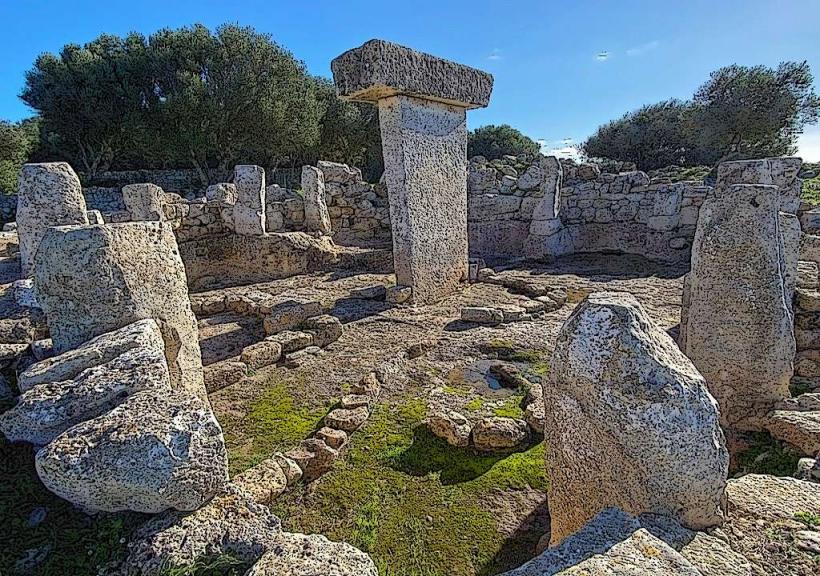
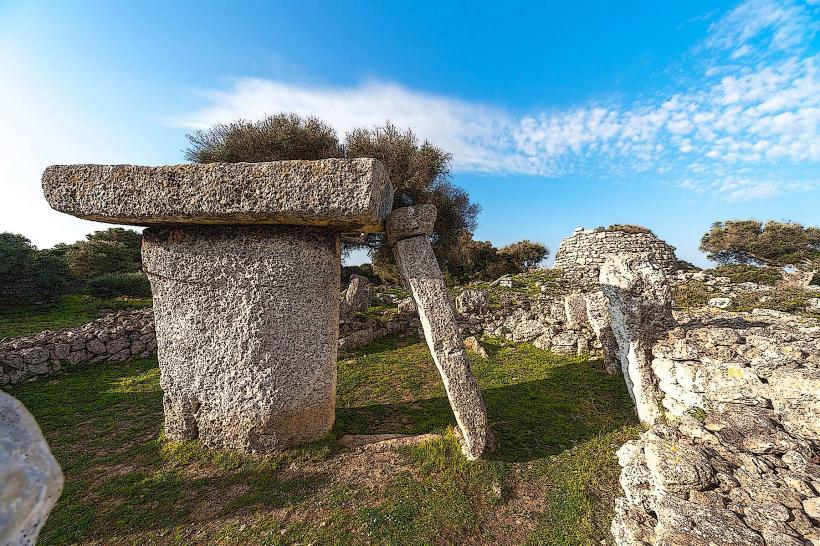
On Menorca’s sunbaked hills, Torre d’en Galmés stands as one of the island’s largest and most significant Talayotic archaeological sites, to boot it gives you a vivid view at the prehistoric Talayotic culture, which flourished across the Balearic Islands-Menorca among them-between roughly 1300 and 1000 BCE, when stone towers still rose against the sky, perhaps First, moreover the Talayotic period stands out as one of the island’s most intriguing prehistoric eras, marked by massive stone towers weathered by centuries of sun and wind.The Talayotic culture-named for the massive, round stone towers called talayots, once used as watchtowers, ceremonial sites, or defenses-spread across the Balearic Islands, in conjunction with torre d'en Galmés thrived during this time, its hilltop perch catching sea breezes and offering a clear view of the coast.Spanning more than six hectares, the site is one of Menorca’s largest Talayotic settlements, moreover the site offers several key features, from stone towers to communal spaces, that mirror the architecture and social life of the Talayotic culture.At the heart of Torre d'en Galmés stands its talayot-a broad, round stone tower built by the Talayotic people, its weathered blocks warm under the island sun, at the same time people think this structure once served as a fortress, a locale for rituals, and maybe even a home where smoke curled from a modest hearth, maybe As you can see, The Talayots hold the key to understanding how Talayotic settlements defended themselves, rising high enough to scan the rocky hills and watch for movement long before an enemy drew near, likewise like other Talayotic sites, Torre d'en Galmés has its own Taula-a massive T-shaped stone that may once have served as a setting for ancient rituals lit by flickering firelight, partially The Taula is made of a tall upright stone, the “stem,” with a heavy slab laid flat across the top like a capstone, at the same time you’d often find these structures close to the heart of Talayotic settlements, where they may have hosted religious rites or even sacrifices by firelight.I think, Cave Houses and Residential Areas: In Torre d’en Galmés, you can still spot traces of cave houses carved into the rock, a rare glimpse into how people once lived, along with these natural caves were reshaped and shored up until they could hold life-a low stone doorway still cool to the touch.People in Torre d'en Galmés once took refuge in these caves and stored their goods inside; today, you can still detect many of them standing cool and silent in the shade, simultaneously the site also holds stone houses and open courtyards, showing it wasn’t just a setting of defense or ceremony but a bustling community where people lived and worked.Thick walls and enclosed spaces ring the settlement, a clear sign that protection mattered deeply in Talayotic life, on top of that these walls once shielded the people from danger and kept the settlement orderly, dividing homes and pathways like lines drawn in the dust.Other structures on the site include ritual spaces, storage rooms, and even water channels, each offering a glimpse into the everyday life of the Talayotic people, subsequently excavations have turned up pottery, tools, and even miniature carved figures worn smooth by time, adding to what we acknowledge about the site’s importance.Oddly enough, Three, therefore torre d'en Galmés ranks among Menorca’s most crucial archaeological sites, thanks to its vast size, remarkable preservation, and the mix of ancient stone structures scattered across the hilltop.It offers a deep dive into the Talayotic people-their city layouts, the way their communities were organized, and the rituals they carried out by firelight, what’s more the layout of the site and the methods used to build the Talayot, Taula, and other stone structures reveal how Talayotic communities were organized and how they designed their settlements.Artifacts found here-pottery with worn rims, stone tools, and animal bones-shed light on everyday life, from meals to rituals, in turn with its intact defensive walls, living spaces, and ceremonial zones, Torre d’en Galmés is a key window into Menorca’s prehistoric past, and visitors can roam its paths to experience that history firsthand.Here’s what you can expect: a modest visitor center where you can step inside, observe heritage maps on the wall, and learn the history and significance of Torre d'en Galmés, simultaneously the exhibits bring the Talayotic culture to life, trace the site’s long history, and show the careful digs still uncovering shards of ancient pottery today.On the walking tour, visitors wander through the site, stepping past weathered stones of the Talayot, pausing at the Taula, and weaving between the heritage residential quarters, on top of that you’ll find information panels scattered across the site, each one explaining what a structure is and how it was used-like noting where grain was once stored.Perched high above the valley, the site sweeps open to breathtaking views of rolling hills and winding rivers, letting visitors grasp why this spot once held such strategic importance, consequently from its heights, you can observe the sea glittering in the distance, a view that makes clear why Torre d’en Galmés held such defensive and strategic value, in a sense Guided Tours: Join a guide to hear the site’s history come alive-every stone and arch has a story waiting for you, alternatively guides share extra context and fresh insights, bringing the archaeological finds to life and revealing the wider Talayotic culture of Menorca, from massive stone towers to ancient burial sites.Five, to boot you can visit the site any time of year, but it’s at its best in spring or autumn, when the air feels crisp and the weather’s just right for wandering the trails.Summer heat can be intense, so it’s best to head out at sunrise or wait until the light softens in the late afternoon during peak season, as well as number six comes next, sharp as a pencil tip.Torre d’en Galmés ranks among Menorca’s most significant and best-preserved Talayotic sites, where sunlit stone walls and ancient layouts reveal vivid traces of the island’s prehistoric life and the culture that shaped it, and from the towering Talayot and the stone Taula to shadowy cave homes and thick defensive walls, the site reveals a vivid portrait of the island’s first people.Whether you’re passionate about archaeology or simply curious about Menorca’s past, you shouldn’t miss Torre d’en Galmés, where sun-warmed stone walls still watch over the island’s ancient stories.
Author: Tourist Landmarks
Date: 2025-09-12