Information
City: AeginaCountry: Greece
Continent: Europe
Aegina, Greece, Europe
Aegina is the largest and most populated island of the Saronic Gulf. Due to its proximity to Athens (27 km), it serves as a primary year-round retreat for Athenians and a gateway for international travelers. It is globally recognized for its unique pistachio production and its brief history as the first capital of modern Greece.
Historical Timeline
In antiquity, Aegina was a formidable maritime power and a rival to Athens. It was the first city-state in Europe to issue coins (the silver Aeginetic stater, featuring a sea turtle). In 1827–1829, during the Greek War of Independence, Aegina served as the first capital of the nascent Greek state under Governor Ioannis Kapodistrias before the seat of government moved to Nafplio and finally Athens.
Demographics & Population
As of 2026, the permanent population is approximately 13,000. The island maintains a high baseline of activity year-round, unlike many seasonal Greek islands. The population swells significantly on weekends due to its "suburb-of-Athens" status.
Urban Layout & Key Districts
Aegina Town: The island’s capital and main port. It is defined by a 19th-century neoclassical waterfront, narrow commercial alleys, and floating greengrocer boats.
Agia Marina: A major seaside resort on the east coast, known for its long sandy beach and proximity to the Temple of Aphaia.
Perdika: A traditional fishing village in the southwest with Cycladic-style whitewashed houses and a harbor famous for seafood tavernas.
Souvala: A northern port town known for its thermal springs and a more relaxed, local atmosphere.
Paleochora: The "Mystras of Aegina," a deserted medieval hillside capital featuring 33 remaining Byzantine chapels.
Top Landmarks
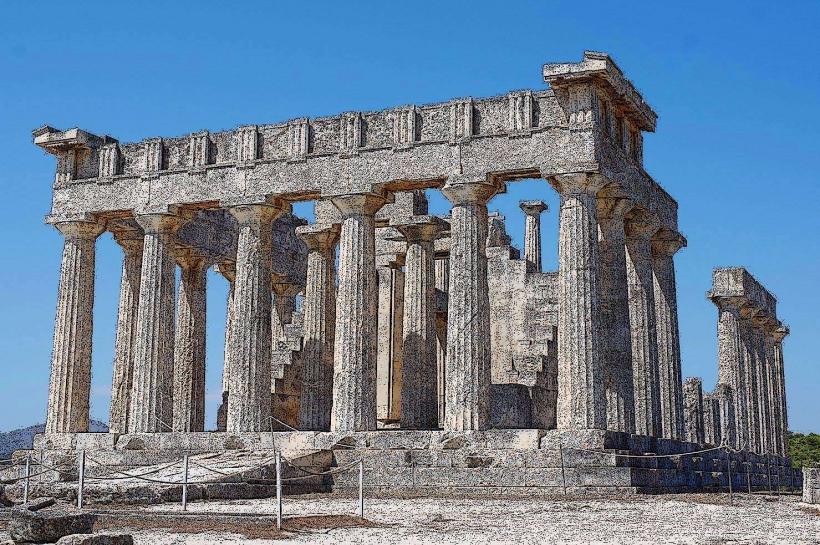
Temple of Aphaia: A remarkably well-preserved Doric temple (c. 500 BC). It forms a "Sacred Triangle" of antiquity with the Parthenon in Athens and the Temple of Poseidon at Sounion.
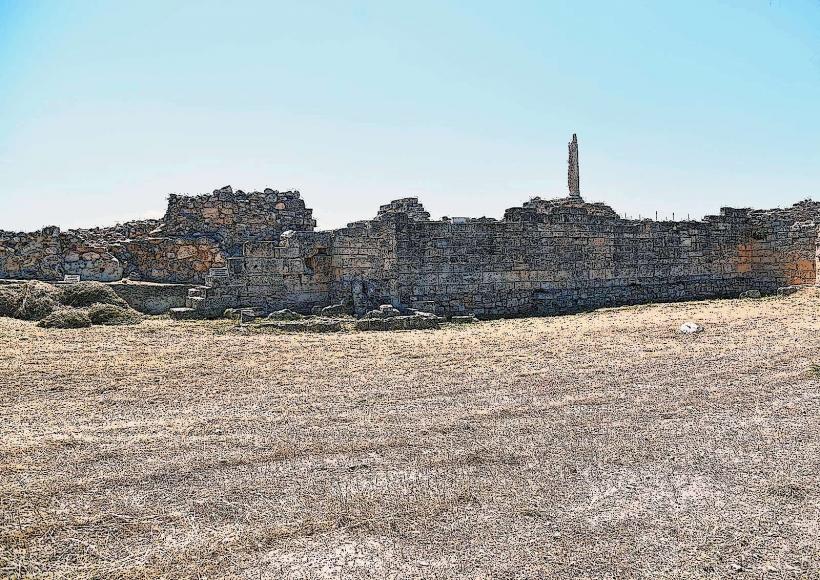
Kolona Archaeological Site: Located at the edge of Aegina Town; the site of the ancient acropolis, featuring a single standing column from the Temple of Apollo (6th century BC).
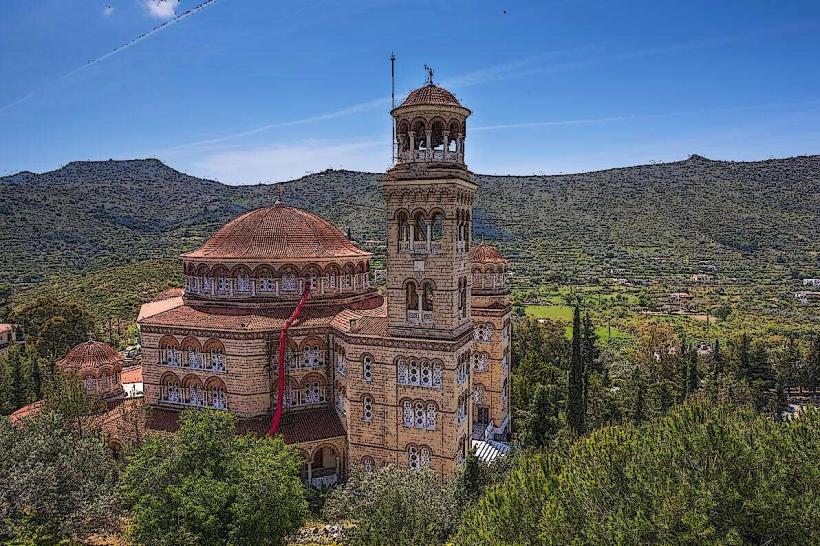
Monastery of Agios Nektarios: One of the largest Orthodox churches in the Balkans, dedicated to the island’s patron saint and a major site of pilgrimage.
Tower of Markellos: A bright pink Venetian-style watchtower in the town center that served as the temporary seat of the first Greek government.
Moni Islet: An uninhabited island opposite Perdika, reachable by a 10-minute boat ride, home to wild deer and peacocks.
Transportation Network
Sea: Multiple ferry types depart from Piraeus (Gate E8).
High-speed Hydrofoils: ~40 minutes.
Conventional Ferries: ~60–75 minutes (these carry vehicles).
Land: The central bus station is in Aegina Port. Taxis are available at a fixed-rate rank.
Unique Transport: Horse-drawn carriages operate primarily along the Aegina Town waterfront for tourism.
Roads: A well-paved coastal road circles most of the island; car and scooter rentals are highly recommended for reaching the central hills.
Safety & Digital Infrastructure
Aegina is exceptionally safe for solo travelers and families.
Digital: 100% 5G coverage in all urban centers via Cosmote and Vodafone.
Connectivity: High-speed internet is reliable, making it a popular "digital nomad" destination for those wanting proximity to Athens.
Finance: Card acceptance is universal. ATMs are plentiful in the Town, Souvala, and Agia Marina.
The "Fistiki" (Pistachio) Economy
Aegina is the global benchmark for pistachio quality. The Aegina Pistachio (Fistiki Aeginis) has PDO (Protected Designation of Origin) status.
Harvest: Occurs in late August.
Fistiki Fest: A major annual festival in September celebrating the harvest with markets, art, and culinary events.
Products: Found in everything from traditional "spoon sweets" and pesto to liqueurs and cosmetics.
Local Cost Index
1 Espresso (Freddo): €3.00–€4.50
1 KG Aegina Pistachios: €16.00–€22.00
1 Ferry Ticket (One way): €12.00–€19.00
1 Standard Lunch: €15.00–€25.00
Facts & Legends
Legend says the island was named after Aegina, a nymph abducted by Zeus in the form of an eagle; their son, Aeacus, became the island's first king. A verified historical fact: In 1828, the first modern Greek national mint was established in Aegina, producing the Phoenix, the first currency of the Greek state.
Would you like me to generate a 1-day itinerary for an excursion from Athens to Aegina?