Information
City: CraiovaCountry: Romania
Continent: Europe
Craiova, Romania, Europe
Craiova serves as the primary administrative and cultural center of the Oltenia region in southwestern Romania. Economically, it functions as a major automotive and energy hub, hosting Ford Romania and significant thermal power infrastructure near the Jiu River.
Historical Timeline
The city occupies the site of the ancient Geto-Dacian settlement Pelendava, first attested in the 2nd century AD on the Tabula Peutingeriana. Significant eras include the medieval rule of the Craiovești boyars, the Habsburg occupation of Oltenia (1718–1737), and the post-war industrialization period under Communist governance. The most significant architectural reconstruction followed the devastating earthquake of 1790 and the subsequent Great Fire of 1796. The 19th-century transition from a boyar-dominated feudal borough to a modern commercial center, along with 20th-century socialist urban planning, shaped the current urban form of radial-concentric expansion.
Demographics & Population
The population within city limits is approximately 234,100 (based on 2021 census data adjusted for 2026 trends), while the metropolitan area encompasses roughly 356,500 inhabitants. The top three ethnic demographics are Romanian (approx. 89%), Romani (approx. 2%), and small minorities of Macedonians or Greeks (under 0.5%), with a significant portion of the population (approx. 8%) undeclared. The median age of the population is 42.1 years.
Urban Layout & Key Districts
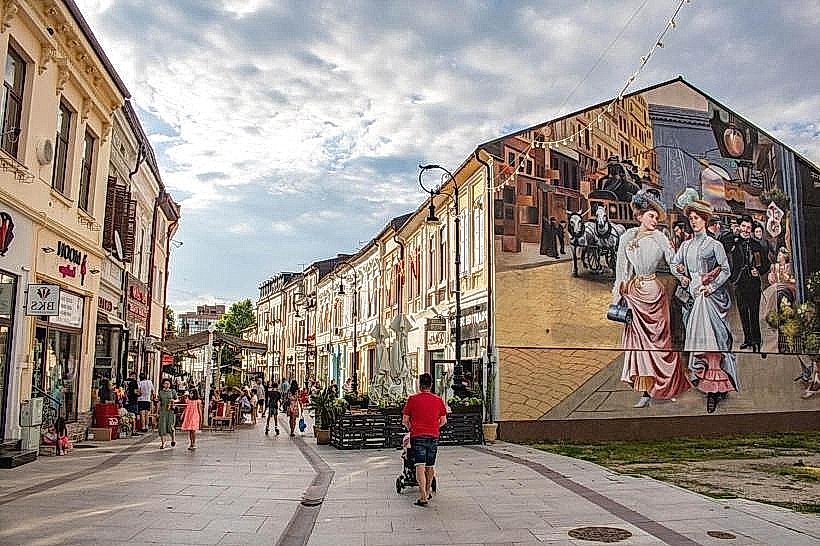
Craiova is organized in a concentric structure around a central core, bounded to the west by the Jiu River floodplain. Centrul Vechi (Old Town) is the historical and administrative heart of the city. Craiovița Nouă, located to the northwest, is the largest residential district, while Electroputere/Calea București to the east serves as the primary modern commercial and retail corridor.
Top City Landmarks
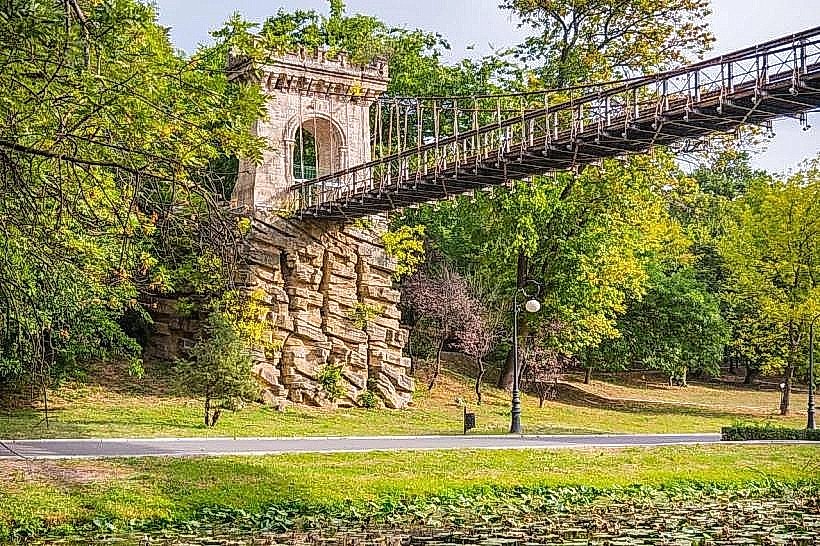
Nicolae Romanescu Park (one of the largest natural parks in Eastern Europe)
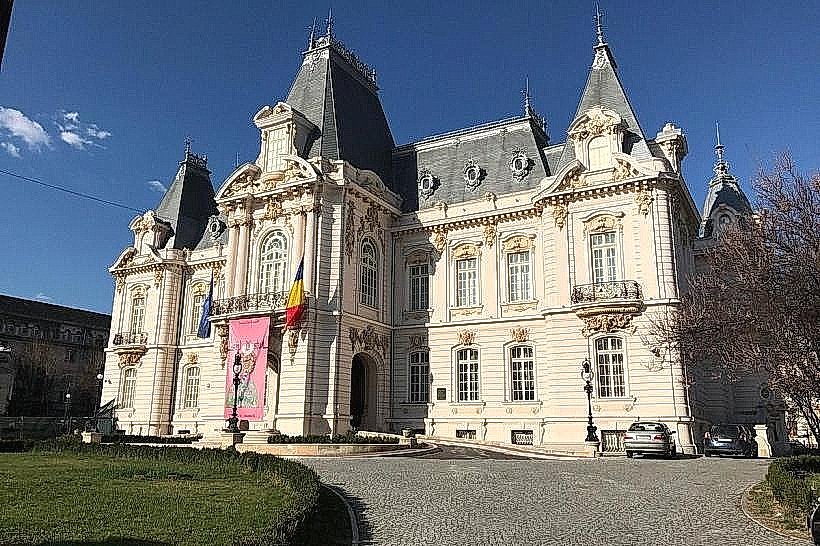
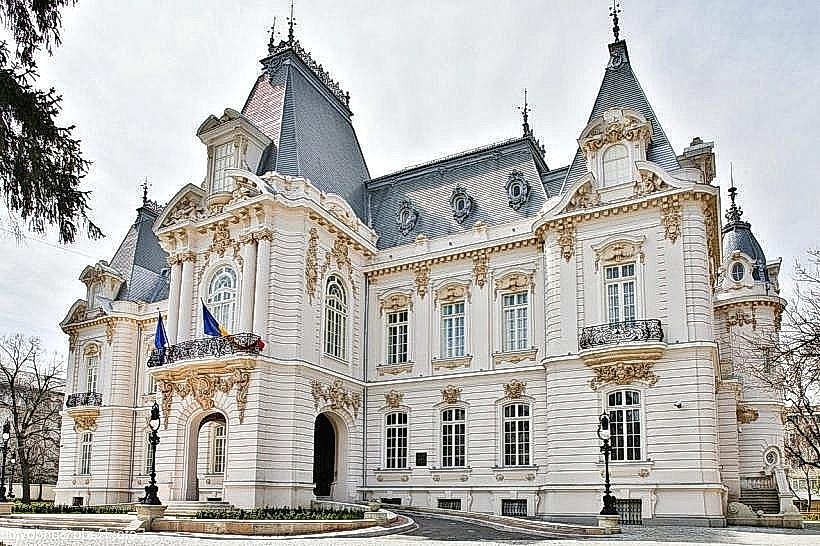
Craiova Art Museum (Dinu Mihail Palace)
Museum of Oltenia (Natural Sciences, Ethnography, and History sections)
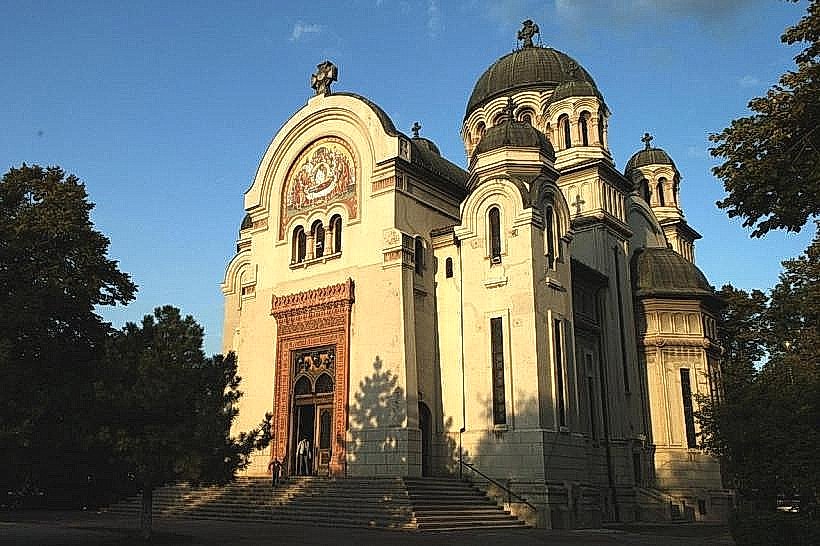
Madona Dudu Church
Metropolitan Cathedral of Saint Demetrius
Transportation Network
Internal movement is facilitated by an extensive tram network (primarily Lines 100, 101, and 102) and a fleet of electric and diesel buses managed by RAT Craiova; there is no Metro. Uber and Bolt are the primary ride-sharing apps. Official taxis are painted yellow and must display the per-kilometer tariff (currently approx. 3.50–4.20 RON) on the door. Traffic density is high on Calea București and the central North-South axis during peak hours (08:00–09:30 and 16:30–18:00).
Safety & "Red Zones"
Craiova is generally safe with low rates of violent crime. The Fața Luncii neighborhood and parts of Brestei Street are identified as zones with higher rates of petty crime and social marginalization; caution is advised after dark. Common scams involve "help" with luggage at the train station for excessive tips or unregulated taxis operating without official markings near the periphery.
Digital & Financial Infrastructure
Average internet speed is 150 Mbps with high fiber-optic penetration. Main mobile carriers are Orange, Digi Mobil, and Vodafone. Card acceptance is high in malls, supermarkets, and central restaurants, but cash (RON) is frequently required for public transport tickets and smaller neighborhood shops. ATMs are concentrated in the Old Town and Electroputere Parc Mall.
Climate & Air Quality
Temperatures range from -4°C to 3°C in winter (January) and 17°C to 30°C in summer (July). The region is prone to drought and high heat in late summer due to Mediterranean influences. Air quality is generally acceptable, though particulate matter (PM2.5) levels occasionally spike in winter due to the nearby Ișalnița thermal power plant and residential wood heating.
Culture & Social Norms
The standard tipping rate is 10% in restaurants, usually paid in cash or added to the card payment. Handshakes are the standard greeting. Dress code is casual-smart; conservative attire is expected in Orthodox churches (long trousers/skirts). Public smoking is prohibited in all indoor public spaces and within 10 meters of public transport stations.
Accommodation Zones
Stay in Centrul Vechi (Old Town): Recommended for walking access to museums, the botanical garden, and central administrative buildings.
Stay near Calea București (East): Recommended for access to major retail centers and logistics, though noisier due to traffic.
Local Cost Index
1 Espresso: 11 RON ($2.40)
1 Standard Lunch: 45 RON ($9.80)
1 Bus/Tram Ticket: 3 RON ($0.65)
Nearby Day Trips
Strehaia Monastery: 60 km
Târgu Jiu (Brâncuși Sculptural Ensemble): 115 km
Calafat (Danube Port and Bridge to Bulgaria): 90 km
Facts & Legends
A persistent local legend claims that the city’s name derives from a legendary ruler, "Craiul Iovan" (King John), who supposedly founded the settlement near the Jiu River. A verified historical oddity relates to the "Bans of Craiova," the highest-ranking boyars in Wallachia, who held the unique right to mint their own currency; this practice is widely cited as the origin of the Romanian word for money, ban.