Information
City: DenpasarCountry: Indonesia
Continent: Asia
Denpasar, Indonesia, Asia
Denpasar is the capital of Bali and the island's largest city. Unlike the resort enclaves of the south or the cultural retreat of Ubud, Denpasar is a bustling administrative and commercial hub that offers an authentic look at modern Balinese life, away from the primary tourist bubbles.
Historical Timeline
Denpasar was originally the capital of the Badung Kingdom. In 1906, it was the site of the tragic Puputan Badung, where the Balinese royalty and their followers chose ritual mass suicide over surrender to Dutch colonial forces. After Indonesian independence, it replaced Singaraja as the provincial capital in 1958, evolving into the island's primary center for government, education, and trade.
Demographics & Population
The population is approximately 730,000. While predominantly Balinese Hindu, the city has significant Muslim and Christian minorities due to its status as a regional economic center. The economy is driven by government administration, retail, and the processing of agricultural goods.
Urban Layout & Key Districts
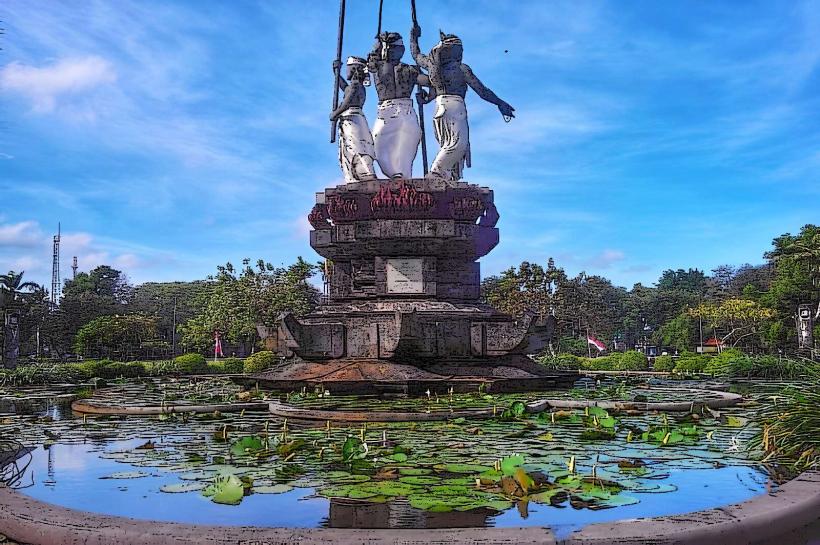
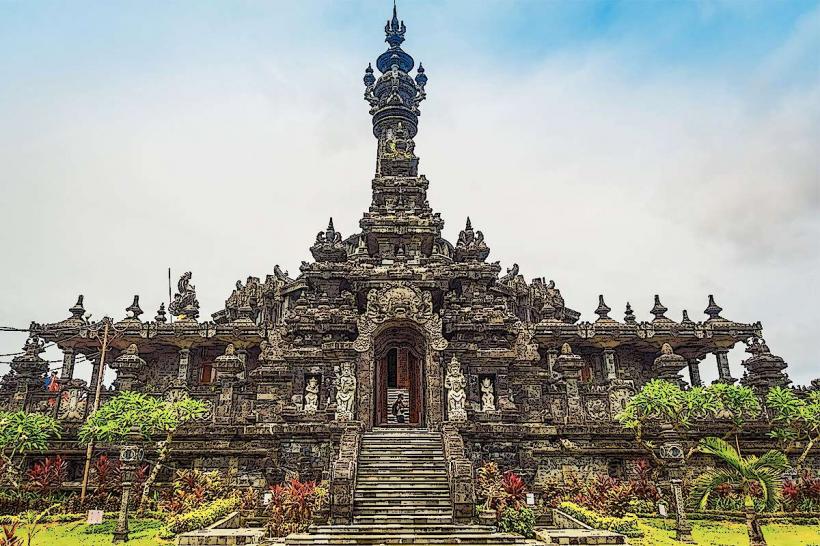
Renon: The administrative heart, home to government offices, consulates, and the massive Bajra Sandhi Monument.
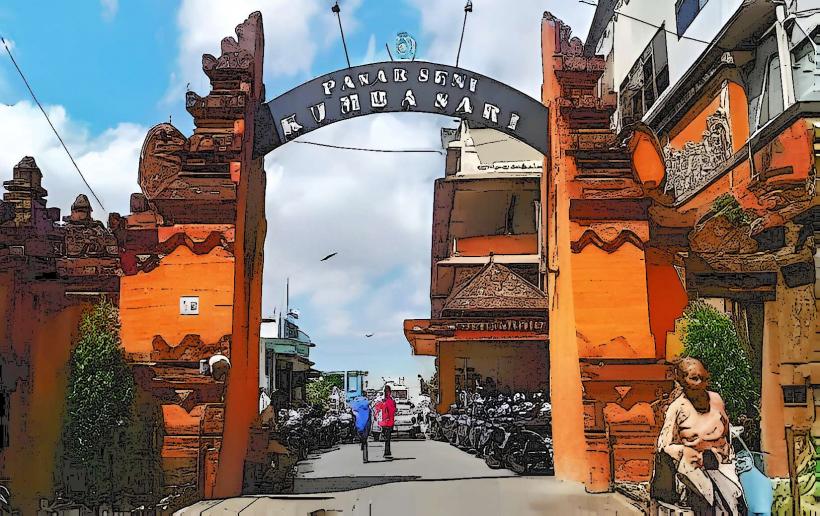
Gajah Mada: The historic commercial center, featuring traditional markets and colonial-era shop houses.
Teuku Umar: A major thoroughfare known for electronics shops, modern retail, and a high density of local restaurants.
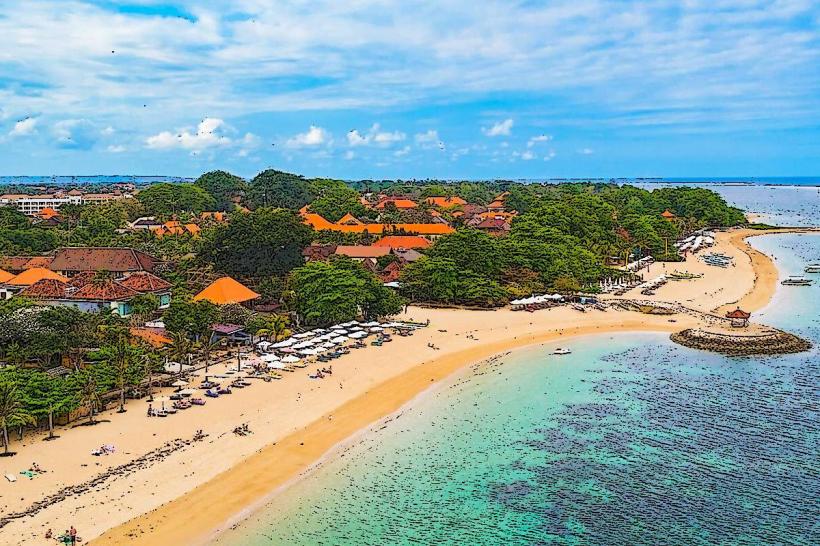
Sanur: Though often considered a separate resort town, it is administratively part of Denpasar, serving as the city’s coastal edge.
Top Landmarks
Bajra Sandhi Monument: A massive stone structure in Renon commemorating the struggles of the Balinese people; it features dioramas of the island's history.
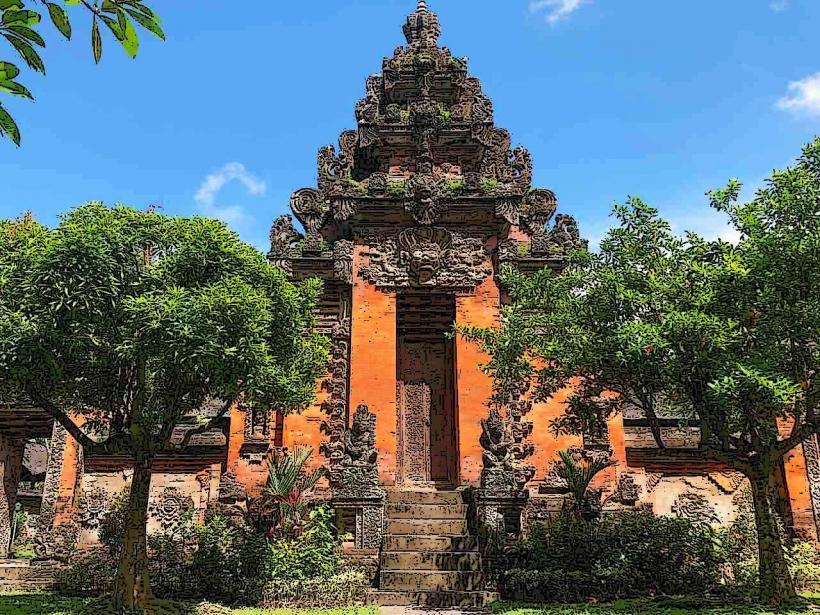
Bali Museum (Museum Negeri Propinsi Bali): Located next to the former royal palace site, it houses a vast collection of Balinese ethnographic and archaeological artifacts.
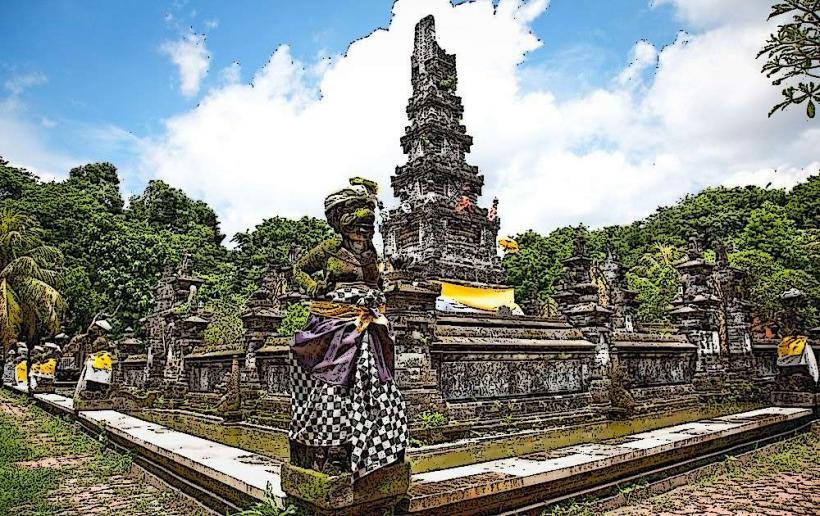
Pura Jagatnatha: The city's state temple, dedicated to the supreme god Sanghyang Widi Wasa, located in the city center.
Pasar Badung: The largest traditional market in Bali, active 24 hours a day and situated along the Badung River.
Art Centre (Taman Werdhi Budaya): A large complex that hosts the annual Bali Arts Festival (June/July), showcasing traditional dance and music.
Transportation Network
Air: Ngurah Rai International Airport (DPS) is located 13 km south of the city center.
Road: Denpasar is the hub for all major roads in Bali. The Bali Mandara Toll Road connects the city to the airport and the Bukit Peninsula.
Public Transit: The Trans Sarbagita and Teman Bus systems offer regulated routes, though coverage is limited.
Local Transit: Gojek and Grab are the most efficient ways to move through the city’s narrow, congested streets.
Safety & "Red Zones"
Traffic: Denpasar experiences severe gridlock during morning and evening rush hours. The one-way street systems can be confusing for self-drivers.
Petty Crime: While generally safe, be vigilant against bag snatching in crowded market areas like Pasar Badung.
Demonstrations: Renon is the primary site for political protests; while usually peaceful, they can cause significant road closures.
Digital & Financial Infrastructure
4G/5G coverage is excellent and more stable than in rural Bali. The currency is the Indonesian Rupiah (IDR). ATMs from all major Indonesian banks (BCA, Mandiri, BNI) are ubiquitous. QRIS is the standard for digital payments in shops and restaurants.
Climate & Air Quality
Tropical monsoon climate. It is noticeably hotter and more humid than the highland areas like Ubud. Air quality is moderate, often affected by heavy vehicle emissions in the city center.
Culture & Social Norms
Denpasar is culturally conservative compared to Seminyak or Canggu.
Etiquette: When visiting Pura Jagatnatha or the Bali Museum, a sarong and sash are required.
Authenticity: The city is the best place to find high-quality traditional Balinese textiles (Endek and Songket) at local prices.
Local Cost Index (IDR)
1 Espresso: 20,000–40,000 IDR
1 Standard Lunch (Nasi Campur): 15,000–35,000 IDR
1 Short Gojek Ride: 12,000–25,000 IDR
Nearby Day Trips
Sanur Beach: 15 minutes east for a calm sunrise and seaside dining.
Serangan Island: 20 minutes south; known for turtle conservation and seafood.
Ubud: 45–60 minutes north for highland scenery and arts.
Facts & Legends
Legend says the name "Denpasar" comes from the words Den (north) and Pasar (market), indicating its origins north of the original market site. A geographic fact: Denpasar is built on a flat coastal plain, which is why it lacks the dramatic ravines and terraces found just a few kilometers north. Historically, the city’s Renon district was designed with wide boulevards to mimic European city planning, a stark contrast to the organic, winding alleys of the old quarters.