Information
City: GlasgowCountry: United Kingdom
Continent: Europe
Glasgow, United Kingdom, Europe
Glasgow is the largest city in Scotland, situated on the River Clyde in the West Central Lowlands. It transitioned from a major industrial and shipbuilding powerhouse into a national center for the creative arts, design, and higher education.
Visual Characteristics
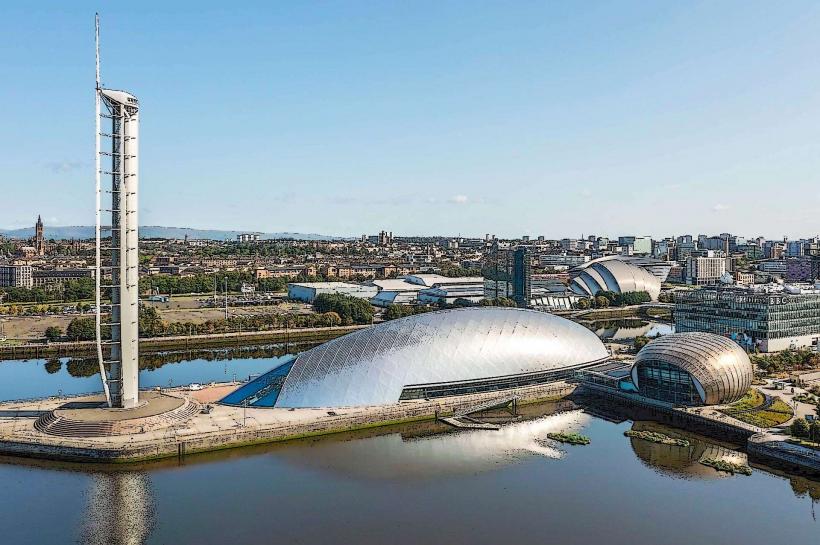
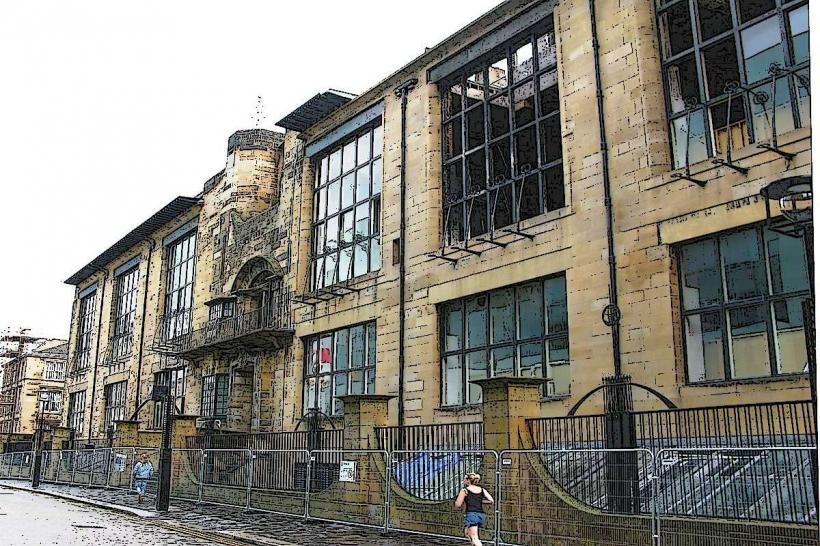
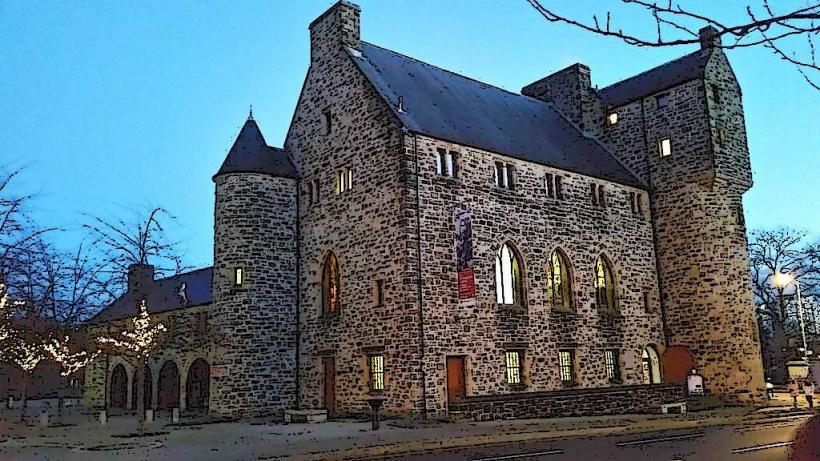
The urban landscape is defined by red and blond Victorian sandstone tenements and monumental civic buildings. The architecture is heavily influenced by the "Glasgow Style," pioneered by Charles Rennie Mackintosh. The skyline features the Gothic spires of Glasgow University and the modern titanium-clad structures of the Glasgow Science Centre and SEC Armadillo. Unlike the vertical density of Edinburgh, Glasgow follows a grid-iron street plan in its central business district.
Location & Access Logistics
Glasgow is located 75 kilometers west of Edinburgh. It is served by Glasgow Airport (GLA), 11 kilometers west, and Glasgow Prestwick (PIK), 46 kilometers southwest. The city has two main rail terminals: Glasgow Central (links to London/South) and Queen Street (links to Edinburgh/North). The Glasgow Subway is a 10.5-kilometer circular underground line, the third oldest in the world. First Bus operates the primary road transit. Vehicle access is via the M8 motorway, which bisects the city center.
Historical & Ecological Origin
Originating as a religious settlement founded by Saint Mungo in the 6th century, Glasgow grew through the tobacco and sugar trades before becoming the "Second City of the Empire" during the Industrial Revolution. Geologically, it sits in the Clyde Valley, a basin characterized by glacial drumlins and carboniferous strata containing coal and ironstone, which fueled its rapid industrialization. The River Clyde, once heavily polluted by heavy industry, has undergone significant ecological recovery.
Key Highlights & Activities
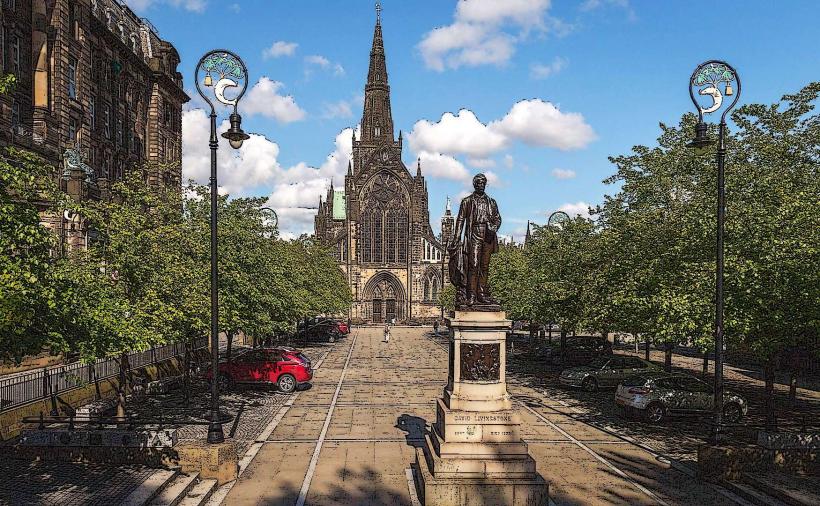
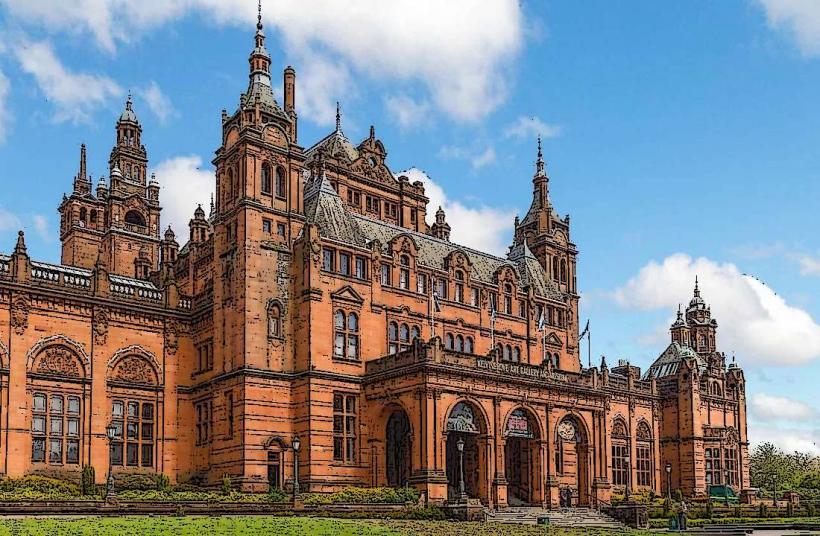
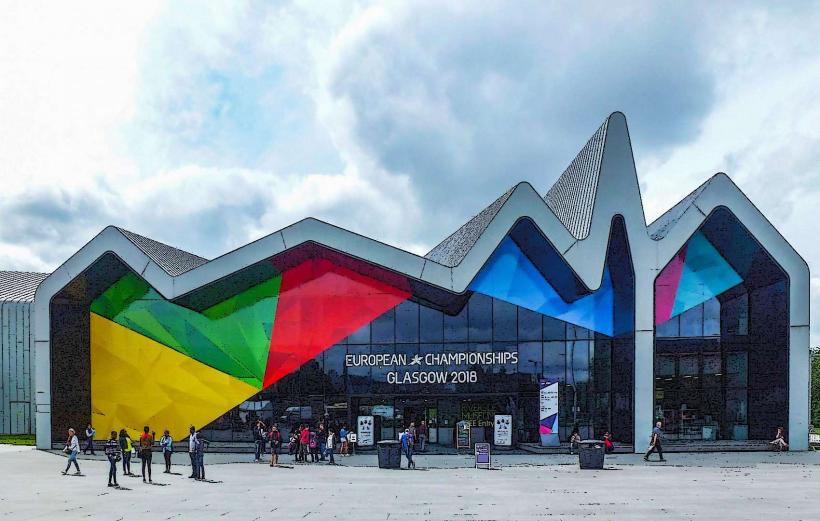
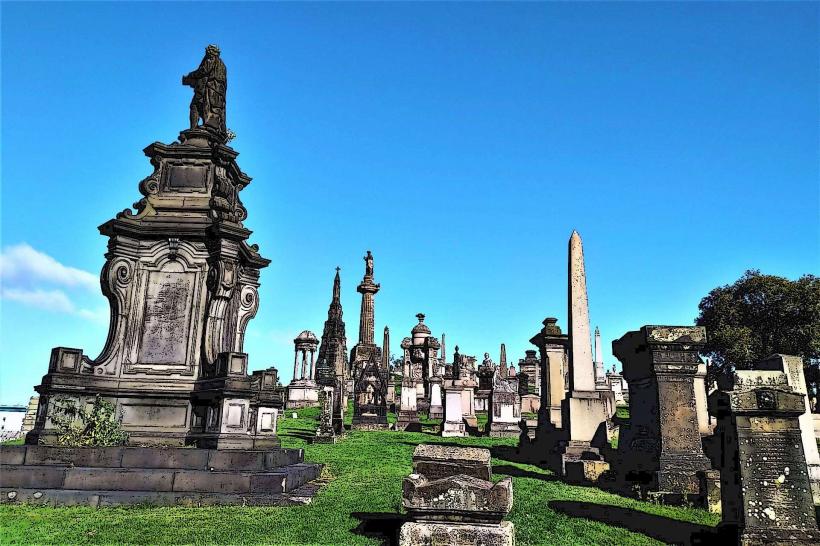
The Kelvingrove Art Gallery and Museum houses a high-density collection ranging from natural history to Salvador Dalí. The Riverside Museum, designed by Zaha Hadid, focuses on transport and maritime history. Glasgow Cathedral is one of the few Scottish medieval churches to survive the Reformation intact. The Necropolis, a Victorian garden cemetery, offers views across the city. The West End, centered on Byres Road, is the primary district for independent retail and bohemian dining.
Infrastructure & Amenities
The city center is equipped with public restrooms in major rail stations and the Buchanan Galleries. 5G cellular coverage is universal. The "OVO Bikes" sharing system provides automated bicycle rentals across the city. Drinking water fountains are available in major parks like Glasgow Green. Retail is concentrated on the "Style Mile" (Buchanan Street, Argyle Street, and Sauchiehall Street). Dining is high-density in the Finnieston area, noted for contemporary Scottish gastronomy.
Best Time to Visit
The climate is temperate oceanic, known for being wetter and milder than the Scottish east coast. May through September is optimal for park access and festivals, with temperatures between 15°C and 20°C. The Celtic Connections music festival in January is a major cultural draw. Photography of the University of Glasgow cloister is best in the morning light.
Facts & Legends
Glasgow has the highest concentration of parks of any UK city ("The Dear Green Place"). A local historical oddity: the Duke of Wellington statue outside the Gallery of Modern Art is almost perpetually capped with a traffic cone, a tradition the city council eventually accepted as a cultural landmark. Legend holds that the city's coat of arms represents the four miracles of Saint Mungo: "The bird that never flew, the tree that never grew, the bell that never rang, the fish that never swam."
Nearby Landmarks
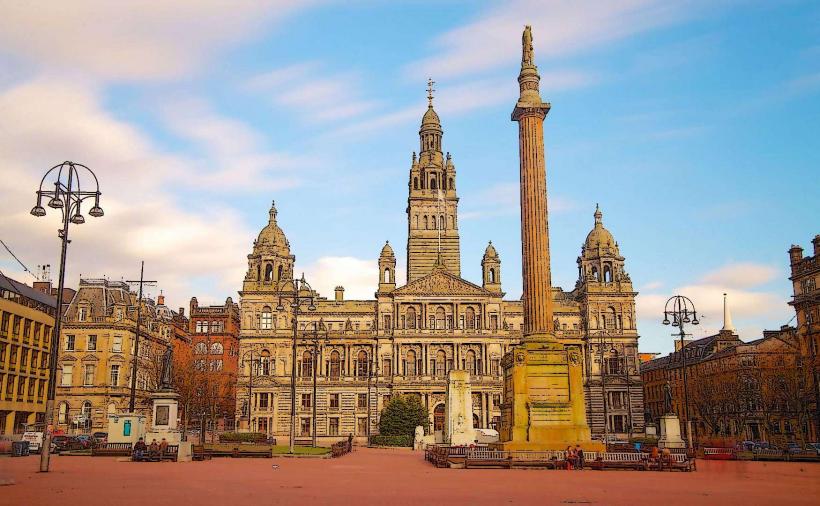
George Square: Central hub (City Chambers)
Glasgow Cathedral: 0.8km East of center
Kelvingrove Museum: 2.5km West of center
Buchanan Street: Main retail artery
University of Glasgow: 2.8km West of center