Information
City: JaisalmerCountry: India
Continent: Asia
Jaisalmer, India, Asia
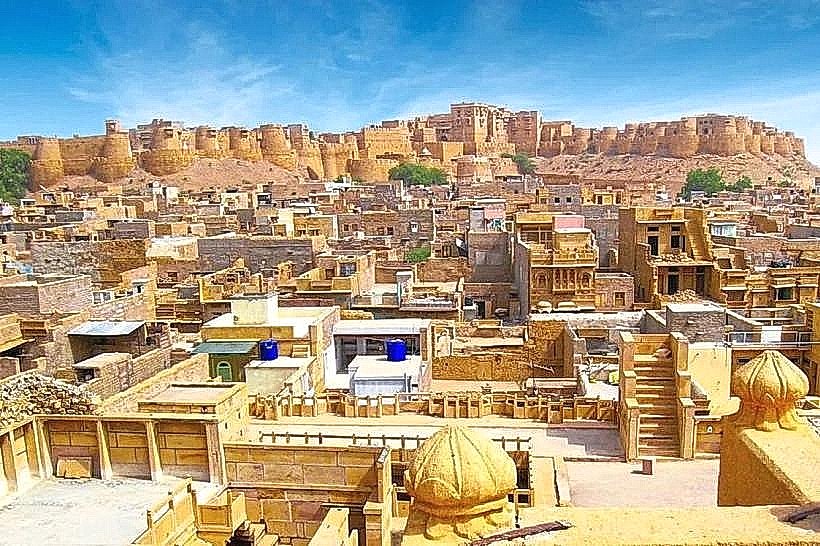
Jaisalmer is a municipality and the administrative seat of Jaisalmer district in western Rajasthan. Known as the "Golden City," it is situated in the heart of the Thar Desert and is defined by its massive yellow sandstone architecture and its status as a "living" medieval fortress.
Historical Timeline
Founded in 1156 CE by Rawal Jaisal of the Bhati Rajput clan after moving the capital from Lodhruva. A critical historical event occurred in 1294, when the city faced its first Jauhar (mass self-immolation) during a siege by Alauddin Khalji. Throughout the 16th and 18th centuries, it flourished as a major transit node on the southern silk route connecting India to Central Asia and Persia. The city's economic importance declined in the late 19th century with the rise of Mumbai as a maritime port. Following the 1947 Partition, the closure of the Indo-Pak border turned it into a strategic military outpost. In 2026, it is a global premier destination for desert tourism and a hub for renewable energy (wind and solar).
Demographics & Population
The 2026 estimated population is approximately 95,000. The demographics are predominantly Hindu (90%), with a significant Muslim minority (8%). The economy is driven by Tourism, Wind Energy, Agriculture (supported by the Indira Gandhi Canal), and Stone Quarrying.
Urban Layout & Key Districts
Jaisalmer is uniquely organized around a ridge of Trikuta Hill.
Jaisalmer Fort (Sonar Quila): A UNESCO World Heritage site and the city's core; it is one of the few "living forts" in the world, housing nearly 3,000 residents, shops, and temples within its walls.
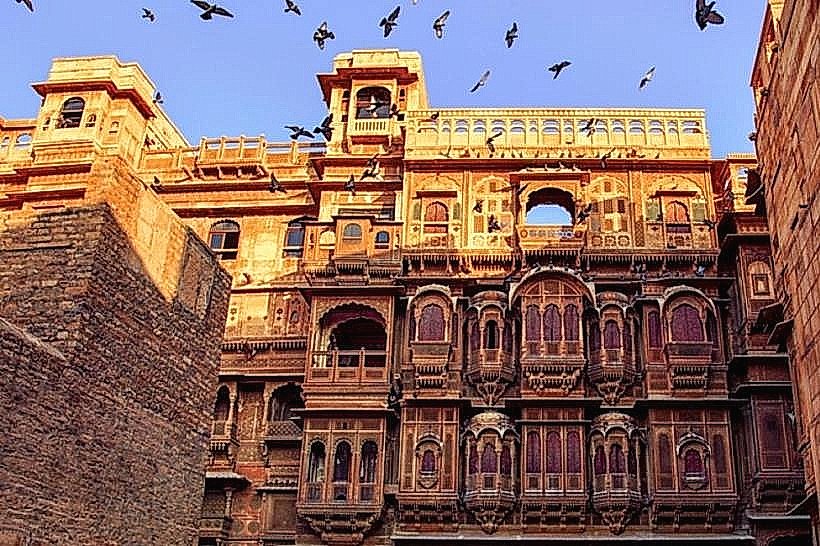
The Walled City (Below the Fort): A dense maze of narrow streets containing the city's most famous merchant havelis.
Amar Sagar & Hanuman Chauraha: Modern commercial expansions and transit hubs located outside the historic gates.
Sam & Khuri: Satellite desert districts (approx. 40 km away) dedicated to luxury tented camps and sand dune tourism.
Top City Landmarks
Jaisalmer Fort: Built without mortar, featuring 99 bastions and a complex of seven interconnected Jain temples (12th–16th century).
Patwon Ki Haveli: The largest and most intricate mansion in the city, originally built by a wealthy brocade merchant.
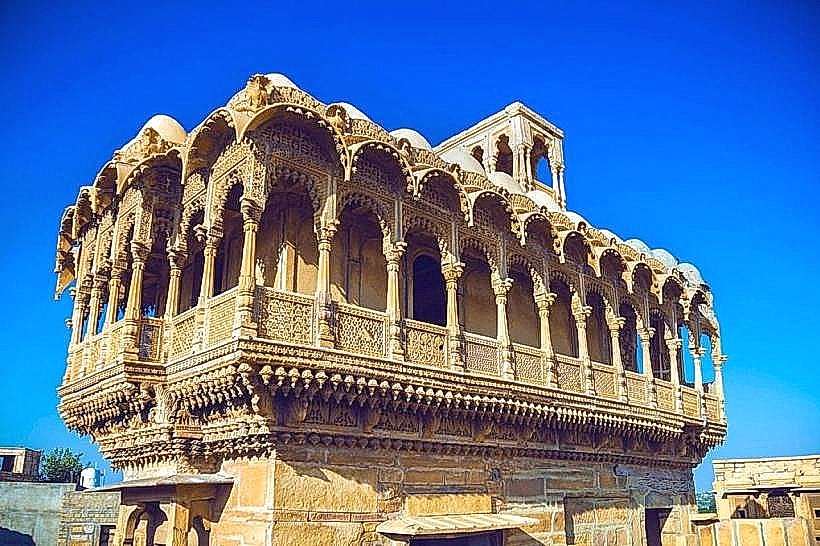
Salim Singh Ki Haveli: Distinguished by its unique "peacock-shaped" roof and 38 gracefully carved balconies.
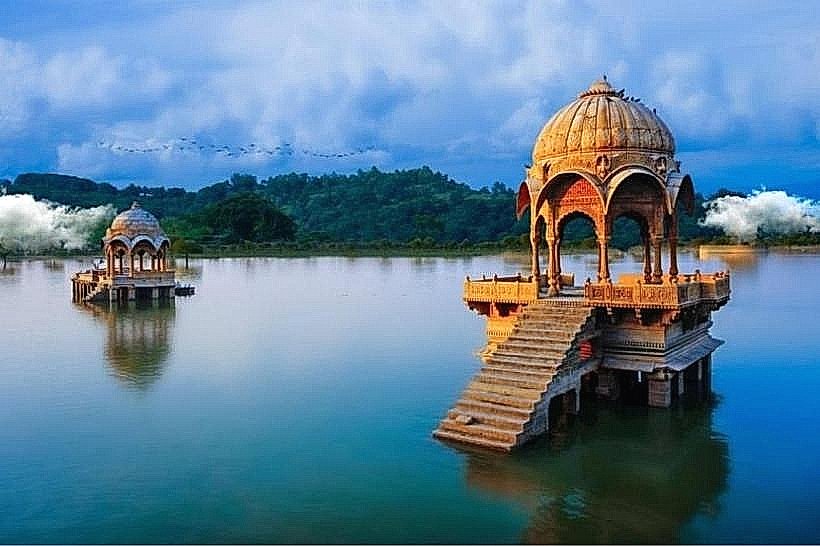
Gadisar Lake: A 14th-century rainwater reservoir surrounded by shrines and the iconic Tilon-Ki-Pol gateway.
Bada Bagh: A garden complex containing the royal cenatophs (chhatris) of the Maharajas of Jaisalmer.
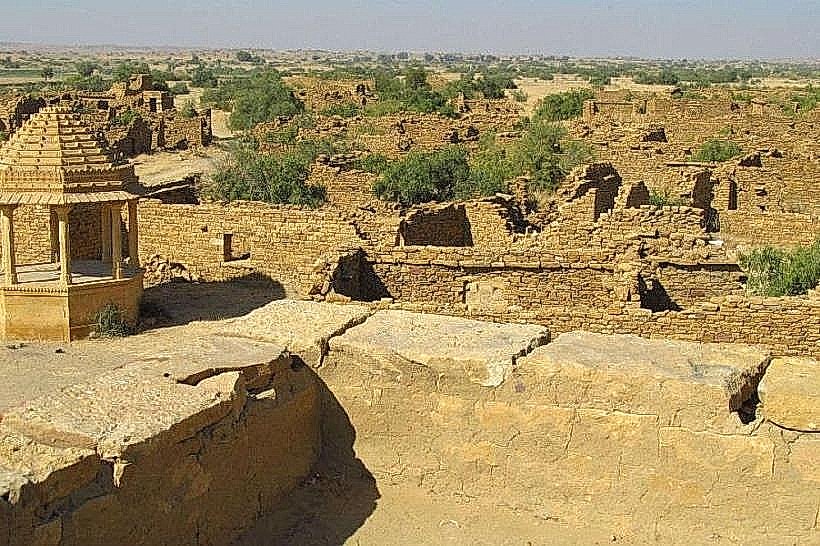
Kuldhara: (Located 18 km away); a "haunted" abandoned village formerly inhabited by Paliwal Brahmins.
Tanot Mata Temple: (Located near the border); famous for reportedly remaining unharmed despite heavy shelling during the 1965 and 1971 Indo-Pak wars.
Transportation Network
Movement is facilitated by walking (inside the fort), auto-rickshaws, and jeeps for desert excursions. Jaisalmer Airport (JSA) provides seasonal domestic flights to Delhi, Mumbai, and Jaipur. Jaisalmer Railway Station is the terminus for the "Desert Circuit" trains. In 2026, the Bharatmala Pariyojana road network has significantly improved high-speed access to the border regions.
Safety & "Red Zones"
General safety is high due to the community's reliance on tourism. Standard awareness is advised against aggressive camel safari touts. "Red Zones" include the Indo-Pak Border area; foreign nationals require a Protected Area Permit (PAP) to visit restricted zones like Tanot or Longewala. Environmental hazards include severe dehydration and sandstorms during the summer.
Digital & Financial Infrastructure
5G connectivity is available in the town center but drops off in the deep desert. UPI payments are accepted at almost all stalls and camps. The city is part of the Rajasthan DigiFest network, promoting digital governance. Rajasthan state taxes apply to all services.
Climate & Air Quality
Temperatures range from 5°C to 24°C in winter and 30°C to 48°C in summer. In 2026, air quality is generally "Moderate," though PM10 levels spike during wind-blown dust events characteristic of the Thar Desert.
Culture & Social Norms
The standard tipping percentage is 10%. A "Warm-Nomadic" greeting (Khamma Ghani) is standard. Dress codes are "Conservative"; despite the heat, modest clothing is preferred. The culture is defined by Manganiyar Folk Music, Kalbelia Dance, and the Desert Festival (held in Jan/Feb).
Local Cost Index
1 Espresso: ₹150 ($1.80 USD)
1 Standard Meal: ₹300 ($3.60 USD)
1 Fort Entry: Free (Living Area) / ₹100–₹500 (Palace Museum).
Nearby Day Trips
Desert National Park: (40 km away; home to the endangered Great Indian Bustard).
Lodhruva: (15 km away; the ancient capital featuring a magnificent Jain temple and a "Kalpavriksha" tree).
Akal Wood Fossil Park: (17 km away; containing 180-million-year-old geological fossils).
Facts & Legends
Jaisalmer Fort is the only fort in India that houses a significant civilian population. Historically, the yellow sandstone was chosen because it turns a brilliant gold at sunset, making the fort appear like a mirage. A local legend claims the city’s location was prophesied by Lord Krishna to the sage Eesul, stating that a descendant of his Yaduvanshi clan would rule from Trikuta Hill. Another legend surrounds Kuldhara, which was reportedly cursed by the Paliwals as they fled overnight, ensuring that no one could ever inhabit the village again.