Information
City: JodhpurCountry: India
Continent: Asia
Jodhpur, India, Asia
Jodhpur is the second-largest city in Rajasthan and the former capital of the Marwar Kingdom. Situated on the edge of the Thar Desert, it is defined as the "Blue City" due to the indigo-hued houses surrounding the fortress and the "Sun City" for its year-round bright weather. In 2026, it serves as a critical strategic military base and a global hub for handicraft exports and "Suncity" solar power initiatives.
Historical Timeline
Founded in 1459 by Rao Jodha, a chief of the Rathore clan. A critical historical event occurred in the 16th century when the city became a vassal of the Mughal Empire under Akbar, leading to a fusion of Rajput and Mughal architectural styles. Following the decline of the Mughals, it faced frequent conflicts with the Marathas before entering a subsidiary alliance with the British in 1818. In 2026, Jodhpur is a major center for higher education, housing an IIT, AIIMS, and the National Law University.
Demographics & Population
The 2026 metro population is approximately 1,655,000. The demographics are predominantly Hindu, with a significant Muslim minority and a prominent Jain community. The economy is driven by Furniture & Handicraft Exports (a multi-billion dollar industry), Tourism, Textiles, and Mineral Processing (specifically Guar gum and Sandstone).
Urban Layout & Key Districts
Jodhpur is divided into the medieval walled city and the modern expansive suburbs.
The Old City: A dense labyrinth of blue-painted houses, narrow alleys, and historic stepwells located at the base of Mehrangarh Fort.
Sardar Market: The commercial heart of the old city, centered around the iconic Ghanta Ghar (Clock Tower).
Ratanada: A colonial-era district that has evolved into a trendy hub for cafes, boutique hotels, and military installations.
Shastri Nagar & Sardarpura: The modern residential and upscale retail districts of the city.
Top City Landmarks
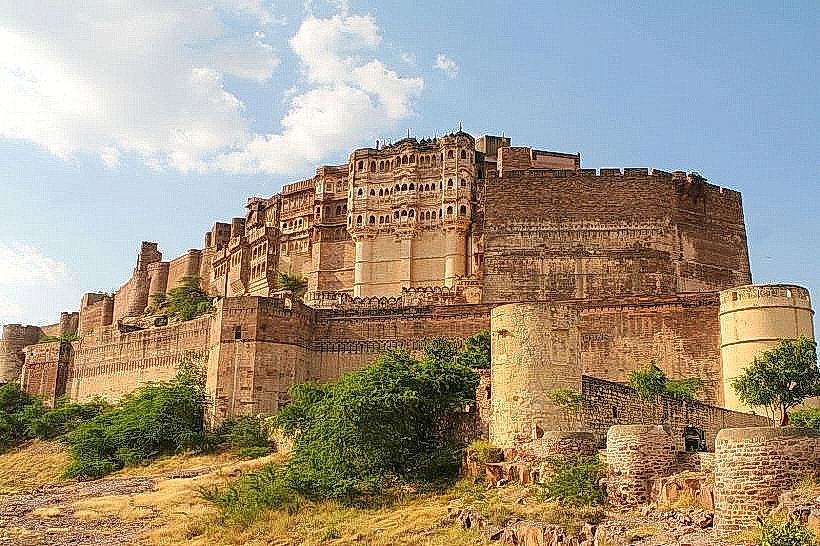
Mehrangarh Fort: One of the largest forts in India, built 125 meters above the city skyline; it houses a world-class museum and preserved royal palanquins.
Jaswant Thada: A white marble cenatoph built in 1899, often referred to as the "Taj Mahal of Marwar."
Umaid Bhawan Palace: One of the world's largest private residences; divided into a luxury Taj hotel, a museum, and the current residence of the royal family.
Toorji Ka Jhalra: A restored 18th-century stepwell featuring intricate carvings, now surrounded by high-end urban cafes.
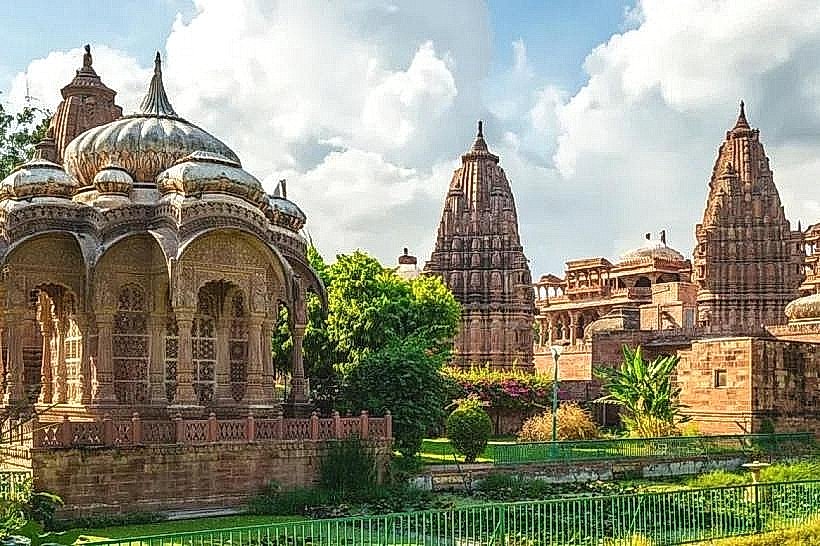
Mandore Gardens: The former capital of Marwar, featuring high-spired "Dewals" (cenotaphs) and a "Hall of Heroes."
Rao Jodha Desert Rock Park: A 72-hectare park created to restore the natural ecology of the rocky wasteland surrounding the fort.
Transportation Network
Movement is facilitated by auto-rickshaws and app-based cabs (Uber/Ola). Jodhpur Airport (JDH) is a civil enclave at a major Indian Air Force base, offering domestic links. Jodhpur Junction is a primary rail head on the North Western Railway. In 2026, the city is a major stop on the Amritsar-Jamnagar Expressway.
Safety & "Red Zones"
General safety is high. Standard awareness is advised against scams in the antique markets and overcharging by rickshaw drivers in the old city. Environmental hazards include extreme heat (May–June) and flash floods during intense monsoon spells due to the rocky terrain.
Digital & Financial Infrastructure
5G connectivity is universal. UPI payments are the absolute standard. Jodhpur is a key "Smart City," utilizing digital mapping for heritage conservation. Rajasthan state taxes apply to all commercial services.
Climate & Air Quality
Temperatures range from 7°C to 25°C in winter and 32°C to 48°C in summer. The air quality is generally "Good" to "Moderate," though dust storms (Andhi) are frequent in late summer.
Culture & Social Norms
The standard tipping percentage is 10%. A "Stately-Hospitable" greeting (Khamma Ghani) is standard. Dress codes are "Conservative-Casual." The city is culturally defined by Breeches (Jodhpurs), Bandhani (Tie-dye), and Spicy Gastronomy (Pyaaz Kachori, Mirchi Bada).
Local Cost Index
1 Espresso: ₹130 ($1.60 USD)
1 Standard Lunch: ₹280 ($3.35 USD)
1 Mehrangarh Fort Entry: ₹200 (Indians) / ₹600 (Foreigners).
Nearby Day Trips
Osian: (65 km north; an ancient temple town known as the "Khajuraho of Rajasthan").
Bishnoi Village: (20 km south; home to the Bishnoi community, famous for nature conservation and blackbuck sightings).
Khimsar Fort: (90 km northeast; a 16th-century fortress on the edge of the sand dunes).
Facts & Legends
Jodhpur is the only place in the world where "Jodhpurs" (riding breeches) originated. Historically, the city was a key stop on the ancient silk route connecting central India to the sea. A local legend claims that a hermit who was displaced during the construction of Mehrangarh Fort cursed the city with a perpetual drought, leading the King to bury a man alive in the foundations to appease the gods. Another legend explains the blue houses as a way to keep dwellings cool and deter termites, though it was originally a mark of the Brahmin caste.