Information
City: Koh RongCountry: Cambodia
Continent: Asia
Koh Rong, Cambodia, Asia
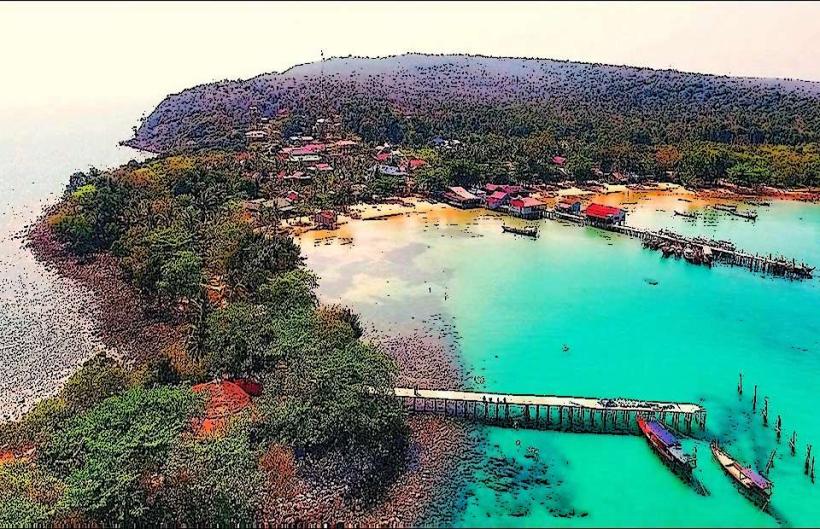
Koh Rong, Cambodia’s second-largest island, is situated in the Gulf of Thailand, 25 km off the coast of Sihanoukville. As of January 2026, the island is transitioning from a backpacker "secret" into a high-end tourism destination, characterized by large-scale infrastructure projects and a significant shift in its demographic profile.
Historical Timeline
1979–2000: The island was under the jurisdiction of the Cambodian Navy; access was strictly limited.
2008: The Royal Group was granted a 99-year lease by the Cambodian government to develop the island.
2012–2014: Emerged as the "last authentic party island" in Southeast Asia, known for its bioluminescent plankton and basic bungalows.
2019: Officially designated as Sangkat Koh Rong (a city-level administrative unit) within Sihanoukville Province.
2024–2026: Massive acceleration of luxury developments and formal utility networks, moving away from off-grid living.
Demographics & Population (2026)
The island’s resident population is approximately 4,500–5,000, though this fluctuates significantly with the tourist season.
Key Communities: Four main villages exist: Koh Tuich (the primary arrival point and busiest area), Prek Svay, Doeum D’keuw, and Sok San.
International Profile: A growing segment of the population consists of Chinese and Western investors and hotel management staff, displacing the traditional backpacker-run guesthouses.
Current Status (January 21, 2026)
Weather: Peak dry season. Today is sunny with a high of 31°C and a low of 20°C. Water temperature is a consistent 28°C.
Air Quality: Currently Moderate (US EPA Index: 2). PM2.5 levels are roughly $22.2\ \mu g/m^3$ due to localized construction dust.
Infrastructure: A new solar power hybrid microgrid (1.25MWp) now provides reliable electricity to over 60% of the island, largely ending the era of noisy private diesel generators.
Safety Warning: While the island itself is peaceful, travelers are advised to exercise a high degree of caution in Cambodia overall. The Cambodia-Thailand land borders remain closed (as of Jan 21, 2026) due to recent regional hostilities.
Top Landmarks & Beaches
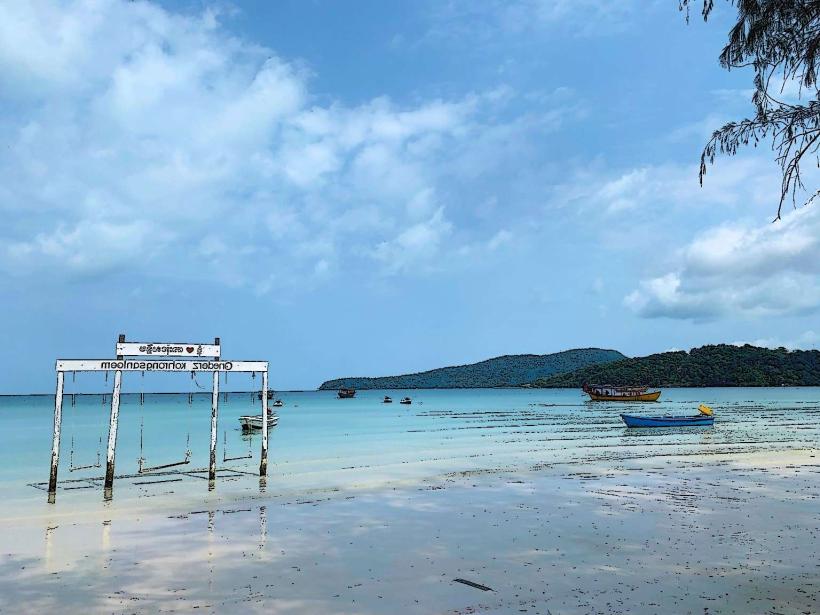
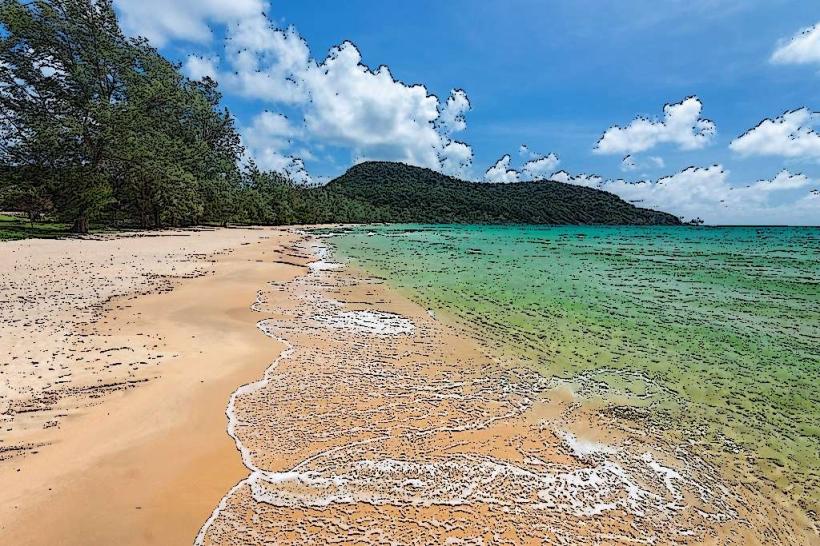
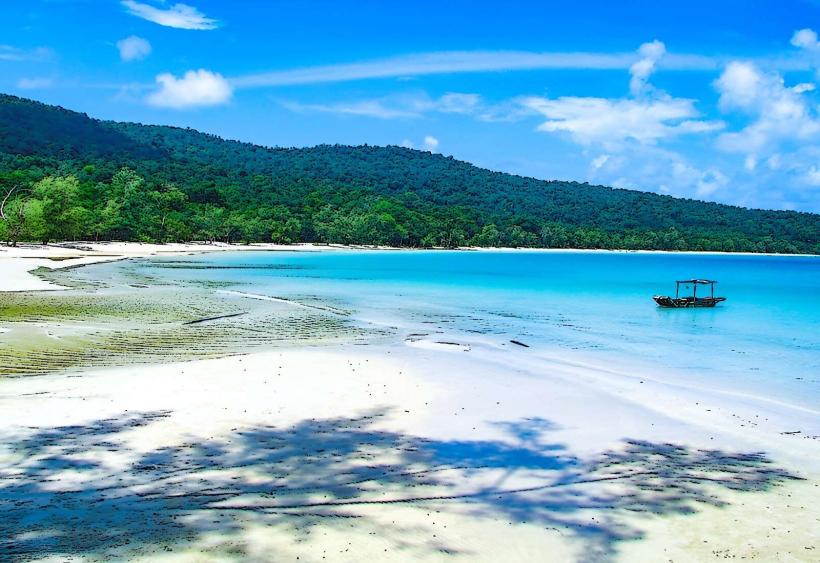
Koh Rong features 43 km of coastline with over 23 distinct beaches.
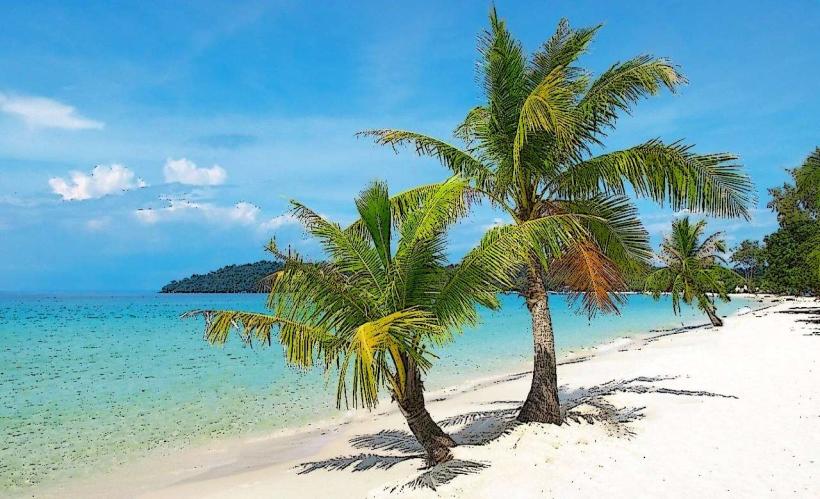
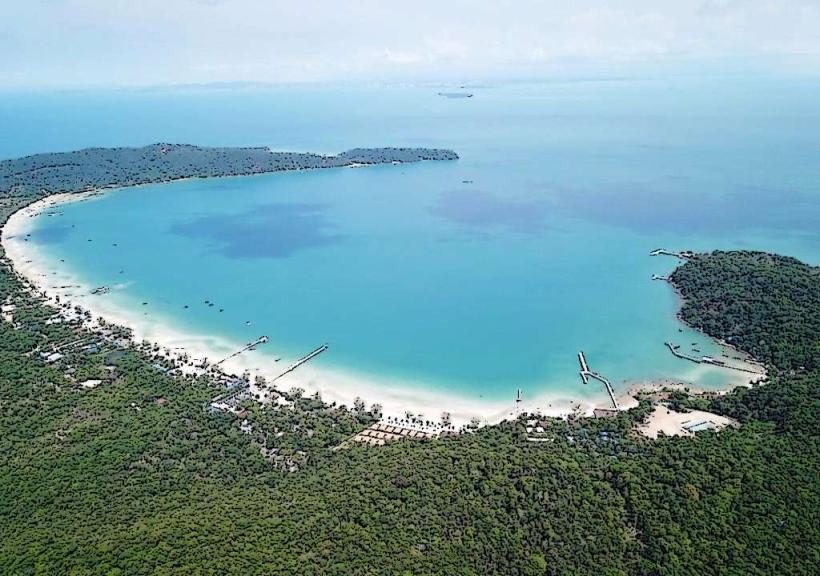
Long Set Beach (4-Mile Beach): Known for its brilliant white sand; currently the site of rapid high-end resort construction, including the Port Yves Palace (broken ground Oct 2025).
Sok San Beach: A 7 km stretch of white sand; formerly a filming location for Survivor, now home to the island's most established luxury resorts.
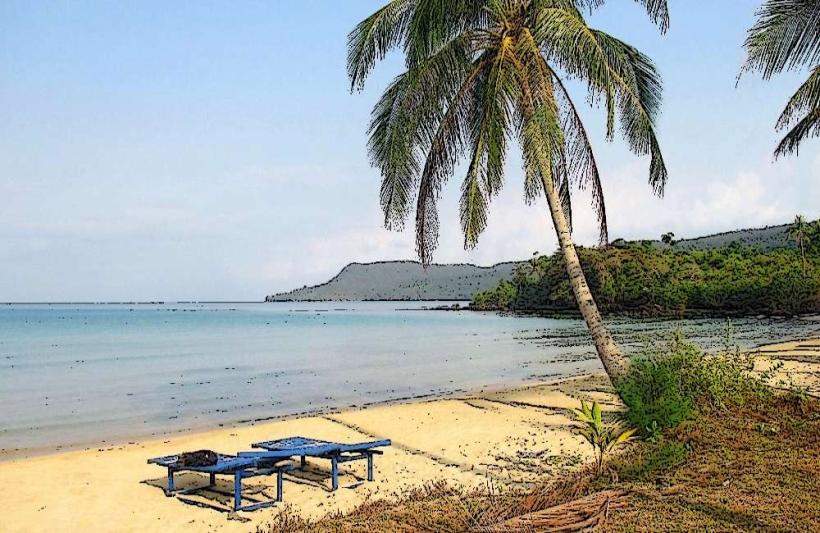
Lonely Beach: Located on the northern tip; one of the few remaining areas maintaining a secluded, "old Koh Rong" atmosphere.
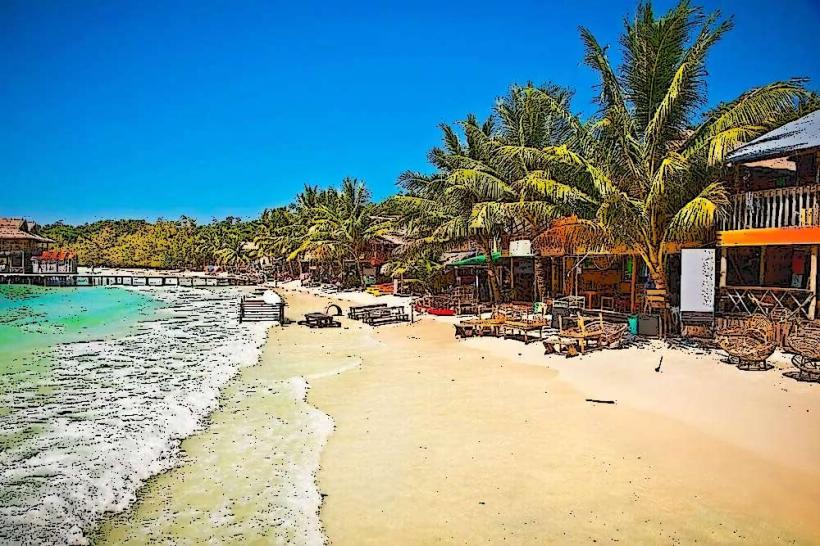
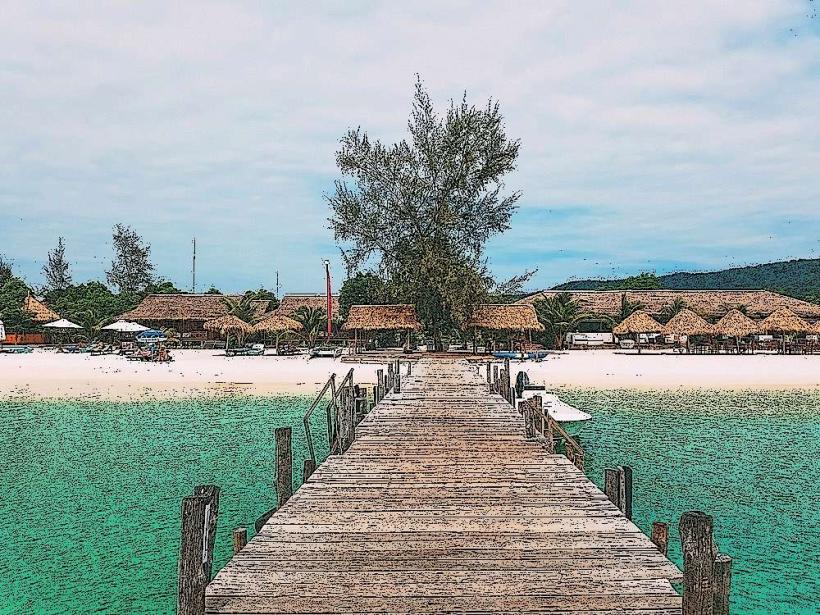
Koh Tuich: The bustling social hub; filled with bars, dive centers, and budget-to-mid-range accommodation.
Koh Rong Marine National Park: Established in 2018, it protects the surrounding coral reefs and seagrass beds, though enforcement remains a challenge amid rapid coastal development.
Transportation & Logistics (2026)
Access: Entry is via high-speed ferry from Sihanoukville Autonomous Port.
Ferry Cost: Standard one-way tickets are $14.00. Major operators include GTVC Speedboat, Buva Sea, and Island Speed Ferry.
Travel Time: High-speed ferries take between 30 and 45 minutes depending on the destination beach.
Entry Requirements: All international arrivals must complete the electronic e-Arrival Card (CeA) within 7 days prior to landing in Cambodia.
Local Cost Index (USD)
Ferry Ticket (One-way): $14
Bungalow (Budget): $20 – $40
Luxury Resort Night: $250 – $600+
Beer (Beach Bar): $1.00 – $2.50
Private Snorkeling Tour: $25 – $40
Facts & Legends
A verified historical oddity: The name "Koh Rong" is often translated as "Shelter Island," but "Rong" is an old Khmer word for cave or tunnel. Some elders claim it refers to a mythical person from the Angkorian era whose name has been lost to time. A local legend describes the Glow of the Ancestors-the bioluminescent plankton visible on dark nights. Traditional fishermen believed the glow was the spirits of the sea guarding the island's fish stocks, and they would avoid fishing during the brightest blooms to show respect to the guardians.