Information
City: LefkadaCountry: Greece
Continent: Europe
Lefkada, Greece, Europe
Lefkada is the fourth-largest Ionian island and is unique for being the only Greek island connected to the mainland via a small 50-meter floating bridge. This accessibility has made it a significant crossroads of cultures, from Corinthian colonizers in the 7th century BC to Venetian, French, and British rulers.
Historical Timeline
Lefkada derives its name from the Greek word leukos (white), referring to the sheer white cliffs of Cape Lefkatas.
Ancient Period: Colonized by Corinthians who excavated the first channel to separate the island from the mainland. The ancient capital, Nirikos, dates back to the 7th century BC.
Medieval Period: Came under the Despotate of Epirus (1204) and was later ruled by the Orsini family, who built the core of the Agia Mavra Fortress.
Modern Era: Following centuries of Venetian and Ottoman transitions, it became part of the Septinsular Republic (1802) and was eventually united with Greece in 1864.
Urban Layout & Architecture
Lefkada Town (Chora): Designed on a "fishbone" model by Venetians, the town features a central shopping axis (Pazari) with secondary roads radiating outward.
Anti-Seismic Architecture: Due to high seismic activity, local houses feature a unique hybrid construction: a stone masonry ground floor supporting a light wooden upper frame, often covered in colorful corrugated iron.
Traditional Districts: Syvota and Agios Nikitas are legally protected as traditional settlements. Mountain villages like Karya (famous for its embroidery) and Egklouvi (known for its lentils) preserve authentic stone rural architecture.
Top Landmarks
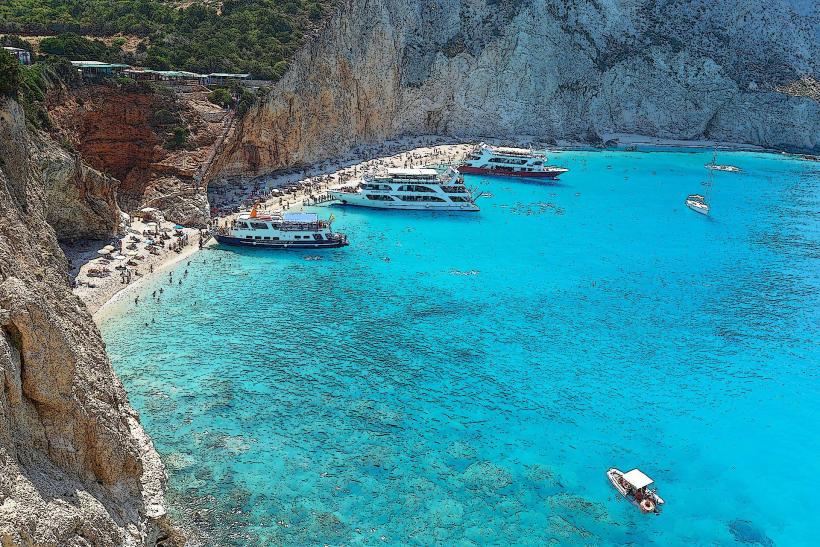
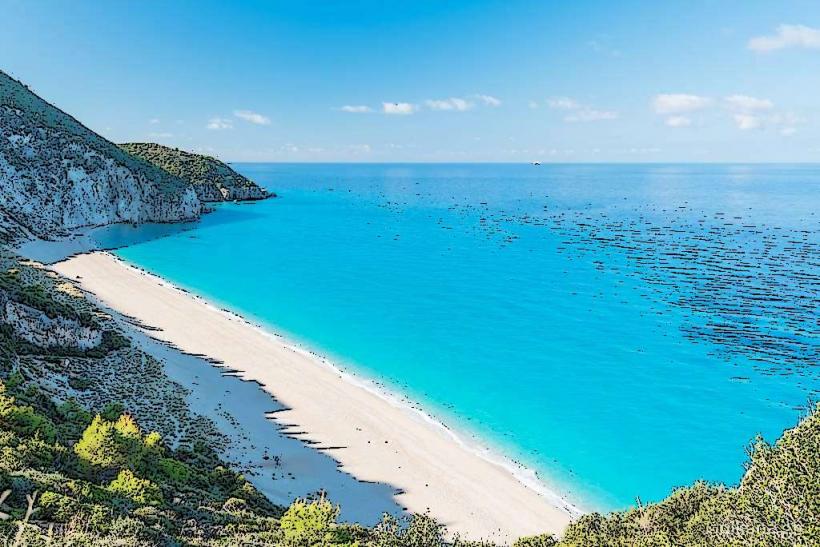
Porto Katsiki & Egremni: Globally famous beaches characterized by massive white cliffs and deep turquoise water.
Fortress of Agia Mavra: A 14th-century medieval stronghold guarding the island's entrance.
Monastery of Faneromeni: The island's religious center and patron saint site, offering panoramic views of the northern lagoons.
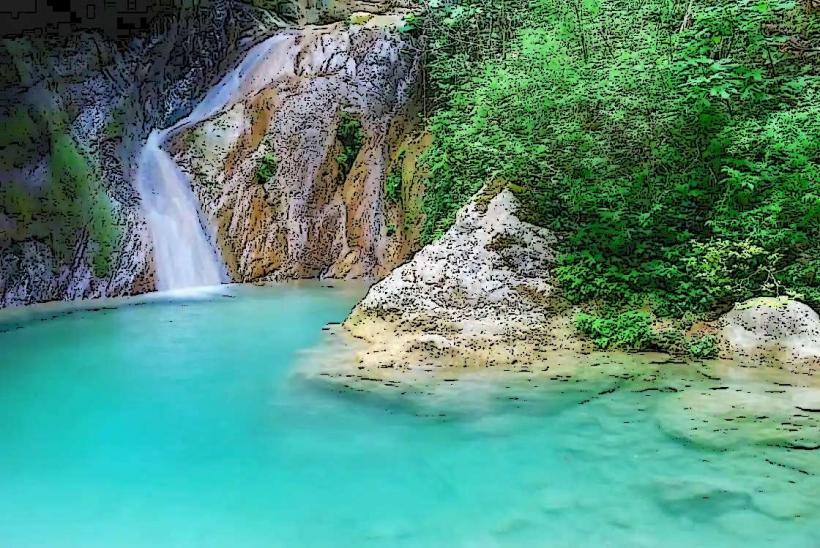
Nydri Waterfalls (Dimosari): A natural gorge with white rock pools and 15-meter waterfalls located near the tourist hub of Nydri.
Cape Lefkatas (Cape Doukato): A vertical cliff 60 meters above the sea where a lighthouse stands on the site of an ancient Temple of Apollo; legend says the poet Sappho leapt to her death here.
Transportation & Infrastructure (2026)
Access: The new Aktio-Lefkada road (opened in late 2025) has significantly reduced travel times from the mainland and the nearby Aktion Airport (PVK).
Floating Bridge: Operates 24/7, providing free vehicle access to the mainland.
Maritime: The Lefkada Marina is one of the most modern in the Mediterranean, with 620 berths. Regular ferry services connect the southern port of Vasiliki to Kefalonia and Ithaca.
Sustainable Tourism: In 2026, the municipality restricted new floating dock developments in protected NATURA 2000 areas to prevent over-tourism and environmental degradation.
Safety & Environment
Lefkada is safe, but natural hazards require attention:
Currents: Western beaches (Kathisma, Porto Katsiki) are prone to powerful waves and undertows; caution is mandatory during high winds.
Earthquakes: The island remains a high-seismic zone; modern infrastructure is built to stringent safety standards.
Local Cost Index (2026)
1 Espresso (Freddo): €3.50–€5.00
1 Taxi (PVK Airport to Town): €35.00–€45.00
1 Standard Lunch: €20.00–€35.00
1 Car Rental (Daily): €40.00–€65.00 (Seasonal)
Facts & Legends
Legend claims that Lefkada is the true Homer’s Ithaca, a theory popularized by archaeologist Wilhelm Dörpfeld, whose grave is located on the Geni peninsula overlooking Nydri. A verified historical fact: The island's traditional "Karsaniko" embroidery is a unique stitch developed by Maria "Koutsohero" Stavraka, a woman who lost the use of one hand and invented the technique to continue her craft.