Information
City: LitochoroCountry: Greece
Continent: Europe
Litochoro, Greece, Europe
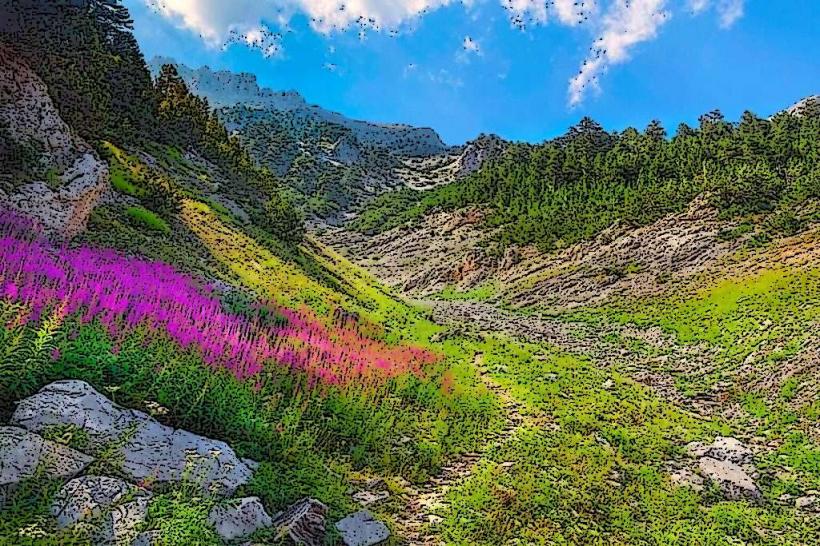
Litochoro is a historic town in the Pieria region of Central Macedonia, situated at the eastern foothills of Mount Olympus. It serves as the primary gateway for mountaineers and hikers ascending the highest peaks of Greece, while maintaining a dual identity as a coastal destination through its nearby maritime settlement, Plaka Litochorou.
Historical Timeline
14th Century: The settlement was first established, with early residents primarily engaged in maritime activities and textile production.
16th Century: The town gained spiritual prominence with the arrival of Saint Dionysios of Olympus, who founded the original monastery.
1943: During World War II, German forces destroyed the historic Old Monastery of Agios Dionysios due to its role as a shelter for Greek resistance fighters.
Modern Era: Litochoro evolved into a premiere national and international mountaineering hub, designated as the seat of the Dio-Olympos municipality in 2011.
Urban Layout & Districts
The town is defined by its traditional Macedonian architecture, featuring stone-built houses with wooden balconies and red-tiled roofs.
The Old Settlement: A labyrinth of narrow, uphill cobblestone alleys starting from the central square, leading toward the mountain.
Katounia Park: A lush pine-forested area at the town's entrance, housing the municipal sports center and cultural facilities.
Plaka Litochorou: The coastal extension 5 km east of the town center, featuring an organized tourist zone with luxury resorts, campsites, and beach bars along the Thermaic Gulf.
Gritsa: The town's small harbor area, located just north of Plaka, used mainly by local fishing boats and small private craft.
Top Landmarks
Enipeas Gorge: A dramatic natural canyon starting from the "Myloi" location in town. It features the Bathtub of Zeus, a series of natural pools and waterfalls.
New Monastery of Agios Dionysios: Located on the outskirts of town; houses a significant ecclesiastical museum with rare manuscripts and vestments.
Old Monastery of Agios Dionysios: Located 17 km up the mountain at 850m elevation; currently undergoing gradual restoration following its WWII destruction.
Maritime Museum of Litochoro: Documents the town's unexpected nautical history, including its 19th-century merchant fleet and local shipbuilders.
Alexandrou Square: The heart of the town, featuring a large fountain and traditional bakeries specializing in local honey-drenched pastries.
Transportation & Infrastructure (2026)
Road: Directly accessible via the A1 Motorway (E75). In 2026, the local road network connecting Litochoro to the Prionia trailhead has been upgraded with modern safety barriers and digital traffic monitoring.
Rail: Served by the Litochoro Railway Station (located on the coast, 5 km from town). Regular suburban trains connect the station to Thessaloniki (1 hour) and Larissa.
Mountaineering Infrastructure: The Prionia station (1,100m) is the highest point accessible by car and features the final parking area and a mountain refuge/restaurant.
Digital: Full 5G coverage is maintained in the town and Plaka. The Olympus National Park Information Center in Litochoro uses interactive VR exhibits as of 2026 to simulate the ascent to Mytikas peak.
Safety & Environment
Mountaineering Risk: High. The ascent to the Mytikas peak (2,918m) involves technical scrambling. Rapid weather changes are frequent; 2026 regulations strongly advise the use of registered mountain guides.
Conservation: Mount Olympus is a UNESCO Biosphere Reserve. Picking flora or disturbing wildlife (including the Balkan Chamois) is strictly prohibited and subject to heavy fines.
Local Cost Index (2026)
1 Espresso (Freddo): €3.50–€4.80
1 Standard Lunch (Taverna): €18.00–€30.00
1 Taxi (Station to Town): €10.00–€15.00
1 Mountain Refuge Stay (Per night): €15.00–€25.00
Facts & Legends
Legend says that the Enipeas River was where the goddess Leto bathed, and its gorge served as the secret meeting place for Zeus and his lovers. A verified historical fact: The first successful ascent of Mytikas, the highest peak, was only achieved in 1913 by local hunter Christos Kakkalos and two Swiss climbers, debunking the ancient belief that the peak was physically inaccessible to mortals.