Information
City: LiverpoolCountry: United Kingdom
Continent: Europe
Liverpool, United Kingdom, Europe
Liverpool is a major port city in Merseyside, Northwest England, situated on the eastern side of the Mersey Estuary. It is a UNESCO City of Music and a global maritime hub, historically serving as the primary gateway for transatlantic trade and migration.
Visual Characteristics
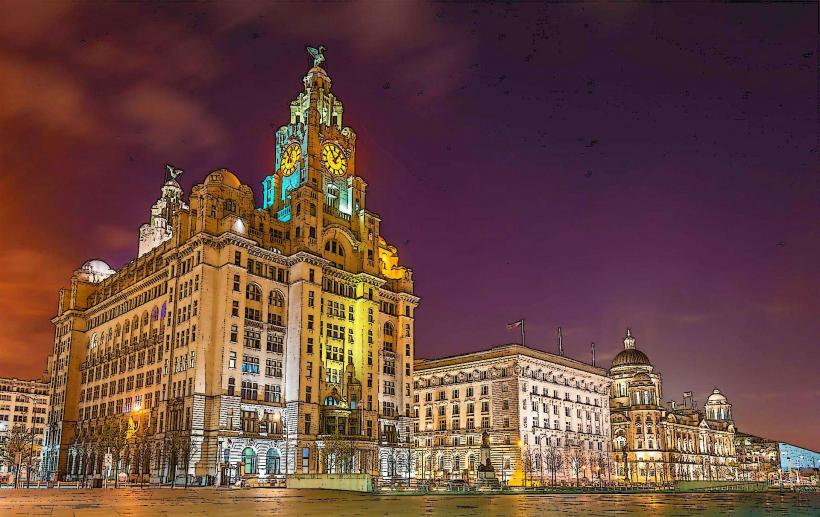
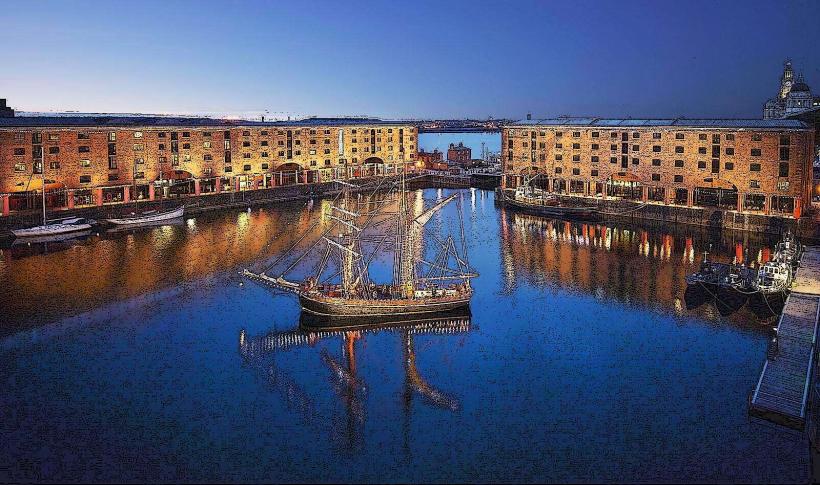
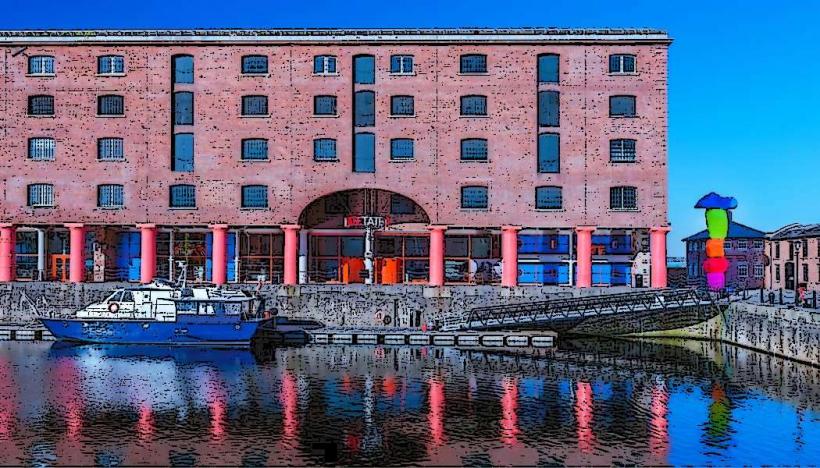
The urban landscape is defined by the "Three Graces"-the Royal Liver Building, the Cunard Building, and the Port of Liverpool Building-located at the Pier Head. The architecture features high-density red-brick Victorian warehouses, particularly at the Royal Albert Dock, and two contrasting 20th-century cathedrals. The skyline is punctuated by the Radio City Tower and the modern glass developments of the Liverpool One district.
Location & Access Logistics
Liverpool is located 55 kilometers west of Manchester and 340 kilometers northwest of London. It is served by Liverpool John Lennon Airport (LPL), 12 kilometers southeast. Liverpool Lime Street is the primary rail terminal, providing high-speed ICE/West Coast Main Line links to London (2 hours 15 minutes). The Merseyrail network operates an underground and overground rail system, while the Mersey Ferries provide cross-river transit to the Wirral Peninsula. Vehicle access is via the M62 and M57 motorways; parking is concentrated in large facilities at the Q-Park Liverpool One and Mount Pleasant.
Historical & Ecological Origin
Granted a borough charter in 1207, Liverpool grew rapidly in the 18th and 19th centuries due to the transatlantic slave trade and later through general merchant shipping. Geologically, it sits on a ridge of Triassic sandstone overlooking the Mersey Estuary. The river's high tidal range (up to 10 meters) necessitated the construction of the world's first enclosed commercial wet dock in 1715. The local ecology is influenced by the estuarine environment, supporting significant migratory bird populations.
Key Highlights & Activities
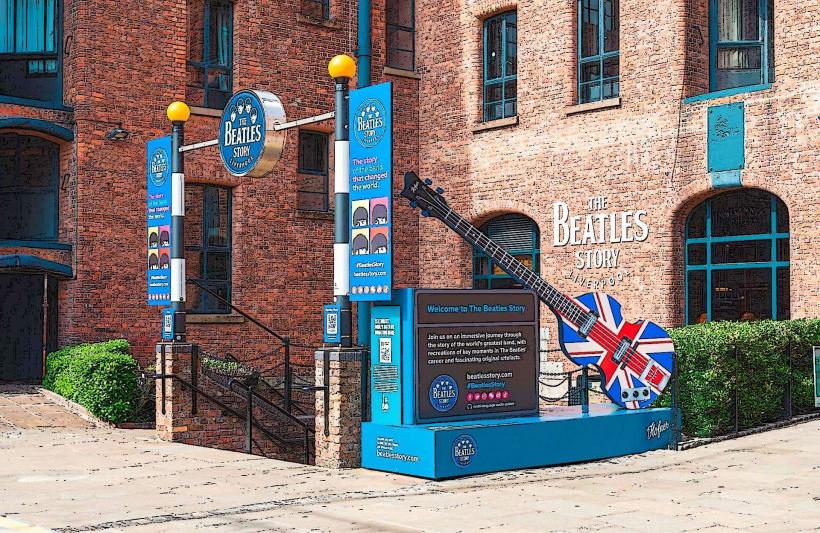
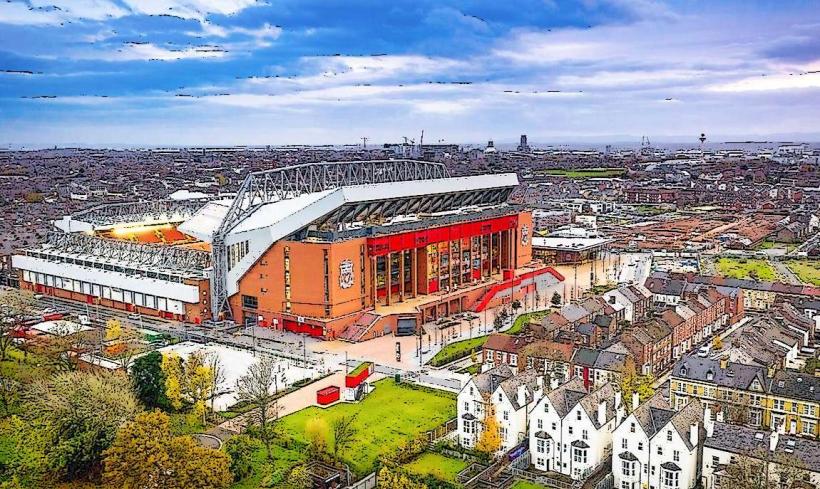
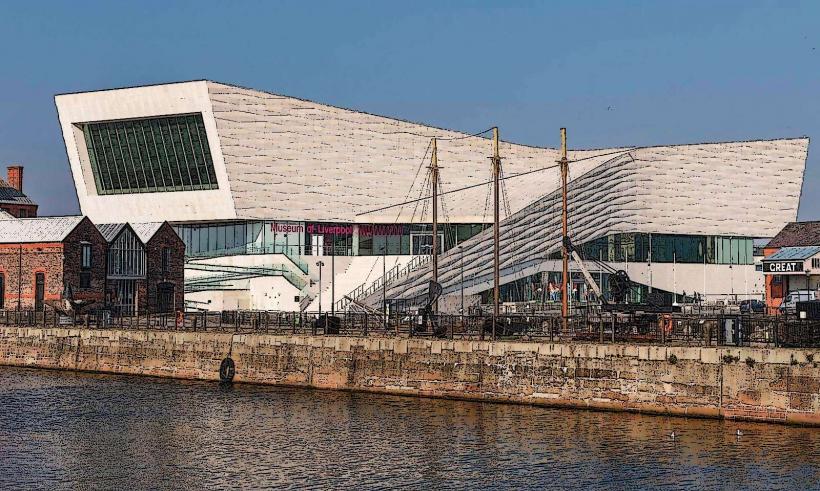
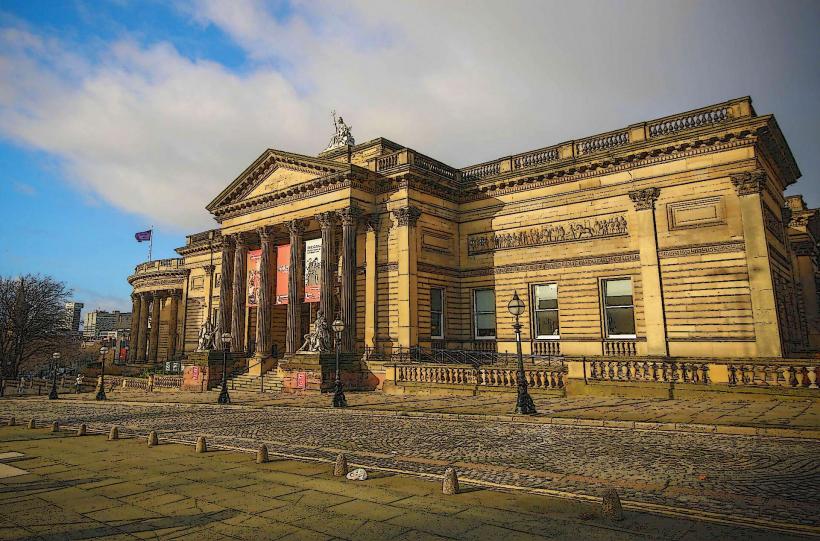
The Royal Albert Dock houses the Tate Liverpool (modern art) and the Merseyside Maritime Museum. The Beatles Story and The Cavern Club are central to the city's musical heritage. The Walker Art Gallery and World Museum offer high-density cultural and scientific collections. Both the Liverpool Cathedral (Gothic Revival) and the Metropolitan Cathedral (Modernist) are accessible for tours. Anfield Stadium and Goodison Park (moving to Bramley-Moore Dock) are primary destinations for football culture.
Infrastructure & Amenities
The city center is equipped with public restrooms in the Liverpool One shopping complex and major rail stations. 5G cellular coverage is universal. The "Voi" e-scooter and e-bike sharing system is the primary micro-mobility provider. Drinking water fountains are available in the Liverpool One district. Retail is concentrated in the 42-acre Liverpool One open-air complex. Dining is high-density on Bold Street and in the Baltic Triangle, specializing in "Scouse" (a local meat stew).
Best Time to Visit
The climate is temperate oceanic with significant maritime influence. May through September is optimal for waterfront activities, with temperatures between $17^{\circ}\text{C}$ and $22^{\circ}\text{C}$. The "International Beatleweek" in August is a peak cultural period. Photography of the Three Graces is best at sunset from across the river or at the Pier Head. Winters are mild but wind-prone.
Facts & Legends
Liverpool has more museums and galleries than any UK city outside of London. A local historical oddity: the Liver Birds atop the Royal Liver Building are legendary protectors; one looks out to sea (to watch over the sailors) and the other looks into the city (to watch over the families). Legend holds that if the two birds were ever to fly away, the city would cease to exist.
Nearby Landmarks
Pier Head / Three Graces: Central hub (Waterfront)
Royal Albert Dock: 0.3km South of Pier Head
Liverpool One: 0.2km East of Waterfront
Liverpool Cathedral: 1.2km Southeast of center
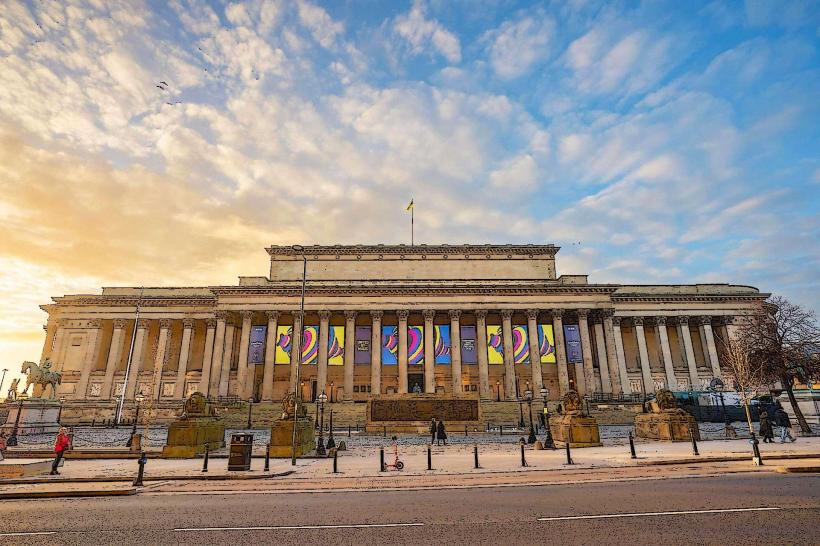
St. George’s Hall: Adjacent to Lime Street Station