Information
City: NimesCountry: France
Continent: Europe
Nimes, France, Europe
Nîmes is a city in the Occitanie region of southern France, located between the Mediterranean Sea and the Cévennes mountains. It is widely recognized for possessing some of the best-preserved Roman monuments outside of Italy, earning it the designation as a UNESCO World Heritage site.
Visual Characteristics
The urban landscape is dominated by heavy Roman masonry, specifically large-scale limestone blocks used in the construction of its amphitheater and temples. The city center features a network of narrow medieval streets that open into expansive neoclassical plazas with ornate fountains. Architectural colors are primarily pale beige and cream, reflecting the local limestone, while modern additions like the Musée de la Romanité utilize glass and steel with a draped, "toga-like" facade.
Location & Access Logistics
Nîmes is situated 45 kilometers southwest of Avignon and 55 kilometers northeast of Montpellier. It is served by the Nîmes-Alès-Camargue-Cévennes Airport (FNI), 9 kilometers southeast of the center. The Gare de Nîmes provides TGV high-speed rail access to Paris in 3 hours and to Marseille in 1 hour. Local transit consists of a high-level service bus system (Tango) with dedicated lanes. Public parking is available in multi-story underground facilities at Les Halles and Maison Carrée.
Historical & Ecological Origin
Originally a Celtic settlement centered around a sacred spring, the city became a Roman colony known as Nemausus under Emperor Augustus. The 1st-century BCE Roman walls once stretched over 6 kilometers, making it one of the largest cities in Roman Gaul. Geologically, Nîmes sits on a plain of sedimentary limestone and alluvial deposits. In the 17th century, the city became a major textile hub, famously developing "serge de Nîmes," the fabric from which the term "denim" originates.
Key Highlights & Activities
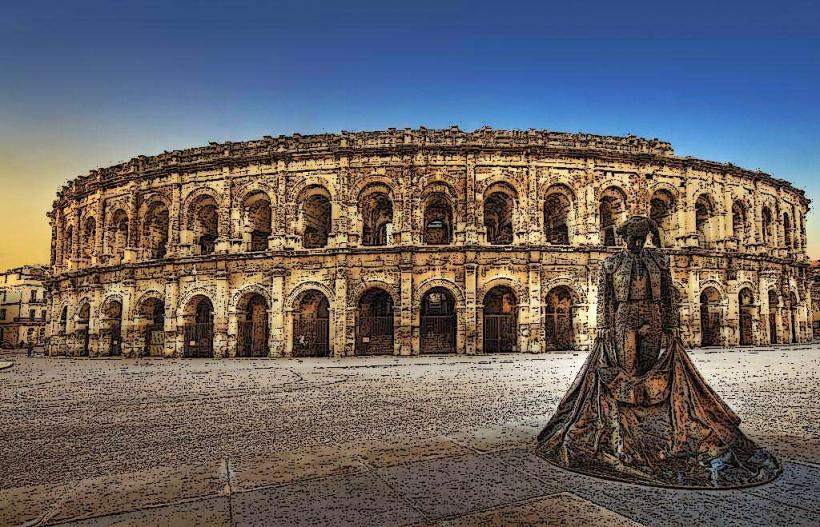
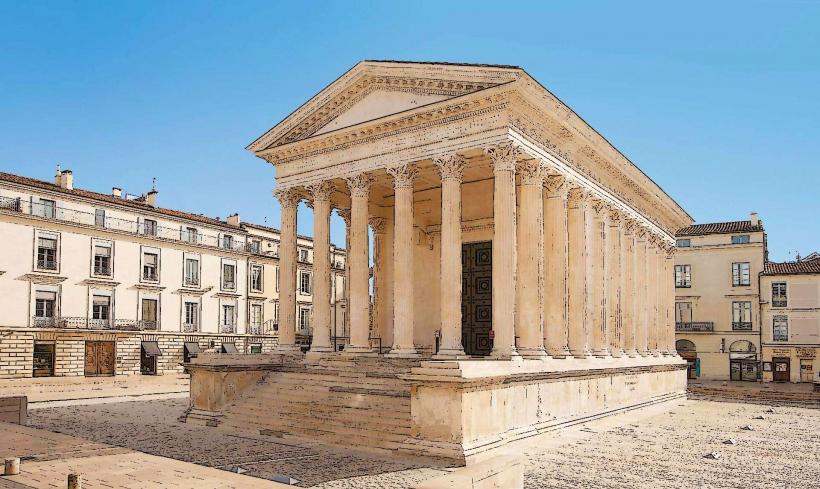
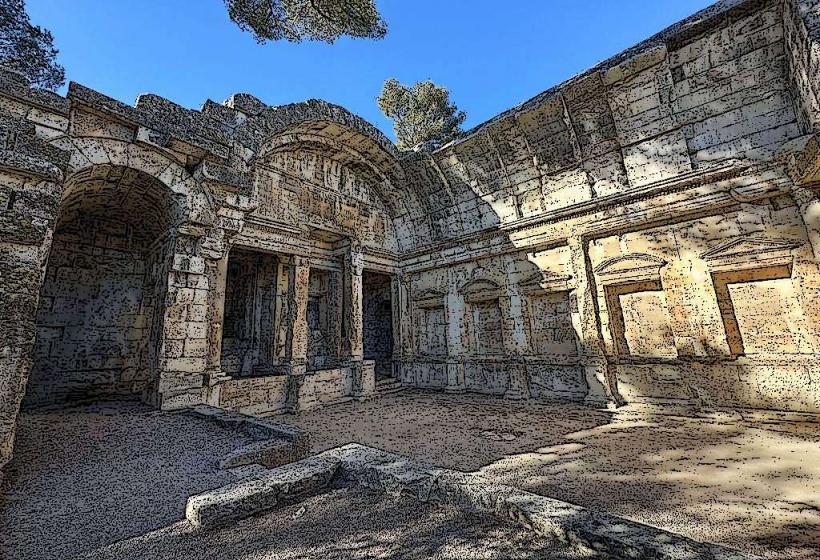
Visitors can enter the Arènes de Nîmes, a 1st-century CE amphitheater that still hosts bullfights and concerts. The Maison Carrée, an exceptionally preserved Roman temple, offers interior viewing of its architectural proportions. Walking through the Jardins de la Fontaine allows for exploration of the 18th-century formal gardens built around Roman ruins. Climbing the Tour Magne provides a panoramic vantage point over the city and the surrounding scrubland (garrigue).
Infrastructure & Amenities
The city center is equipped with public restrooms located near the Arènes and within the Jardins de la Fontaine. 5G cellular coverage is comprehensive throughout the metropolitan area. The city operates a bike-sharing program called "Tango vélo" with numerous docks in the pedestrian core. Drinking water fountains are scattered across the main plazas, and the Les Halles de Nîmes indoor market provides high-density access to regional food and supplies.
Best Time to Visit
The optimal months for climate are May, June, and September, with average temperatures ranging from 20°C to 26°C. Photography of the Roman monuments is best in the early morning to avoid shadows from surrounding buildings. The "Féria de Nîmes," held during Pentecost and in September, involves significant crowds and restricted vehicle access but offers unique cultural viewing.
Facts & Legends
The city's emblem is a crocodile chained to a palm tree, symbolizing the Roman conquest of Egypt by veterans who were later settled in Nîmes. A historical oddity: the "serge de Nîmes" textile was originally a mix of wool and silk before evolving into the cotton-based denim used for modern jeans. Legend holds that the spring in the Jardins de la Fontaine has never run dry, even during the most severe Mediterranean droughts.
Nearby Landmarks
Arènes de Nîmes: 0.1km South of center
Maison Carrée: 0.4km Northwest
Musée de la Romanité: 0.1km Southwest of Arènes
Jardins de la Fontaine: 1.0km West
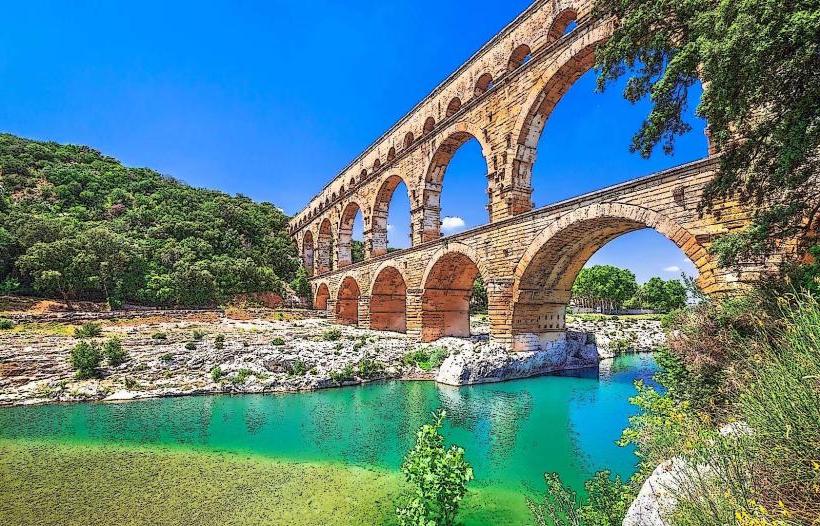
Pont du Gard (Roman Aqueduct): 22km Northeast