Information
City: Phan ThietCountry: Vietnam
Continent: Asia
Phan Thiet, Vietnam, Asia
Phan Thiet is the capital of Binh Thuan Province, located on the South Central Coast of Vietnam. It functions as a critical regional fishing port and is the gateway to the Mui Ne tourism ward.
Historical Timeline
The area was originally part of the Cham Kingdom (Panduranga) before being annexed by the Nguyen Lords in 1697. Governance transitioned from the Nguyen Dynasty to French colonial administration (Protectorate of Annam), then to the Socialist Republic of Vietnam in 1975. The primary event shaping the current urban form was the 1995 total solar eclipse, which brought international attention to the Mui Ne coastline and triggered the rapid development of the "Resort Capital of Vietnam."
Demographics & Population
The total population is approximately 230,000 residents. The demographic is predominantly Kinh (ethnic Vietnamese), with a significant Cham minority and a small community of ethnic Chinese (Hoa). The median age is approximately 32.5 years.
Urban Layout & Key Districts
The city is bisected by the Ca Ty River. The 2 most important districts are Phan Thiet City Center (the administrative and traditional market core, located West) and Mui Ne/Ham Tien (the tourism, kite-surfing, and resort strip, located 15–20 km East).
Top City Landmarks
Po Sah Inu Cham Towers (8th-century ruins)
Duc Thanh School (where Ho Chi Minh taught in 1910)
Phan Thiet Water Tower (Designed by Prince Souphanouvong)
Red Sand Dunes and White Sand Dunes
Van Thuy Tu Temple (Whale museum containing over 100 skeletons)
Transportation Network
Movement within the city is facilitated by local buses (Route 1 and Route 9 connect the center to Mui Ne), taxis, and Grab (car and bike). There is no metro or tram system. The Phan Thiet Railway Station connects to Ho Chi Minh City via the "SPT" tourist train. The Dau Giay–Phan Thiet Expressway has reduced travel time from Ho Chi Minh City to approximately 2.5 hours. Traffic density is moderate in the center but light on the coastal roads.
Safety & "Red Zones"
The general safety level is very high. There are no designated "red zones." Risks are primarily limited to petty bag snatching on the Ham Tien tourist strip and "overcharging" at seafood restaurants (check prices/weight before ordering). Traffic accidents involving tourists on rented scooters are the most significant safety hazard.
Digital & Financial Infrastructure
Internet speeds average 40–80 Mbps, with high fiber-optic penetration in resorts. Main carriers are Viettel, Vinaphone, and Mobifone. Card acceptance is high in hotels and modern restaurants but cash (VND) is mandatory for local markets and street food. ATMs are concentrated in the city center and along the Ham Tien main road (Agribank, Vietcombank).
Climate & Air Quality
Phan Thiet has a tropical semi-arid climate, the driest in Vietnam. Temperatures range from 25°C to 33°C. Air quality is high. The primary weather risk is the monsoon season (June–October), though the region is less prone to typhoons than northern Vietnam.
Culture & Social Norms
Tipping is not traditional but 5–10% is appreciated in tourist restaurants. Social greetings are respectful; "Xin chào" is standard. Dress code is casual, but modest clothing (covering shoulders and knees) is mandatory when visiting Cham towers or temples. The city is the center of Vietnam’s Fish Sauce (Nuoc Mam) production; the scent of fermenting fish is a distinct cultural characteristic of the harbor area.
Accommodation Zones
Ham Tien: Stay here for kite-surfing, nightlife, and mid-range boutique resorts.
Phan Thiet Center: Stay here for an authentic local experience, traditional markets, and proximity to the train station.
Mui Ne Ward: Stay here for luxury resorts and proximity to the sand dunes.
Local Cost Index
1 Espresso (Vietnamese Coffee): 25,000 VND ($1.00 USD)
1 Standard Lunch (Banh Can): 45,000 VND ($1.80 USD)
1 Taxi Fare (City to Mui Ne): 250,000 VND ($10.00 USD)
Nearby Day Trips
Ta Cu Mountain: 30 km (45 minutes by car) - Features a 49-meter reclining Buddha.
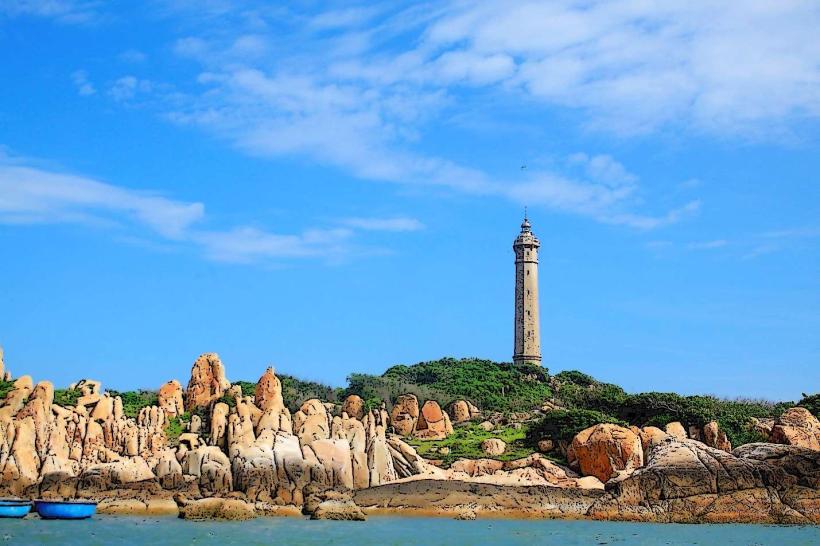
Ke Ga Lighthouse: 35 km (50 minutes by car) - The oldest lighthouse in Vietnam.
Fairy Stream (Suoi Tien): 18 km (In Ham Tien) - Walking through a silt-bottomed canyon.
White Sand Dunes (Bau Trang): 45 km (1 hour by car).
Facts & Legends
Phan Thiet is the birthplace of the modern Vietnamese fish sauce industry, with some barrels aging for over 12 months. A local legend involves the "Lord Whale," believed by fishermen to be a deity that protects sailors; when a whale washes ashore, it is given a royal funeral and its bones are enshrined at Van Thuy Tu. A verified historical oddity is that the city’s landmark Water Tower was designed by the man who later became the first president of Laos.