Information
City: PiraeusCountry: Greece
Continent: Europe
Piraeus, Greece, Europe
Piraeus is the principal port of Greece and one of the largest and most strategically significant maritime hubs in the Mediterranean. Located within the Athens Urban Area, it serves as the primary gateway for the Aegean islands and a vital node for international shipping and trade.
Historical Timeline
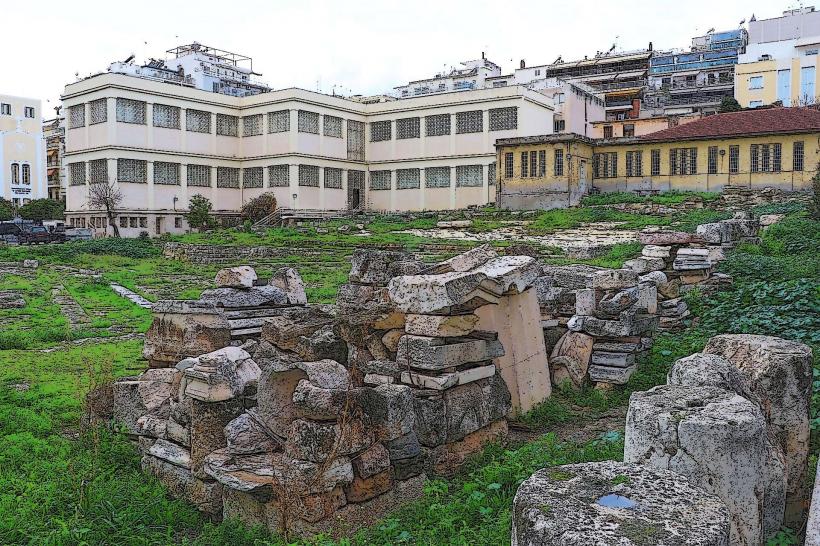
Classical Antiquity: Developed by Themistocles in the 5th century BC as the fortified naval base for the Athenian triremes. It was connected to Athens by the Long Walls.
Modern Expansion: Following the establishment of Athens as the capital in 1834, Piraeus was transformed from a desolate village into a modern industrial and commercial powerhouse.
Refugee Influence: The 1922 population exchange brought hundreds of thousands of Asia Minor Greeks to Piraeus, deeply influencing its culture, music (Rebetiko), and urban density.
Urban Layout & Port Infrastructure
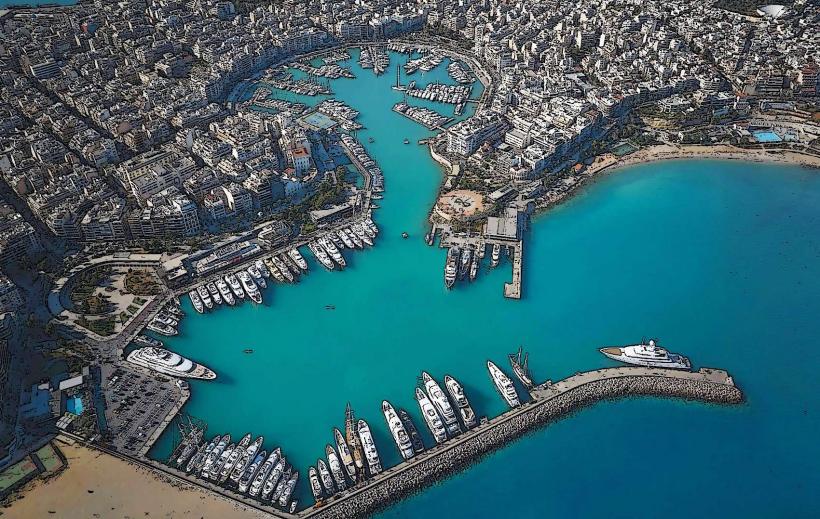
Piraeus is characterized by three distinct natural harbors:
The Central Port (Kantharos): The main terminal for all passenger ferries to the Greek islands and international cruise ships.
Zea Harbor (Pasalimani): A circular bay hosting luxury yachts, maritime museums, and a dense concentration of cafes and retail.
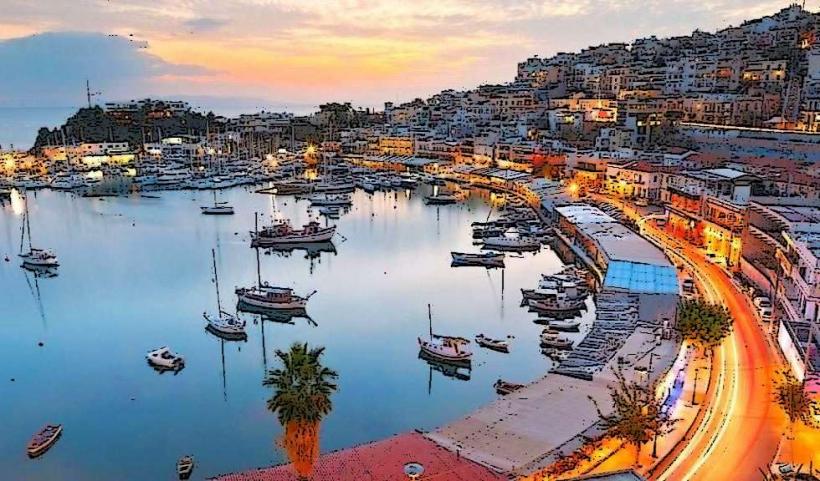
Mikrolimano: A smaller, picturesque harbor known for its high-end seafood restaurants and traditional fishing boats.
Top Landmarks
Archaeological Museum of Piraeus: Houses rare bronze statues, including the Piraeus Apollo and Athena, discovered during 1959 sewage works.
Hellenic Maritime Museum: Located at Zea Harbor; the largest of its kind in Greece, detailing the nation’s naval history from antiquity to the present.
Piraeus Municipal Theatre: A 19th-century neoclassical masterpiece and the cultural focal point of the city.
Kastella: A hilltop neighborhood above Mikrolimano featuring 19th-century mansions and panoramic views of the Saronic Gulf.
The Lion of Piraeus (Replica): A symbol of the ancient port; the original was looted by Venetians in 1687 and currently resides in Venice.
Transportation & Connectivity (2026)
Metro Line 3 (Blue): Provides a direct link from Athens International Airport (ATH) to the Piraeus Port in approximately 55 minutes.
Metro Line 1 (Green): The historic "Electric Railway" connecting Piraeus to Omonoia and Monastiraki.
Tram: Links the Piraeus coast to the southern suburbs (Glyfada and Voula).
Port Gates (2026): Organized by destination (e.g., E1 for Dodecanese, E7/E8 for Saronic, E9 for Cyclades). Digital signage provides real-time gate updates for all 12 million annual passengers.
Safety & Logistics
Terminal Safety: High-density area; travelers should be vigilant against pickpocketing, especially at the E7 and E8 gates where crowds are most concentrated.
Traffic: Piraeus is notoriously congested. During peak summer months, arriving at the port at least 90 minutes before ferry departure is recommended.
Digital & Financial Infrastructure
5G Connectivity: 100% coverage via all Greek providers. The port area serves as a testbed for 5G-enabled logistics and "Smart Port" technologies.
Banking: ATMs are ubiquitous around the metro stations and main harbor gates. Card acceptance is 100% in all legal businesses.
Local Cost Index (2026)
1 Espresso (Freddo): €3.50–€5.00
1 Souvlaki/Gyros: €4.00–€5.00
1 Metro Ticket (90 min): €1.20
1 Standard Seafood Dinner (Mikrolimano): €40.00–€75.00
Facts & Legends
Legend says that in ancient times, Piraeus was an island separated from the mainland by marshes, hence the name "Piraeus" from the word peraio (to carry across). A verified historical fact: The Piraeus Port Authority (OLP) is currently a major global investment point, with the Chinese shipping giant COSCO owning a majority stake, making it the most active transshipment port in the Mediterranean.