Information
City: PitestiCountry: Romania
Continent: Europe
Pitesti, Romania, Europe
Pitești serves as the administrative capital of Argeș County and functions as the primary automotive and petrochemical hub of Romania. It is located in the historical region of Muntenia, situated on the Argeș River at the crossroads of the A1 motorway connecting Bucharest to the Southern Carpathians.
Historical Timeline
Pitești was first documented in 1388 and served as an informal residence for Wallachian Princes until the 18th century. Significant eras include its 19th-century role as a political center for the National Liberal Party (Brătianu family) and the early Communist period (1949–1951), characterized by the "Pitești Experiment" at the local prison. The primary event shaping the current urban form was the 1960s industrial transformation, which established the Dacia automotive works and the Arpechim refinery, leading to the rapid construction of expansive socialist-realist housing estates and the widening of the central axis.
Demographics & Population
The population within city limits is approximately 141,000, with a metropolitan area reaching roughly 210,000. The demographics are predominantly Romanian (over 90%), with small Romani and Armenian minorities. The median age of the population is 43.4 years.
Urban Layout & Key Districts
Pitești is organized linearly along the Argeș River. Centru (Downtown) contains the pedestrian zone, administrative buildings, and the Musical Fountain. Trivale is the primary residential and recreational district to the west, known for its extensive forest park. Găvana and Prundu are high-density residential districts located in the northern and southern peripheries, respectively.
Top City Landmarks
Pitești Prison Memorial (Experimentul Pitești)
Trivale Park and Zoo
The Musical Fountain (Piața Primăriei)
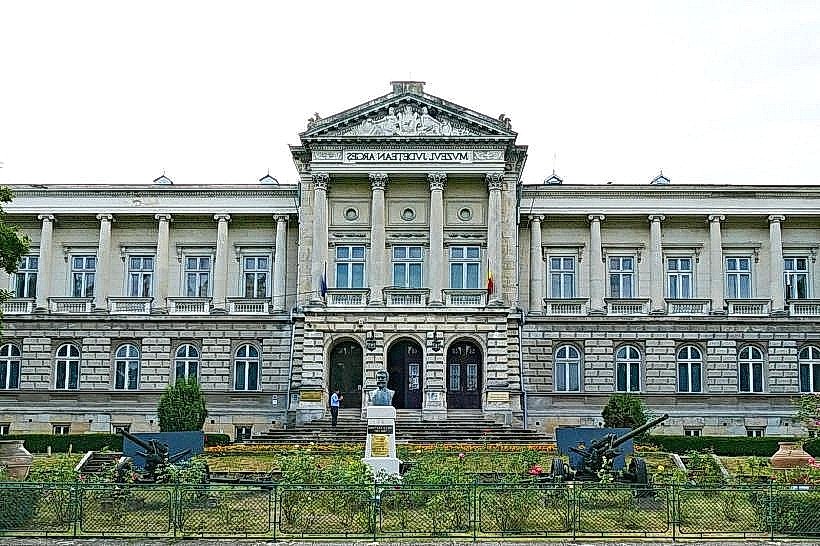
Golești Museum (located 7 km east)
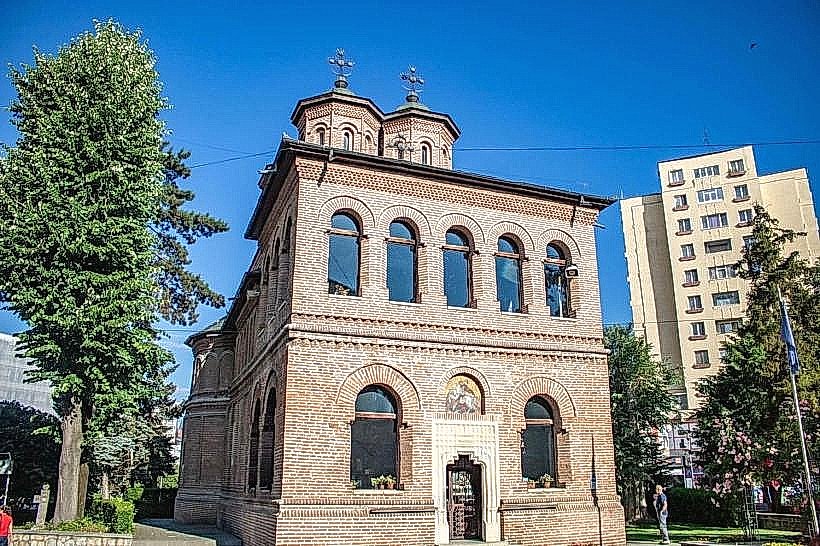
St. George’s Church (Royal Church)
Transportation Network
Movement within the city is facilitated by a bus network operated by Publitrans 2000; there is no Metro or Tram system. Uber and Bolt are the primary ride-sharing apps. Official taxis are yellow and must display the tariff (approx. 2.50–3.00 RON/km) on the front doors. Traffic density is extremely high on Calea București and the A1 motorway exit during peak hours (07:30–08:30 and 16:30–18:00).
Safety & "Red Zones"
Pitești is generally safe for travelers. The Războieni and Prundu districts are identified as having higher rates of petty crime and poor lighting; caution is advised at night. Common scams include unauthorized individuals offering "mechanical assistance" or selling counterfeit automotive parts near the industrial zones.
Digital & Financial Infrastructure
Average internet speed is 140 Mbps via fiber-optic networks. Main mobile carriers are Orange, Digi Mobil, and Vodafone. Card acceptance is high in the city center and VIVO! Mall; cash is required for local bus tickets purchased at kiosks and in the central agricultural markets. ATMs are densely distributed along the main pedestrian promenade.
Climate & Air Quality
Temperatures range from -5°C to 2°C in winter (January) and 16°C to 29°C in summer (July). Air quality is moderate, though particulate matter (PM10) and nitrogen dioxide levels frequently spike in the southern districts due to proximity to the Arpechim industrial site and heavy transit traffic.
Culture & Social Norms
The standard tipping rate is 10% in restaurants. Handshakes are the standard greeting. Dress code is casual, but conservative attire (covered shoulders/knees) is required for St. George’s Church. Public smoking is prohibited in all indoor venues and at transit stations. The city hosts the annual "Tulip Symphony" (Simfonia Lalelelor), a major floral festival every April.
Accommodation Zones
Stay in Centru (City Center): Recommended for walking access to the pedestrian zone, restaurants, and the Prison Memorial.
Stay in Trivale: Recommended for a quieter, nature-oriented stay near the forest park and Zoo.
Local Cost Index
1 Espresso: 10 RON ($2.20)
1 Standard Lunch: 40 RON ($8.70)
1 Bus Ticket: 2 RON ($0.45)
Nearby Day Trips
Curtea de Argeș Monastery: 38 km
Vidraru Dam and Transfăgărășan Road: 65 km
Vila Florica (Brătianu Mansion): 5 km
Facts & Legends
A verified historical oddity is the "Pitești Experiment," a brutal form of psychological re-education through torture that occurred between 1949 and 1951, now recognized internationally as one of the most notorious episodes of the Communist era. An urban legend persists regarding a secret tunnel connecting the Trivale Hermitage to the city center, allegedly used by local boyars to hide from Ottoman raids.