Information
City: SegoviaCountry: Spain
Continent: Europe
Segovia, Spain, Europe
Segovia serves as the administrative capital of the Segovia province in the Castile and León region. It is situated on a rocky ridge between the Eresma and Clamores rivers at the foot of the Sierra de Guadarrama, approximately 90 km northwest of Madrid.
Historical Timeline
The city was a Celtic settlement before being conquered by the Romans in 80 BC. Governance eras include the Visigothic, Islamic (8th–11th centuries), and Leonese. It achieved its peak during the Middle Ages as a royal residence for the Trastámara dynasty and a major center for the wool and textile industry. Isabella the Catholic was proclaimed Queen of Castile here in 1474. The city's current urban form is a remarkably preserved medieval and Renaissance ensemble, designated as a UNESCO World Heritage site in 1985.
Demographics & Population
As of 2026, the city population is approximately 51,000. The demographic is stable, with a significant elderly population and a transient student body from IE University. The primary ethnic demographic is Spanish (89%), followed by residents from Bulgaria, Morocco, and Latin America. The median age is 46.8 years.
Urban Layout & Key Districts
Casco Antiguo: The walled historic core containing the majority of the monuments; characterized by narrow, winding streets and Romanesque architecture.
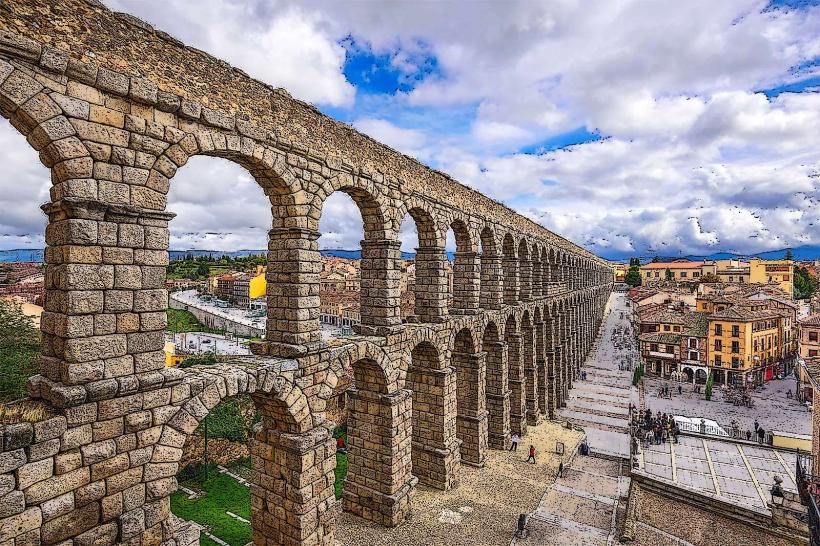
Azoguejo: The central square located at the base of the Roman Aqueduct, serving as the primary transition point between the old and new city.
San Lorenzo: A traditional neighborhood known for its Romanesque church and medieval plaza.
La Albuera: A modern residential district in the southern periphery.
Top City Landmarks
Roman Aqueduct: Built in the 1st century AD, it is one of the best-preserved Roman engineering feats in the world, consisting of 167 arches made of granite blocks without mortar.
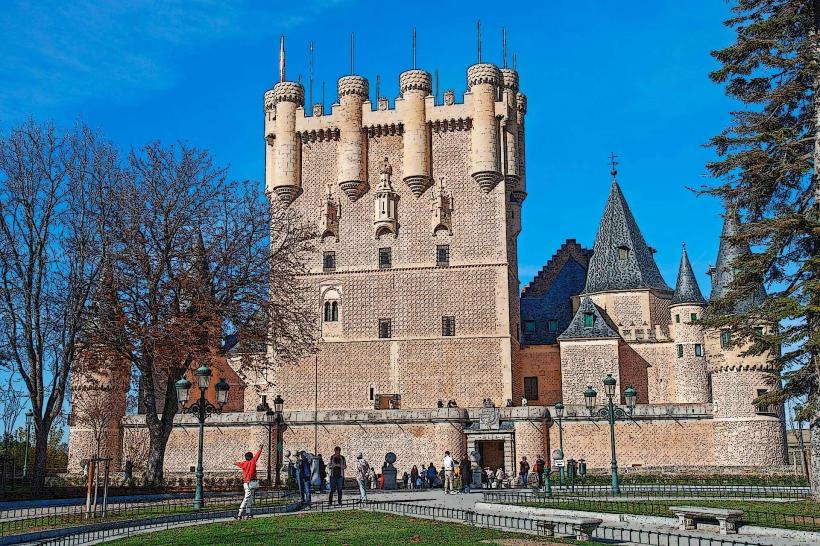
Alcázar of Segovia: A fairytale-style stone fortress and palace; served as the inspiration for Walt Disney’s Cinderella Castle.
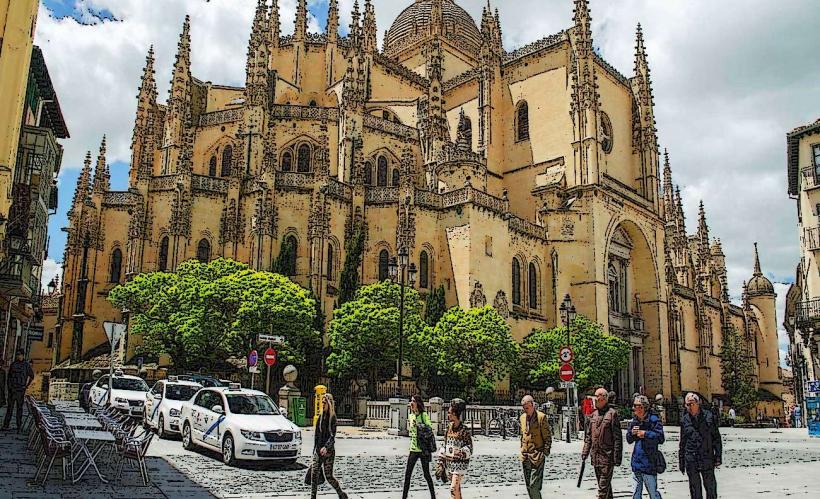
Segovia Cathedral: Known as "The Lady of Cathedrals" for its elegance; it was the last Gothic cathedral built in Spain (1525–1577).
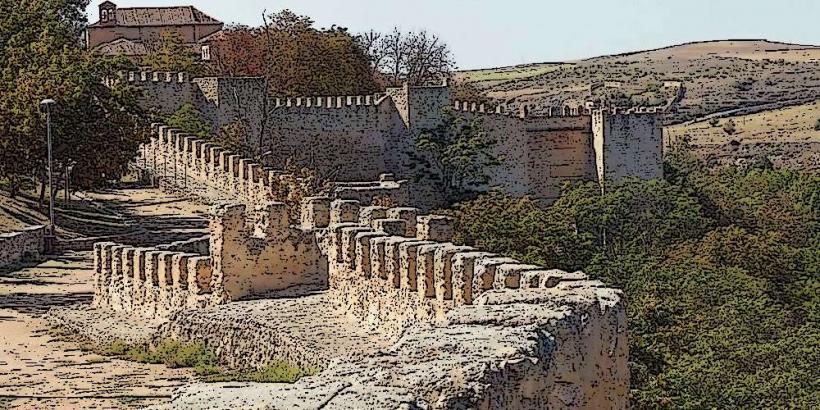
Walls of Segovia: A continuous 3 km circuit of medieval fortifications that encircle the historic core.
Monastery of Santa María del Parral: A 15th-century Hieronymite monastery located in the valley below the Alcázar.
Transportation Network
The historic center is primarily pedestrian. Local transit consists of a municipal bus network. Taxis are white; PideTaxi is the functional app. The Segovia-Guiomar high-speed station (AVE) is located 6 km from the center and connects to Madrid Chamartín in 27 minutes. Standard trains and buses use the station and terminal closer to the city center.
Safety & "Red Zones"
Segovia is exceptionally safe. There are no designated "red zones." Standard caution for petty theft is advised in the Plaza del Azoguejo and near the Alcázar during peak tourist hours.
Digital & Financial Infrastructure
Average fixed broadband speed is 210 Mbps. 5G coverage is universal via Movistar, Orange, and Vodafone. Card acceptance is 100% in restaurants and retail. Following the 2026 Eurozone standard, the currency is the Euro (€). ATMs are concentrated around the Aqueduct and Calle Real.
Climate & Air Quality
The climate is Mediterranean-Continental. Summers are dry and warm (13°C to 29°C), while winters are cold, ranging from -1°C to 8°C. Air quality is very high due to its elevation (1,000m) and proximity to the Guadarrama mountains.
Culture & Social Norms
Language: Castilian Spanish.
Gastronomy: Famous for Cochinillo (suckling pig), traditionally carved with the edge of a plate to demonstrate tenderness.
Tipping: Not required; rounding up or leaving €1–€2 is standard for table service.
Dress Code: Casual but respectful in religious sites.
Accommodation Zones
Casco Antiguo: Recommended for historical immersion and walking access to landmarks.
San Marcos / Eresma Valley: Recommended for quiet stays with views of the Alcázar.
Local Cost Index
1 Espresso: €1.50–€1.90
1 Standard Lunch (Menu del Día): €14.00–€18.00
1 Single Bus Ticket: €1.00
Nearby Day Trips
La Granja de San Ildefonso (11 km): An 18th-century royal palace and gardens modeled after Versailles.
Pedraza (37 km): A perfectly preserved walled medieval village.
Sepúlveda (58 km): Known for its Romanesque architecture and the Hoces del Río Duratón Natural Park.
Facts & Legends
According to local legend, the Aqueduct was built by the Devil in a single night to win the soul of a young girl, but he failed to place the final stone before dawn. A verified historical oddity: the Royal Mint of Segovia (Casa de la Moneda) is the oldest industrial building in Spain, having used water-powered machinery for coining from 1583 until 1869.