Information
City: SigiriyaCountry: Sri Lanka
Continent: Asia
Sigiriya, Sri Lanka, Asia
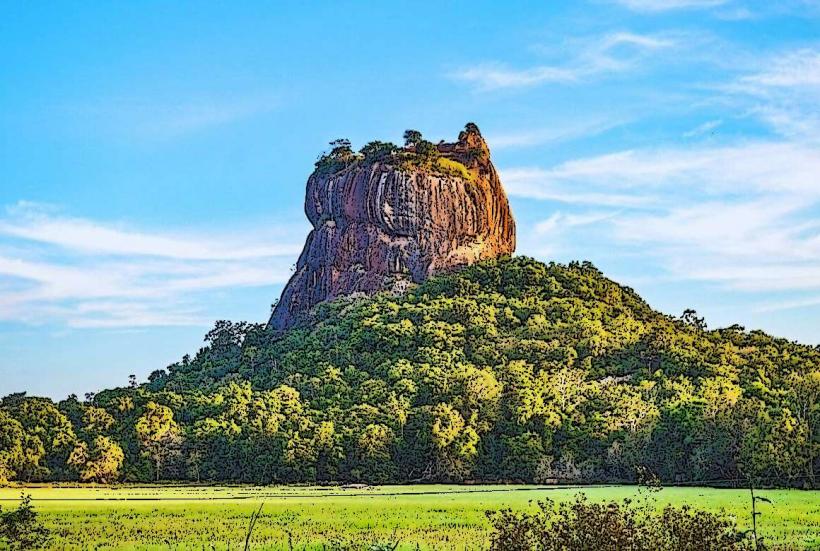
Sigiriya serves as one of Sri Lanka’s most significant archaeological sites and a UNESCO World Heritage site, located in the Matale District of the Central Province. It is defined by a massive column of rock nearly $200$ meters high, which housed an ancient palace and fortress complex.
Historical Timeline
The site was used as a rock-shelter monastery from the 3rd century BCE. Its most prominent phase occurred between 477 and 495 CE when King Kashyapa established it as his capital. Kashyapa, having seized the throne from his father and fearing retribution from his brother, built his palace atop the summit for defense. Following his death, it reverted to a Buddhist monastery until the 14th century, after which it was abandoned until being surveyed by British archaeologist H.C.P. Bell in the 1890s.
Demographics & Population
Sigiriya is a small village community. The demographic is primarily Sinhalese. The local economy is almost exclusively dependent on tourism, ecological farming, and hospitality services.
Urban Layout & Key Districts
The site is a masterclass in ancient urban planning, centered on the rock.
The Summit: The 1.6-hectare area containing the ruins of the upper palace.
The Terrace Gardens: Located at the base of the rock, featuring the Lion Gate.
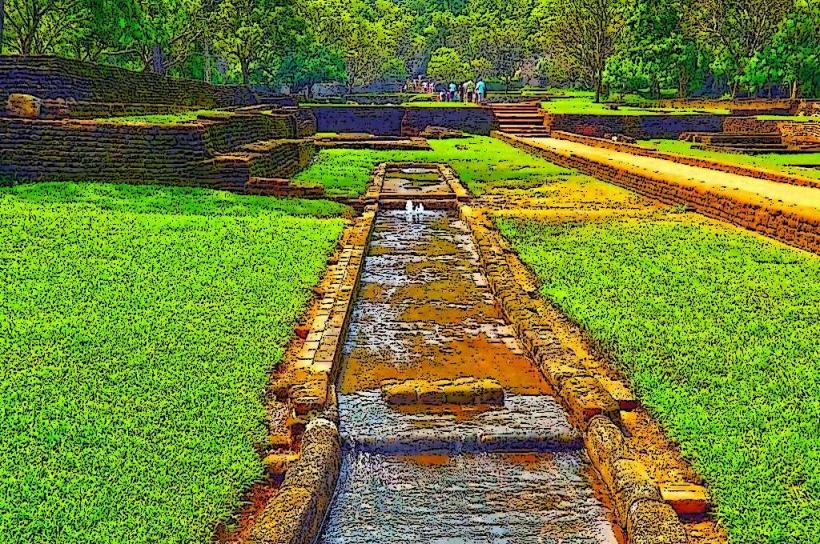
The Water Gardens: A symmetrical complex of pools, fountains, and streams on the western side.
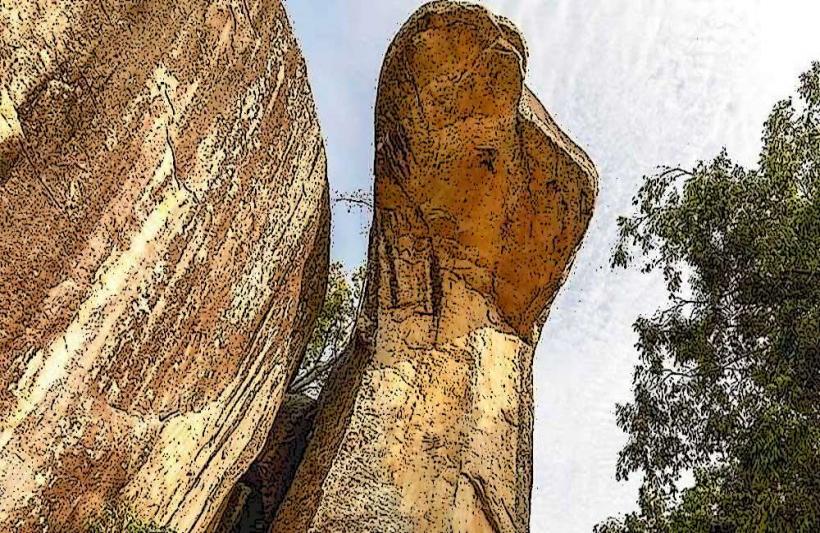
The Boulder Gardens: A rugged area utilizing natural rock formations for monastic cells.
The Moats: Two concentric moats (inner and outer) that originally protected the city.
Top Landmarks
The Lion’s Paw (Lion Gate): The monumental entrance to the final ascent; originally a massive brick lion through which visitors entered.
The Frescoes: 5th-century paintings of celestial nymphs (Apsaras) preserved in a sheltered rock gallery.
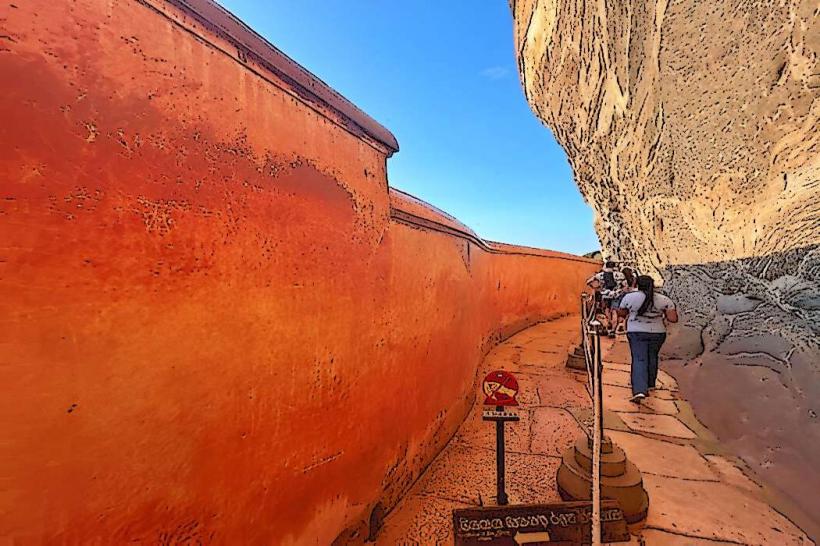
The Mirror Wall: A highly polished masonry wall containing graffiti and poems dating from the 6th to 14th centuries.
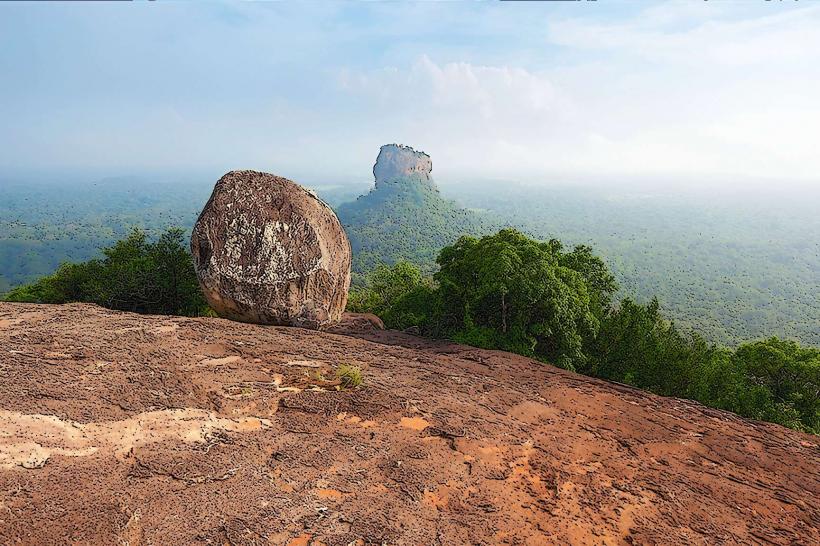
Pidurangala Rock: A neighboring peak offering the best panoramic view of Sigiriya.
The Royal Throne: A massive stone seat carved from the bedrock on the summit.
Transportation Network
Road: Located approximately 170 km from Colombo (4–5 hours). It is best accessed via the town of Dambulla.
Public Transit: Regular buses connect Dambulla to Sigiriya. Tuk-tuks are the primary mode for local transit between hotels and the archaeological entrance.
Air: Cinnamon Air operates domestic water-plane flights to nearby reservoirs (Dambulla/Kandalama).
Safety & "Red Zones"
Wasps: Sigiriya is famous for its large wasp nests on the rock face. Visitors must remain quiet on the upper terraces; noise can trigger swarms. "Wasp protection" enclosures are located on the path.
Wildlife: Wild elephants frequent the roads around Sigiriya and Pidurangala at dusk and dawn. Walking or cycling after dark is highly discouraged.
Climb Safety: The final ascent via metal staircases is steep and can be challenging for those with acrophobia.
Digital & Financial Infrastructure
4G/LTE coverage is available but can be inconsistent near the base of the rock. Most hotels offer Wi-Fi. The currency is the Sri Lankan Rupee (LKR). There are limited ATMs in Sigiriya village; travelers should withdraw cash in Dambulla. Credit cards are accepted at major hotels and the official ticket office.
Climate & Air Quality
Tropical Dry Zone climate. It is characterized by intense heat and humidity. Air quality is excellent due to the surrounding forest reserves and lack of industry.
Culture & Social Norms
While not a functioning temple, Sigiriya is treated with high national pride.
Etiquette: Photography of the frescoes is strictly prohibited (no flash or otherwise).
Dress: Casual wear is acceptable for the climb, but modest clothing is required if visiting nearby religious sites.
Environment: Sigiriya is a "Plastic-Free Zone"; park rangers may check for single-use plastic bottles at the entrance.
Local Cost Index (LKR)
1 Espresso: 700–1,000 LKR (Hotel only)
1 Standard Lunch: 500–1,500 LKR
1 Ticket (Foreign National): Approx. 30–35 USD (payable in LKR)
Nearby Day Trips
Dambulla Cave Temple: 30 minutes south; a massive complex of five gilded caves.
Minneriya National Park: 45 minutes east; famous for "The Gathering" of wild elephants.
Polonnaruwa: 1.5 hours east; the second ancient capital of Sri Lanka.
Facts & Legends
Legend says Kashyapa built Sigiriya to represent "Alakamanda," the city of the gods in Buddhist mythology. A geographic fact: The water gardens at Sigiriya still utilize a 1,500-year-old hydraulic system; the gravity-fed fountains still operate during the rainy season. It is often referred to locally as the "Eighth Wonder of the World."