Information
City: SollerCountry: Balearic Islands
Continent: Europe
Soller, Balearic Islands, Europe
Sóller is a historic town and municipality located in a lush, bowl-shaped valley in the Serra de Tramuntana mountain range on the northwest coast of Mallorca. It is renowned for its orange groves, modernist architecture, and its isolation from the rest of the island until the early 20th century.
Historical Timeline
The valley has been inhabited since Talaiotic times. In 1561, Sóller famously repelled a massive invasion by North African pirates, an event still celebrated today. Historically, the town was isolated by high mountains, leading its residents to trade more frequently with France than with Palma. This created a wealthy merchant class that returned from France in the late 19th century, bringing Art Nouveau (Modernisme) architectural styles to the valley. The "Tunnel of Sóller" through the mountains opened in 1997, ending the town's reliance on the treacherous "Coll de Sóller" mountain pass.
Demographics & Population
The population is approximately 13,500. The community includes a significant number of French, British, and German expatriates. The economy is primarily driven by tourism, citrus farming (the "Valley of Oranges"), and olive oil production.
Urban Layout & Key Districts
Sóller Town: The inland commercial and residential center, centered around Plaça Constitució.
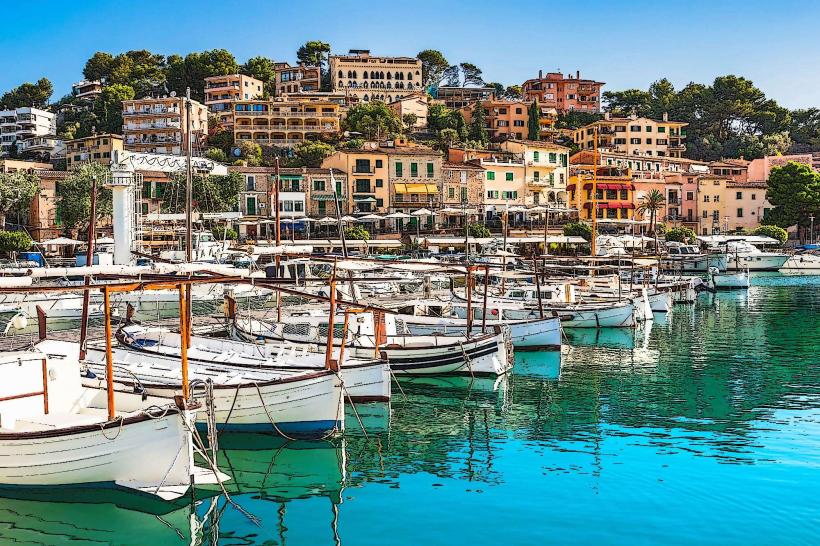
Port de Sóller: Located 3 km from the town; a circular natural harbor serving as the maritime and beach hub.
Biniaraix & Fornalutx: Nearby picturesque stone villages often reached by hiking trails from the town center.
Horta: The agricultural outskirts dominated by citrus terraces.
Top Landmarks
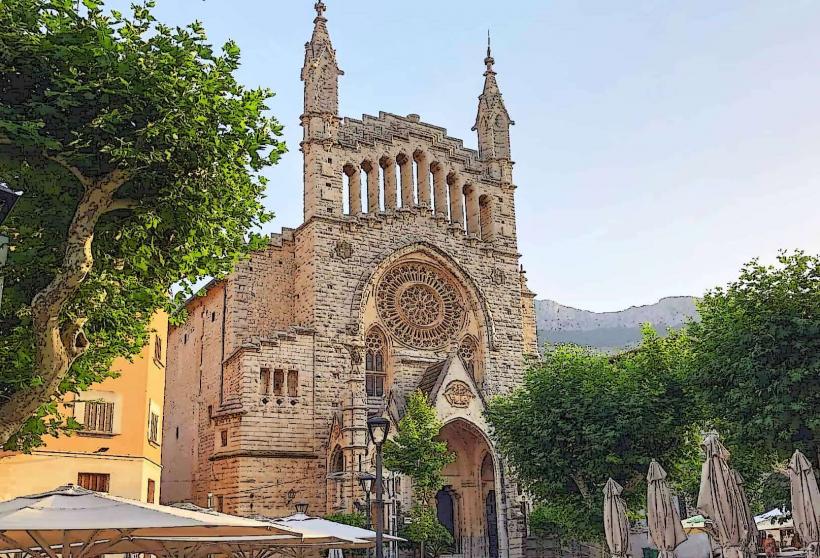
Sant Bartomeu Church: An iconic landmark with a modernist facade designed by Joan Rubió (a student of Antoni Gaudí).
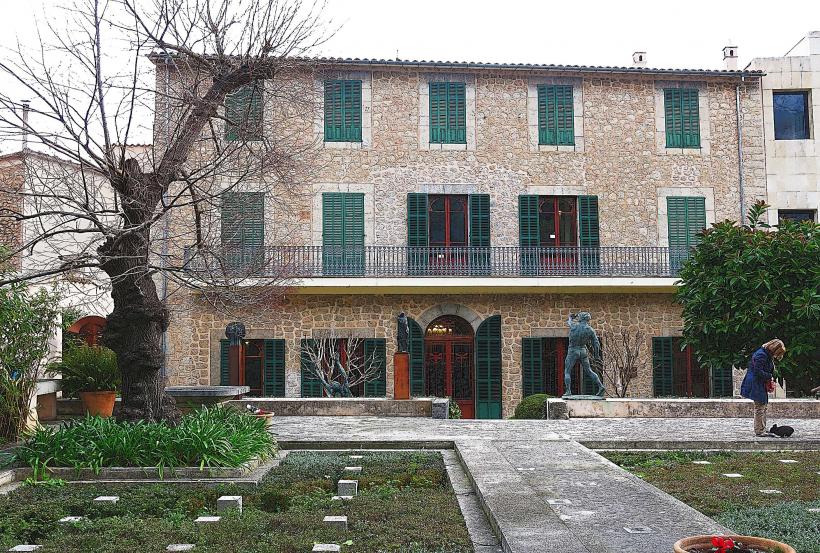
Can Prunera: A refurbished Modernist mansion serving as a museum for 20th-century art.
Banco de Sóller: A striking Art Nouveau building adjacent to the church.
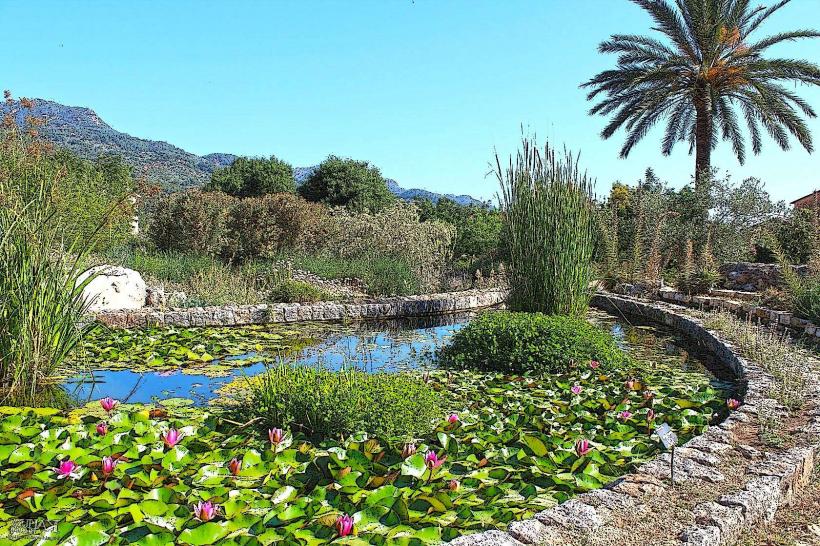
Jardí Botànic de Sóller: A botanical garden dedicated to the flora of the Balearic and Mediterranean islands.
The Tram (Tranvía de Sóller): The "Orange Express," an electric tramway operating since 1913 that connects the town to the port.
Transportation Network
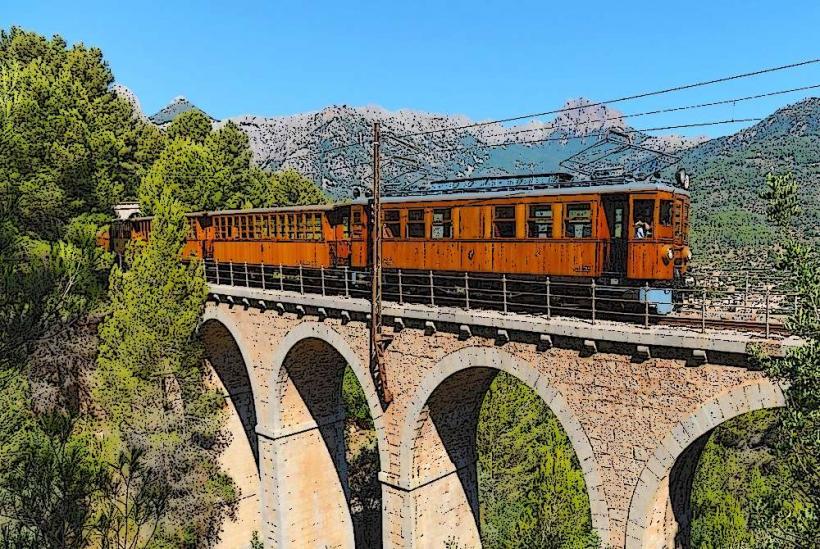
Vintage Train (Ferrocarril de Sóller): A wooden narrow-gauge train that has connected Palma to Sóller through 13 tunnels since 1912.
Tram: Links the town center to the Port de Sóller.
Bus: The TIB (yellow/red) buses connect Sóller to Palma, Valldemossa, and Deià via the tunnel.
Road: Accessible from Palma via the Ma-11 road. The tunnel is now toll-free.
Safety & "Red Zones"
Hiking Safety: Trails in the Tramuntana can be rocky and steep. Rapid weather changes occur at higher elevations.
Cycling: The Ma-10 mountain road is popular with professional cyclists; drivers must exercise extreme caution on narrow hairpin bends.
Tram Tracks: In the town center, the tram passes within inches of cafe tables; stay clear of the tracks when the bell sounds.
Digital & Financial Infrastructure
4G/5G coverage is excellent in the valley and port. The currency is the Euro (€). ATMs are concentrated around Plaça Constitució. Most establishments accept contactless payments, though small amounts for the tram or local markets may require cash.
Climate & Air Quality
Mediterranean mountain climate. It is generally cooler and rainier than Palma due to the surrounding peaks. Air quality is exceptional, characterized by the scent of orange blossoms during the spring blooming season.
Culture & Social Norms
Es Firó: A massive festival in May reenacting the 1561 battle between "Moors and Christians."
Language: While Spanish is spoken, the local Mallorquín dialect features several French-influenced loanwords unique to the valley.
Cuisine: Famous for Sóller Prawns (Gambas de Sóller), freshly squeezed orange juice, and Sopes Mallorquines.
Local Cost Index (EUR)
1 Espresso: €2.00–€3.50
1 Tram Ticket (One-way): €8.00–€10.00
1 Vintage Train Ticket (Palma-Sóller): €18.00–€25.00
Nearby Day Trips
Fornalutx: Frequently voted "Spain’s Most Beautiful Village," accessible by a 45-minute uphill hike.
Sa Calobra: A dramatic coastal gorge reached by a boat from the Port or a legendary winding road.
Deià: A coastal village famous for its association with artist Robert Graves, located 20 minutes south.
Facts & Legends
Legend says the "Brave Women of Sóller" (Ses Valentes Dones) helped defeat the pirate invasion using only household tools. A geographic fact: The valley's microclimate allows for the growth of tropical fruits like avocados and cherimoyas that struggle elsewhere on the island. Historically, the wealth generated from the orange trade was so great that the town's bank (Banco de Sóller) was established specifically to manage the capital of returning emigrants.