Information
City: SongeaCountry: Tanzania
Continent: Africa
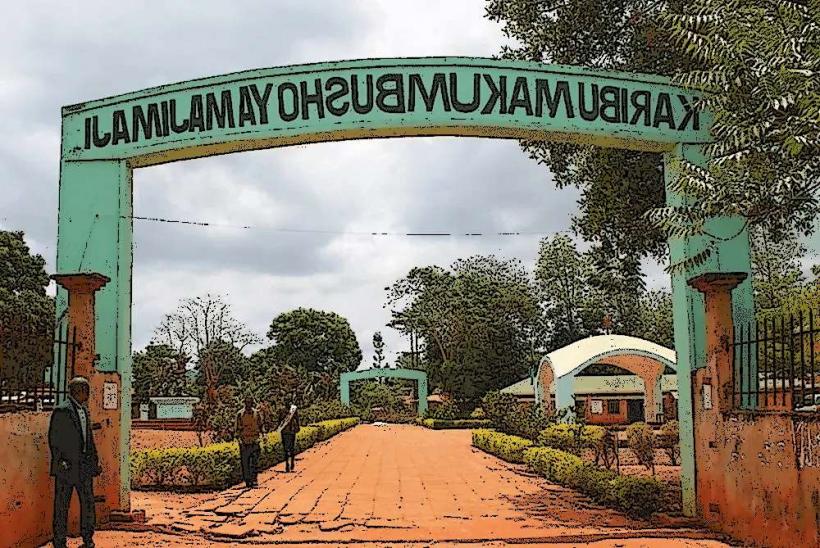
Songea, Tanzania, Africa
Songea is the capital of the Ruvuma Region in southwestern Tanzania, situated on a high plateau at an elevation of 1,060 m. It is a major center for the Ngoni people and is historically significant as a primary theater of the Maji Maji Rebellion (1905–1907). In 2026, it remains one of the fastest-growing inland cities in East Africa, driven by its role as a strategic hub for the Mtwara Development Corridor.
Historical Timeline
The city is named after Chief Songea Mbano, a revered Ngoni leader. In the early 1900s, Songea was the center of resistance against German colonial rule. The Germans executed 67 Ngoni leaders here in 1906, including Chief Songea, who reportedly refused a pardon to die alongside his men. Following the Second World War, the region was earmarked for the ill-fated British Groundnut Scheme. Since the 1980s, the paving of the road to Makambako has integrated Songea into the national economy.
Demographics & Population
The 2026 metropolitan population is approximately 494,000. The demographic is dominated by the Ngoni people, who migrated from South Africa in the 19th century (descendants of the Zulus), as well as the Matengo and Yao. The city is the seat of the Roman Catholic Archdiocese of Songea, reflecting a strong missionary influence in the Southern Highlands.
Urban Layout & Key Districts
CBD: The commercial core featuring the central market and the historic German boma area.
Mahenge: The historical district containing the Maji Maji Memorial.
Mfaranyaki: A bustling residential and small-business district.
Seed Farm: An area traditionally focused on agricultural research, now a growing residential suburb.
Peramiho: Located 20 km west; a significant satellite town centered on the historic Benedictine Abbey.
Top Landmarks
Maji Maji Memorial Museum: The only museum in Tanzania dedicated to the Maji Maji Rebellion; it contains a mass grave of 66 executed warriors and the individual tomb of Chief Songea Mbano.
St. Mathias Mulumba Kalemba Cathedral: A massive, architecturally striking cathedral that serves as a landmark for the city skyline.
Peramiho Abbey: A vast complex including a church, hospital, and schools, founded by German Benedictines in 1898.
Matogoro Mountains: A range overlooking the city, popular for hiking and providing the city’s primary water catchment.
Chandamali: A distinctive rock formation on the outskirts used for local excursions.
Transportation Network
Road: Located on the A19 highway, connecting the city to Mtwara to the east and Mbamba Bay (Lake Nyasa) to the west. The B6 connects Songea north to Makambako and the Southern Highlands.
Air: Songea Airport (SGX) handles domestic flights primarily to Dar es Salaam.
Rail: There is no functional passenger rail; however, the proposed Mtwara-Songea railway remains a long-term strategic project for coal and agricultural export.
Safety & Health
Climate Dangers: High-altitude location means very cold nights from June to August ($8^\circ\text{C}$–$12^\circ\text{C}$); winter gear is necessary.
Health: Lower malaria risk than coastal Tanzania due to altitude, but outbreaks occur during the rainy season. Peramiho Hospital is one of the best-equipped medical facilities in southern Tanzania.
Safety: Very high. Songea is known for a low crime rate and a disciplined social environment.
Digital & Financial Infrastructure
4G is standard across the municipality. The currency is the Tanzanian Shilling (TZS). As a major transit hub for the gemstone and tobacco trade, the city has a high density of banks (NMB, CRDB, NBC, Stanbic). Mobile Money is the universal payment method for local transport and markets.
Climate & Economy
Humid subtropical climate ($Cwa$).
Weather: Mild temperatures year-round ($14^\circ\text{C}$–$27^\circ\text{C}$).
Agriculture: The region is a "breadbasket," producing maize, coffee, and tobacco.
Mining: A hub for the trade of coal (from Mchuchuma) and gemstones (sapphires and garnets) from the Tunduru-Songea belt.
Local Cost Index (TZS)
1 Entry to Maji Maji Museum: 15,000–25,000 TZS (Non-Resident)
1 Shared Dala-dala ride: 500–700 TZS
1 kg of Matogoro Coffee (Local): 18,000–25,000 TZS
Facts & Legends
Legend says that the spirit of Chief Songea Mbano still protects the city, and his refusal to be buried in the mass grave led to his separate, honored tomb. A geographic fact: Songea is the most significant city in Tanzania that does not sit on a major lake, ocean, or international border, yet it maintains one of the highest urban growth rates in the country. Historically, the Ngoni people brought the isidhlodlo (headring) tradition from Zululand, which can still be seen in some cultural ceremonies in the Ruvuma Region.