Information
City: SpetsesCountry: Greece
Continent: Europe
Spetses, Greece, Europe
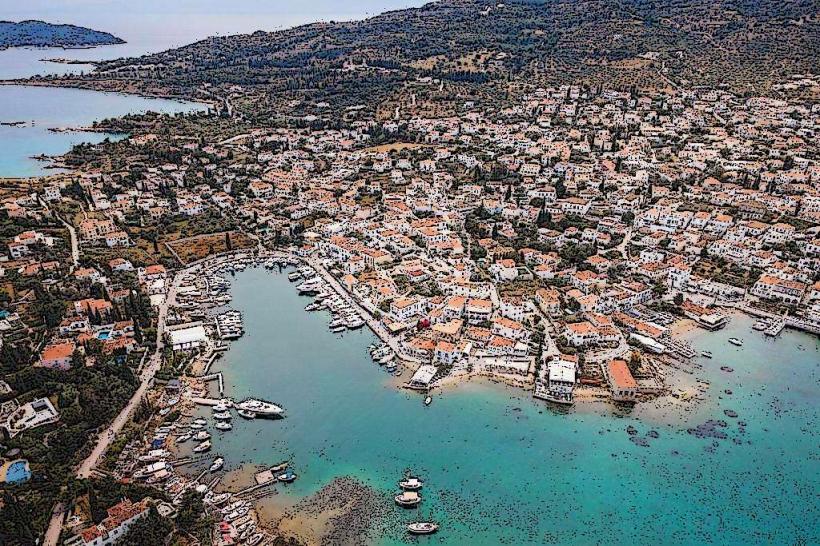
Spetses is the southernmost island of the Saronic Gulf, situated near the Argolic Peninsula. It is characterized by its pine-forested interior and a unique transport policy that restricts private cars within the main town, prioritizing horse-drawn carriages, bicycles, and motorbikes.
Historical Timeline
The island was known in antiquity as Pityoussa (Pine-clad). Its modern history is defined by its role as a naval superpower during the 18th and 19th centuries. Spetses was the first Saronic island to join the 1821 Greek War of Independence. The local heroine Laskarina Bouboulina, the first woman to hold the rank of Admiral, used her own wealth and ships to lead naval blockades against the Ottoman Empire. The island became a high-society destination in the early 20th century following the establishment of the Poseidonion Grand Hotel in 1914.
Urban Layout & Key Districts
Dapia: The modern harbor and heart of the island; serves as the arrival point for ferries and the central social hub.
Old Harbor (Palio Limani): The historic maritime center located a 20-minute walk east of Dapia; characterized by traditional shipyards and high-end dining.
Agios Nikolaos: The district between Dapia and the Old Harbor, housing the island's cathedral and neoclassical mansions.
Kastelli: The original fortified settlement of the island, located on the slopes above Dapia.
Top Landmarks
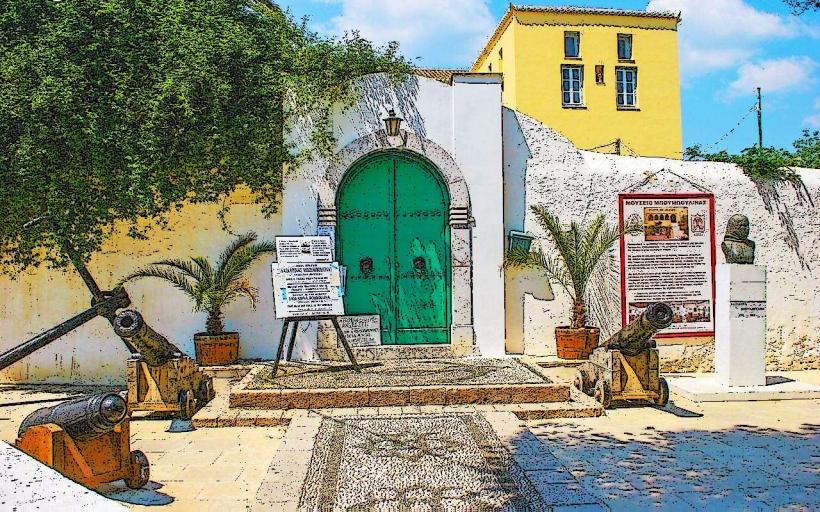
Bouboulina Museum: Housed in the 300-year-old mansion of the heroine; features personal artifacts and a detailed history of the naval revolution.
Spetses Museum (Hatzigianni-Mexi Mansion): Showcases 4,000 years of island history, including the bones of Bouboulina and revolutionary flags.
Poseidonion Grand Hotel: An architectural landmark on the waterfront, built in the style of the French Riviera’s Carlton and Negresco hotels.
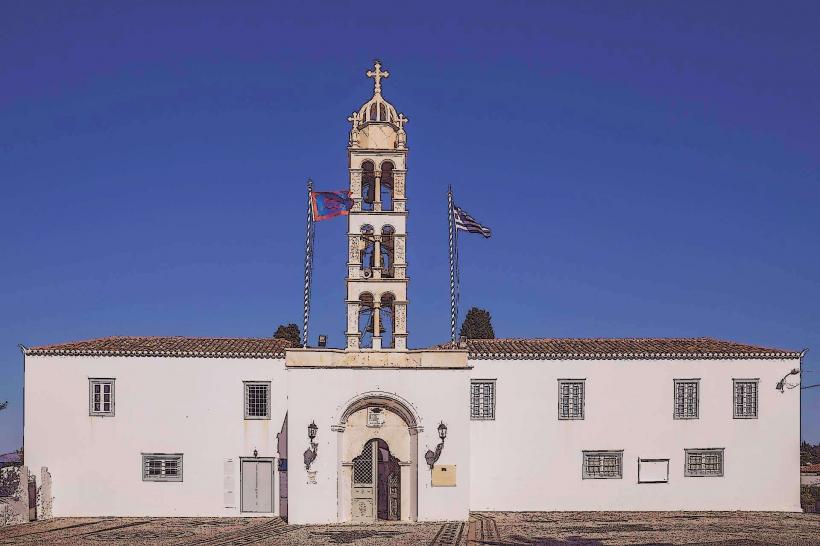
Church of Agios Nikolaos: The site where the revolutionary flag was first raised in 1821; it features a notable pebble-mosaic courtyard.
Anargyrios and Korgialenios School: A historic English-style boarding school on the outskirts of town, which served as the inspiration for the setting of John Fowles’ novel The Magus.
Transportation Network
Sea: Accessible via high-speed hydrofoils from Piraeus (2–3 hours) or via small ferry from Kosta in the Peloponnese (15 minutes).
Land: Private cars are prohibited for non-residents. Transit is managed through horse-drawn carriages, bicycles, and a large population of mopeds. A public bus runs the coastal route to Agia Marina and Agioi Anargyroi.
Water Taxis: Centered in Dapia; provide fast transport to coastal villas and remote beaches.
Safety & Digital Infrastructure
Spetses is highly safe. The primary risk involves the high volume of moped traffic in narrow alleys.
Digital: 5G coverage is universal via Cosmote and Vodafone.
Payments: Card acceptance is 100%. ATMs are concentrated in the Dapia area.
Climate & Environment
The climate is Mediterranean. The island is significantly greener than the Cyclades due to its extensive Aleppo pine forests.
Armata Festival: The island's major event (September), featuring a dramatic reenactment of a 1822 naval battle, including the burning of a mock Ottoman flagship.
Local Cost Index
1 Espresso (Freddo): €4.00–€6.00
1 Horse-Drawn Carriage Ride: €15.00–€30.00 (depending on distance)
1 Standard Lunch: €25.00–€45.00
1 Water Taxi (Short trip): €25.00+
Facts & Legends
Legend says the island’s name "Spetses" derives from the Venetian Isola di Spezzie (Island of Fragrances), referring to the aromatic herbs found on its slopes. A verified historical fact: The Poseidonion Grand Hotel was the first hotel in Greece to offer its guests "modern" amenities such as private bathrooms and electric lighting upon its opening in 1914.