Information
City: SyrosCountry: Greece
Continent: Europe
Syros, Greece, Europe
Syros is the administrative capital of the Cyclades and the South Aegean region. Unlike its tourism-centric neighbors, Syros maintains a robust year-round economy based on administration, shipbuilding, and education. It is architecturally unique for its high concentration of neoclassical buildings rather than the traditional whitewashed Cycladic style.
Historical Timeline
Antiquity: Birthplace of the philosopher Pherecydes, teacher of Pythagoras.
Venetian Era: Inhabited by Roman Catholics since the 13th century, earning it the nickname "The Pope's Island."
1821 Revolution: Thousands of Greek refugees from Chios, Psara, and Crete fled to Syros, founding Ermoupoli.
19th Century: Ermoupoli became the leading commercial, industrial, and maritime center of the newly formed Greek state, surpassing Piraeus until the late 1800s.
Urban Layout & Districts
The island is defined by two hills overlooking the main port:
Ermoupoli: The capital, characterized by grand marble-paved squares, neoclassical mansions, and public buildings.
Ano Syros: The medieval Catholic settlement on the adjacent hill, featuring narrow alleys, fortifications, and a traditional Cycladic layout.
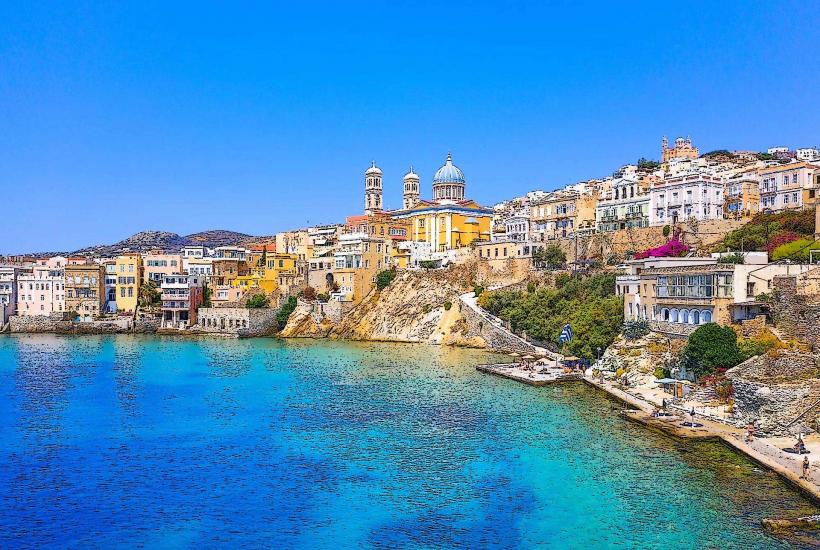
Vaporia: The most prestigious district of Ermoupoli, where wealthy 19th-century shipowners built mansions that appear to rise directly out of the sea.
Posidonia (Della Grazia): A southern resort area known for the historic summer villas of the Syriot aristocracy.
Top Landmarks
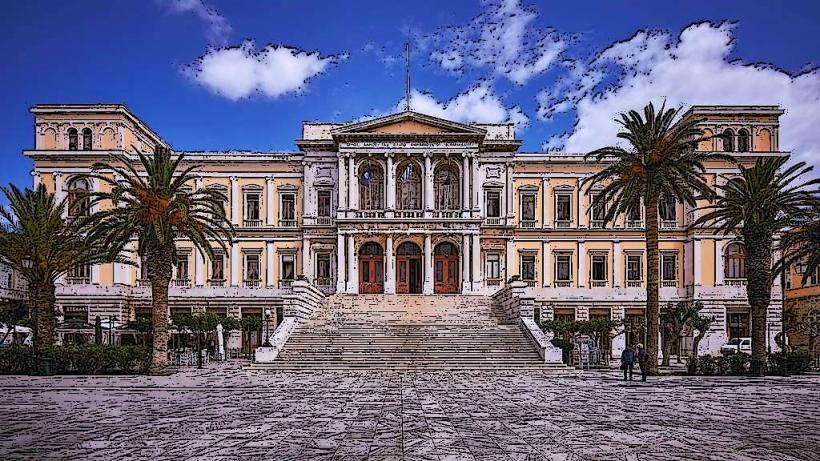
Town Hall (Dimarcheio): Designed by Ernst Ziller in 1876; one of the largest and most impressive municipal buildings in Greece, located in Miaouli Square.
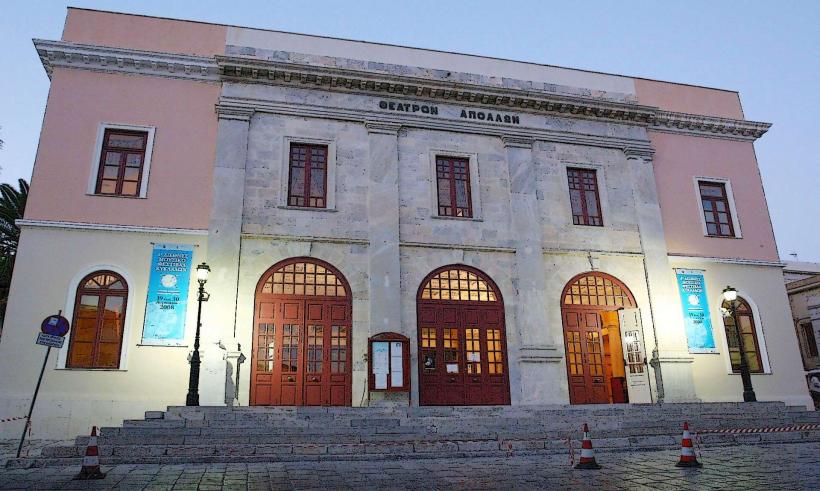
Apollo Theater: Built in 1864 as a miniature version of La Scala in Milan; the first opera house in Greece.
Saint George's Cathedral (San Giorgio): The seat of the Roman Catholic Bishop of Syros, located at the highest point of Ano Syros.
Saint Nicholas Church: A lavish Orthodox church in Vaporia known for its blue dome, marble iconostasis, and "the choir of Syros."
Industrial Museum of Ermoupoli: Located in a restored factory; houses the first electric car ever produced (the Enfield 8000).
Transportation & Infrastructure (2026)
Sea: The Port of Ermoupoli is a major transit point. High-speed ferries connect to Piraeus (2–3 hours) and Rafina (4 hours). It is the central hub for local "inter-Cycladic" ferry routes.
Air: Syros Island National Airport (JSY) serves daily domestic flights to Athens.
Road: A dense bus network connects Ermoupoli to the seaside villages of Galissas, Kini, and Vari.
Shipbuilding: The Neorion Shipyard remains one of the largest industrial facilities in the Aegean, specializing in ship repairs and yacht maintenance.
Safety & Environment
Safety: Extremely safe. Syros has a lower tourist-to-resident ratio than most islands, resulting in a stable, community-focused environment.
Beaches: Primarily found on the western and southern coasts. Unlike the sandy beaches of Naxos, Syros features a mix of pebbles and sand (e.g., Kini, Galissas).
Gastronomy & Local Products
Loukoumi: Syros is famous for its Turkish delight, introduced by Chian refugees.
San Michali Cheese: A hard, spicy PDO cheese made from local cow's milk.
Halvadopita: A sweet nougat pie with almonds and honey sandwiched between thin wafers.
Rebetiko: The island is the birthplace of Markos Vamvakaris, the "Patriarch" of Rebetiko music; a museum dedicated to him is located in Ano Syros.
Local Cost Index (2026)
1 Espresso (Freddo): €3.50–€4.50
1 Box of Loukoumi (Standard): €5.00–€8.00
1 Standard Lunch: €18.00–€30.00
1 Night in a Neoclassical Hotel: €90.00–€160.00
Facts & Legends
Legend claims that the island was the first place where the "Hermes" (trade) and "Apollo" (arts) archetypes perfectly merged through the city of Ermoupoli (City of Hermes). A verified historical fact: The Enfield 8000, the world's first mass-produced electric car, was manufactured in Syros in the 1970s due to the island's long tradition in precision engineering and metalwork.