Information
City: ZakynthosCountry: Greece
Continent: Europe
Zakynthos, Greece, Europe
Zakynthos (Zante) is the southernmost and third-largest of the major Ionian Islands. It is defined by a sharp geographical split: a rugged, mountainous plateau in the northwest and a fertile, densely populated plain in the southeast. Known as "Il Fiore di Levante" (The Flower of the East) by the Venetians, the island is a major ecological site for the protection of the loggerhead sea turtle.
Historical Timeline
Inhabited since the Neolithic Age, Zakynthos is mentioned in Homer’s Iliad and Odyssey. The island fell under Roman rule in the 2nd century BC and later became a crucial outpost of the Byzantine Empire. Its most significant era was Venetian rule (1484–1797), which deeply influenced its architecture, dialect, and music. After brief French and Russian occupations, it was part of the British protectorate before joining Greece in 1864. Much of the island's historic Venetian infrastructure was lost in the Great Earthquake of 1953, leading to a widespread modern reconstruction.
Urban Layout & Key Districts
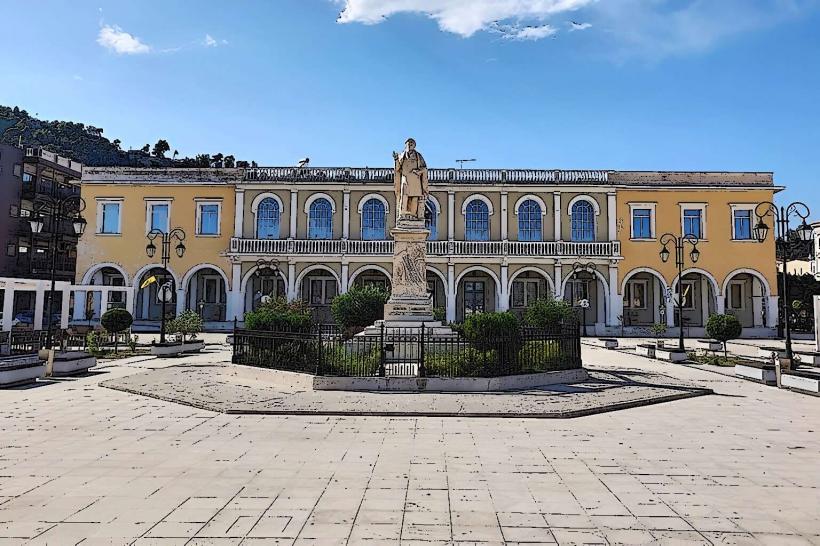
Zakynthos Town (Chora): The administrative and commercial capital, rebuilt in a neoclassical style following the 1953 earthquake. It centers around Solomos Square and the Strada Marina.
Bochali: A hilltop district directly above Chora, offering panoramic views and housing the ruins of the Venetian Castle.
Laganas: The island’s primary tourism hub, known for its 9-km sandy beach and high-intensity nightlife.
Vasilikos: A scenic southeastern peninsula characterized by pine forests and high-end sandy beaches like St. Nicholas and Porto Roma.
Volimes: A cluster of traditional mountain villages in the north, famous for local handicrafts, honey, and textiles.
Top Landmarks
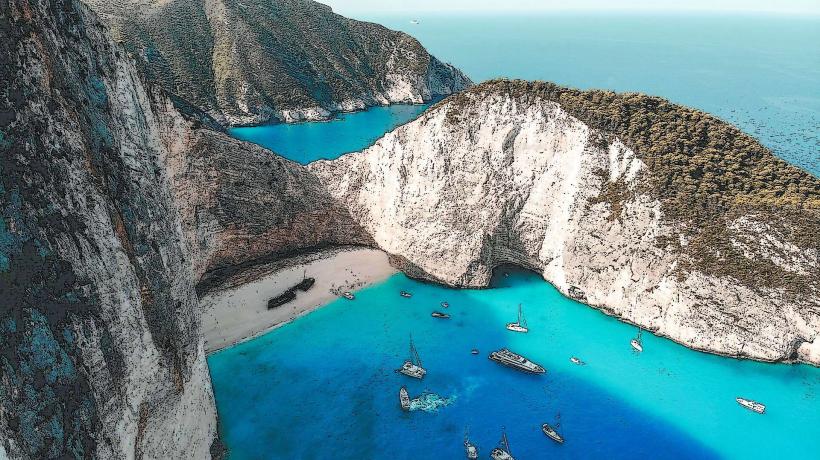
Navagio (Shipwreck Beach): Accessible only by boat, this cove features the wreck of the Panagiotis (1980) against 200m limestone cliffs and electric-blue water.
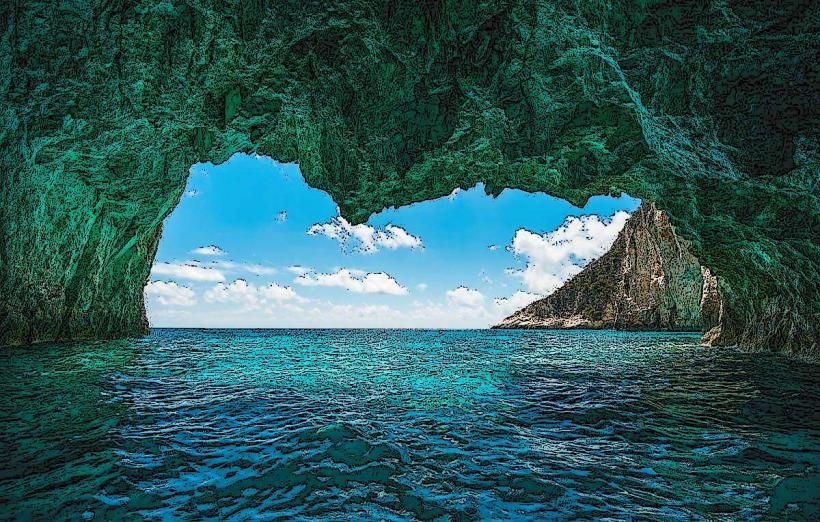
The Blue Caves: A series of geological formations at Cape Skinari where the light reflects off the white seafloor to turn the water a vivid neon blue.
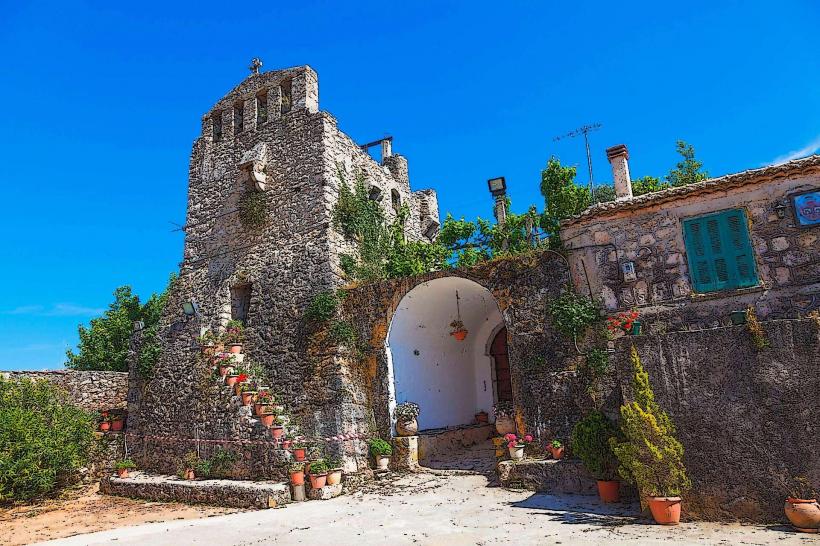
Church of Agios Dionysios: The island’s most important religious site, housing the relics of its patron saint. Its freestanding Venetian campanile is a city icon.
Marathonisi (Turtle Island): An uninhabited islet in Laganas Bay that resembles a turtle and serves as a vital nesting ground for the Caretta caretta.
Venetian Castle (Kastro): Located on Bochali Hill; although largely in ruins, it offers a glimpse into the island’s medieval fortification history.
Transportation Network
Air: Zakynthos International Airport "Dionysios Solomos" (ZTH) handles high volumes of seasonal charters. Note: Flight operations are restricted at night to protect nesting turtles.
Sea: The main port in Chora connects to Kyllini (Peloponnese). A secondary port at Agios Nikolaos (Volimes) provides ferry links to Pesada in Kefalonia.
Bus: The KTEL network provides frequent service from Chora to major resorts (Laganas, Tsilivi, Argassi), but mountain villages are less accessible.
Road: The island is roughly 40 km long. Car or quad bike rentals are standard for reaching the western cliffs.
Safety & Environment (2026)
Zakynthos is safe, but specific localized risks exist:
The "Shipwreck" Viewpoint: The cliffs above Navagio are unstable; visitors should strictly adhere to fenced areas as fatalities from cliff falls have occurred.
Nightlife Safety: Laganas is subject to heavy police presence due to alcohol-related incidents involving young tourists.
Wildlife Protection: It is strictly prohibited to enter the nesting beaches of the National Marine Park after sunset during the summer.
Digital & Financial Infrastructure
Average fixed broadband speed is 95 Mbps. 5G is universal in the eastern plains and Chora via Cosmote and Vodafone. Card acceptance is 100% in tourism-facing businesses. The currency is the Euro (€).
Climate & Gastronomy
The climate is Mediterranean with high winter rainfall, making it one of the greenest islands in Greece.
Signature Dishes: Rabbit Stifado (slow-cooked with cinnamon and wine), Sartsa (beef stew with garlic and oil cheese), and Skordostoumpi (eggplant with heavy garlic and vinegar).
Local Products: Ladotyri (a spicy cheese aged in olive oil) and Mantolato (traditional honey-and-almond nougat).
Verdea Wine: A high-alcohol, traditional multi-variety white wine produced exclusively on the island.
Local Cost Index
1 Espresso (Freddo): €3.50–€5.00
1 Boat Trip to Navagio: €25.00–€40.00
1 Standard Lunch: €18.00–€28.00
1 Litre of Gasoline: €1.98–€2.15
Facts & Legends
Legend says the island was named after Zacynthus, the son of the Arcadian chief Dardanus. A verified historical fact: During WWII, the Mayor of Zakynthos and the Bishop refused to hand over a list of the island's Jews to the Nazi occupiers, instead giving a paper with only their own two names. Consequently, the entire Jewish population of Zakynthos survived the Holocaust.