Information
Landmark: Dudutki Folk MuseumCity: Minsk
Country: Belarus
Continent: Europe
Dudutki Folk Museum, Minsk, Belarus, Europe
The Dudutki Folk Museum is an open-air complex dedicated to traditional Belarusian rural life, crafts, and culture, located approximately 40 kilometers south of Minsk, Belarus.
Visual Characteristics
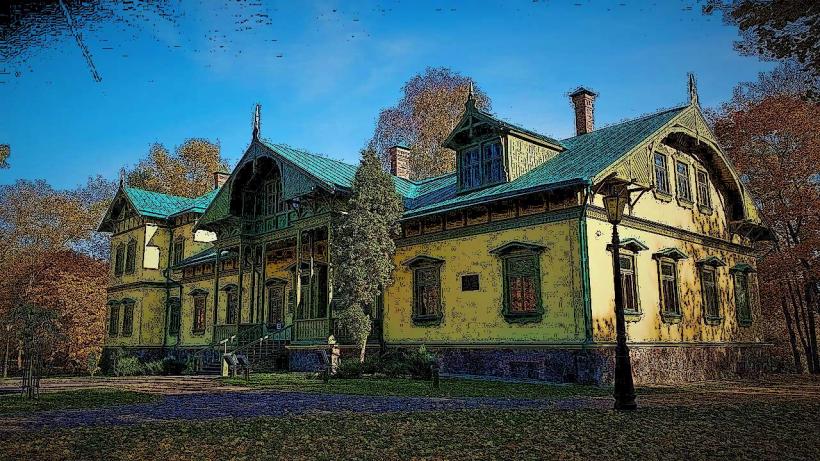
The museum complex replicates a 19th-century Belarusian village, featuring predominantly wooden structures. Key buildings include a working windmill, a pottery workshop, a bakery, a blacksmith's forge, a stable, and a small wooden church. The architecture reflects traditional Belarusian rural styles, characterized by timber construction and functional designs. Buildings are typically single-story with pitched roofs.
Location & Access Logistics
The museum is situated near the Ptich River, approximately 40 kilometers south of the Minsk city center. Access is primarily via the P23 highway (Minsk-Slutsk route). Driving from Minsk takes about 45-60 minutes. Ample free parking is available on-site for private vehicles and tour buses. Public transport options are limited; some intercity buses from Minsk Central Bus Station towards Slutsk or Rudensk may stop at a nearby junction, requiring a subsequent taxi ride or a walk of several kilometers. Organized tour buses from Minsk are a common method of access.
Historical & Ecological Origin
The Dudutki Folk Museum was established in 1994 by Yevgeny Budinas. Its original purpose was to create a living museum that preserves and demonstrates the traditional crafts, daily life, and cultural heritage of rural Belarus. The site features reconstructed and relocated historical buildings, showcasing various aspects of Belarusian peasant life and craftsmanship from past centuries.
Key Highlights & Activities
Visitors can observe and participate in traditional craft demonstrations, including pottery making, weaving, blacksmithing, and baking in a traditional oven. Specific activities include tasting freshly baked bread, local cheese, honey, and legally produced Belarusian moonshine (samogon). Horse-drawn carriage rides are available, and interaction with farm animals is possible. The working windmill is a central attraction, demonstrating traditional grain milling processes.
Infrastructure & Amenities
The museum complex provides public restrooms. Shade is available under trees and within the various buildings. Cell phone signal (4G/5G) is generally reliable across the site. On-site infrastructure includes a restaurant serving traditional Belarusian cuisine, several cafes, and souvenir shops selling handcrafted items and local products.
Best Time to Visit
The best months to visit are from May to September, when the weather is mildest and all outdoor activities are fully operational. Weekends, particularly during summer, can be busy. Visiting in the morning on a weekday is recommended to experience the museum with fewer crowds and allow ample time for participation in activities. Special events and festivals are often held during national holidays and traditional Belarusian celebrations.
Facts & Legends
The Dudutki Folk Museum is one of the few places in Belarus where the production and sale of traditional Belarusian moonshine, known as samogon, is officially permitted and regulated. Visitors can observe the distillation process and sample the product. A unique tip for visitors is to engage directly with the artisans; many are willing to provide hands-on experiences in their respective crafts.
Nearby Landmarks
- Ptich River: 0.5km East
- Village of Dudichi: 2km South-East
- Village of Ptich: 4km North-West