Information
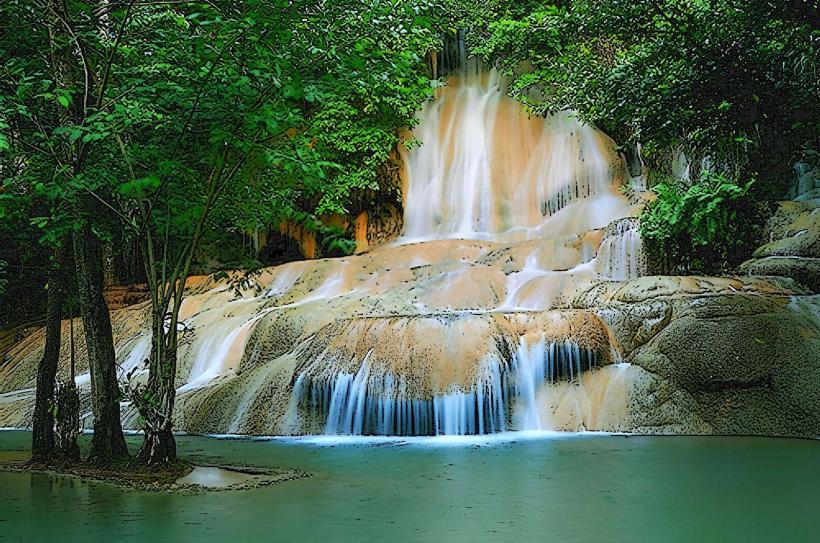
Landmark: Erawan National ParkCity: Kanchanaburi
Country: Thailand
Continent: Asia
Erawan National Park, Kanchanaburi, Thailand, Asia
Silale Swamp is a wetland area located within the Ngorongoro Conservation Area in Tanzania's Ngorongoro Region.
Visual Characteristics
The swamp is characterized by dense, tall grasses and reeds, interspersed with shallow, slow-moving water channels. The water color varies from muddy brown to a greenish hue depending on recent rainfall and sediment. Scattered acacia trees and occasional larger trees mark the drier edges of the wetland. The terrain is generally flat with a soft, muddy substrate.
Location & Access Logistics
Silale Swamp is situated approximately 30 kilometers west of the main Ngorongoro Crater entrance gate. Access is via unpaved park roads, primarily the track leading from the Ngorongoro Conservation Area headquarters towards the Serengeti National Park. Vehicle access is restricted to 4x4 vehicles, especially during the wet season. Parking is not designated; vehicles typically pull off the track at points offering a view or access to observation areas. No public transport operates within the conservation area to reach the swamp.
Historical & Ecological Origin
Silale Swamp is a natural geological formation, a low-lying depression that collects water from surrounding higher ground and seasonal rainfall. It functions as a vital wetland ecosystem, supporting a diverse range of flora and fauna adapted to marshy conditions. Its ecological significance lies in its role as a water source and habitat within the broader Ngorongoro ecosystem.
Key Highlights & Activities
Wildlife viewing is the primary activity. Visitors can observe a variety of bird species, including waterbirds and waders. Mammals such as wildebeest, zebras, and various antelope species frequent the swamp's edges for water and grazing. Limited walking is possible on the drier periphery, but direct entry into the swamp is not advised due to terrain and wildlife. Game drives along the access tracks offer opportunities for observation.
Infrastructure & Amenities
There are no formal infrastructure or amenities within Silale Swamp itself. Restrooms, shade structures, and food vendors are not present. Cell phone signal is intermittent and generally unreliable within the conservation area, particularly in remote locations like the swamp. Visitors should come prepared with all necessary supplies.
Best Time to Visit
The best time for wildlife viewing is during the dry season, typically from June to October, when animals congregate around remaining water sources. The early morning and late afternoon offer optimal lighting conditions for photography due to softer light angles. High tide is not a relevant factor for this inland swamp.
Facts & Legends
Silale Swamp is known for its significant population of hippopotamuses that inhabit the deeper water channels. A specific tip for visitors is to listen for the distinct grunting and splashing sounds that often indicate the presence of hippos before they are visually apparent.
Nearby Landmarks
- Ngorongoro Crater (15km East)
- Olmoti Crater (20km North)
- Serengeti National Park Boundary (25km West)
- Olduvai Gorge (35km Southwest)