Information
Landmark: Famagusta GateCity: Famagusta
Country: Cyprus
Continent: Europe
Famagusta Gate, Famagusta, Cyprus, Europe
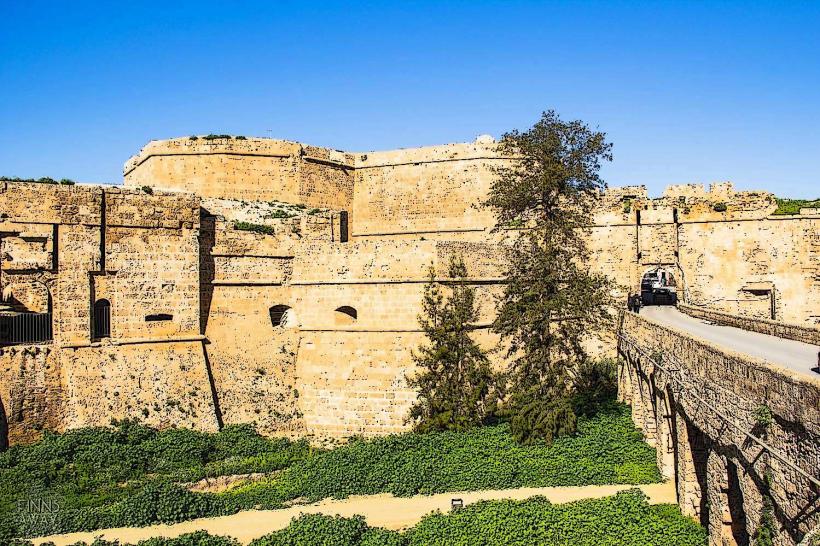
The Famagusta Gate is a significant historical structure in Cyprus, serving as one of the three original gates of the Venetian Walls. It is located on the eastern side of the walled city.
Visual Characteristics
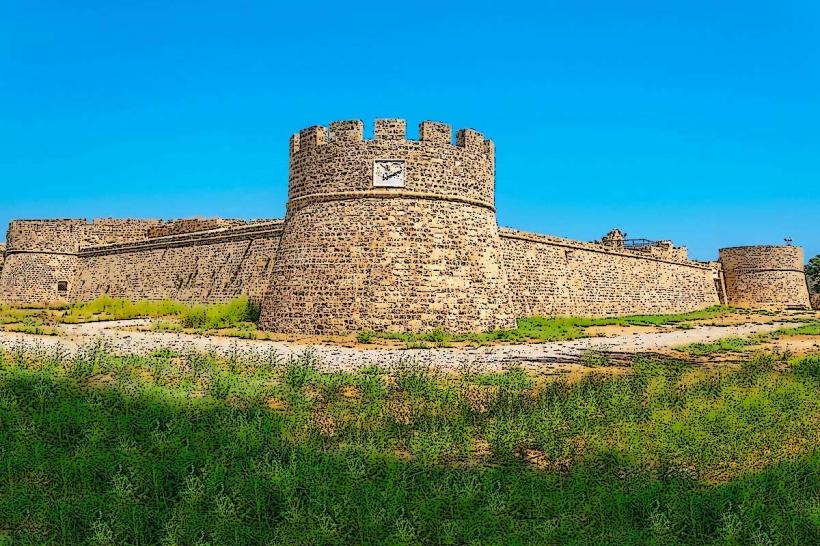
The gate is a large, arched stone structure, integrated into the circular Venetian defensive walls. It is constructed primarily from sandstone blocks, exhibiting a weathered, light brown to grey coloration. The gate features a deep, vaulted passage approximately 10 meters long, leading into a spacious, open square on the interior side. The exterior arch is imposing, while the interior space is designed for defensive and logistical purposes. Its height is consistent with the surrounding fortifications, reaching approximately 12 meters from ground level to the top of the parapet. The architectural style is characteristic of 16th-century Venetian military engineering.
Location & Access Logistics
The Famagusta Gate is situated on the eastern perimeter of the Old City of Nicosia. It is accessible via Athinas Avenue, which runs along the outer side of the Venetian Walls. The gate is approximately 1.5 kilometers east of Eleftheria Square, considered the city center. Limited street parking is available on roads adjacent to the gate, such as Athinas Avenue and Stasinou Street. Public transport options include several bus lines, such as routes 158 and 160, which have stops near the Archbishop Makarios III Foundation, a short walk (approximately 300 meters) from the gate.
Historical & Ecological Origin
The Famagusta Gate was constructed between 1567 and 1570 by the Venetians, under the supervision of military engineer Giulio Savorgnan. Its original purpose was to serve as the main eastern entrance to the walled city of Nicosia, facilitating passage and trade routes towards the city of Famagusta. It was designed as a robust defensive structure, part of the comprehensive fortification system built to protect Nicosia from Ottoman invasion.
Key Highlights & Activities
The gate currently functions as the Nicosia Municipal Arts Centre, hosting various art exhibitions, cultural events, and performances. Visitors can walk through the vaulted passage, observing the historical construction techniques. The interior courtyard often features contemporary art installations. The surrounding Venetian Walls offer pedestrian pathways for walking and viewing the city's historical defenses.
Infrastructure & Amenities
Restroom facilities are available within the premises of the Nicosia Municipal Arts Centre, located inside the gate structure. Limited shade is provided by the deep archway and the interior courtyard walls. Cell phone signal, including 4G and 5G, is generally strong and reliable in the vicinity. Several cafes, restaurants, and small convenience stores are located within a 500-meter radius in the surrounding Old City area.
Best Time to Visit
The optimal time for photography of the Famagusta Gate is during the morning hours (9:00-11:00) or late afternoon (16:00-18:00), when the sun provides softer light, highlighting the stone textures and architectural details. The months of April, May, September, and October offer the most pleasant weather conditions, avoiding the intense heat of summer and the cooler, wetter winter months. There are no tide requirements for visiting this landmark.
Facts & Legends
Originally, the Famagusta Gate was known as Porta Giuliana, named after its designer, Giulio Savorgnan. It was considered the most elaborate and strategically important of Nicosia's three gates. A verified historical oddity is that the gate's design, particularly its vaulted passage and internal square, was a sophisticated example of Renaissance military architecture, intended to trap and neutralize attackers who breached the outer defenses. A specific tip for visitors is to check the schedule of the Nicosia Municipal Arts Centre in advance, as temporary exhibitions can significantly enhance the experience of the interior space.
Nearby Landmarks
- Archbishop Makarios III Foundation: 0.3km West
- Liberty Monument: 0.4km Northwest
- St. John's Cathedral: 0.7km West
- Cyprus Museum: 1.5km West
- Buyuk Han: 1.2km Northwest