Information
Landmark: Göcseji Village MuseumCity: Zalaegerszeg
Country: Hungary
Continent: Europe
Göcseji Village Museum, Zalaegerszeg, Hungary, Europe
The Göcseji Village Museum is an open-air ethnographical museum located on a backwater of the Zala River in Zalaegerszeg, Hungary. It was the first facility of its kind in the country, established to preserve the vernacular architecture and folk culture of the Göcsej region.
Visual Characteristics
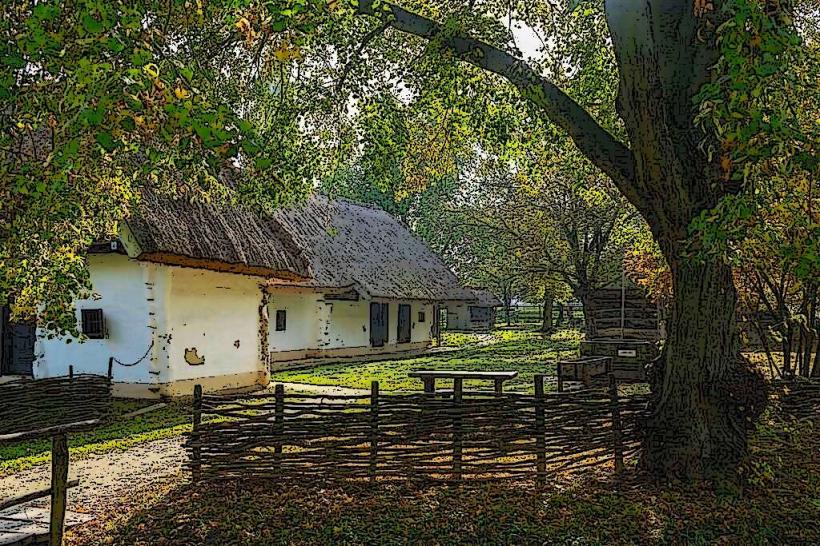
The museum consists of approximately 40 relocated structures, including timber-framed residential houses, thatched-roof barns, a watermill, and a wooden belfry. Materials are predominantly oak logs, clay plaster, and thick straw thatch. The site is characterized by an undulating landscape with fruit orchards, vegetable gardens, and traditional "skirted" wooden structures typical of southwestern Transdanubia.
Location & Access Logistics
The site is located at Falumúzeum Street, approximately 1.5km west of Zalaegerszeg city center. It is accessible via local bus lines 1, 1U, and 1Y, with the "Falumúzeum" stop located directly at the entrance. A paved parking lot for cars and tour buses is situated adjacent to the main gate. The museum is connected to the city center via a dedicated bicycle path along the Zala River.
Historical & Ecological Origin
Opened in 1968, the museum was designed to rescue original 18th and 19th-century buildings from nearby villages that were facing demolition. It is situated on a 3-hectare plot that replicates the ecological conditions of the Göcsej hills, featuring marshy lowlands near the watermill and drier slopes for the residential clusters.
Key Highlights & Activities
Visitors can enter fully furnished peasant houses to observe period-accurate furniture and weaving tools. The Hencz watermill is a functional demonstration site for traditional milling techniques. Seasonal craft workshops (pottery, basket weaving) and folk festivals occur during public holidays, and a dedicated educational trail explains regional flora.
Infrastructure & Amenities
The museum features a central reception building with a gift shop and indoor restrooms. 5G cellular coverage is functional throughout the site. Shaded areas are abundant due to mature trees and deep eaves of the thatched buildings. A small snack bar operates seasonally near the entrance, and the adjacent Finnugor Ethnographic Park offers additional exhibits.
Best Time to Visit
The museum is open from April through October. The best time for photography is early afternoon when the sun highlights the textures of the thatched roofs and timber walls. The months of May and September provide temperate weather suitable for the extensive walking required to view all 40 structures.
Facts & Legends
The museum’s watermill is rumored by local folklorists to be inhabited by a "mill spirit," a common trope in Göcsej mythology used to explain the mechanical creaks of the wooden gears. The site also contains a rare "Finnugor Park" which displays the architectural styles of distant linguistic relatives of Hungarians, such as the Mansi and Khanty peoples.
Nearby Landmarks
Finnugor Ethnographic Park – 0.1km North
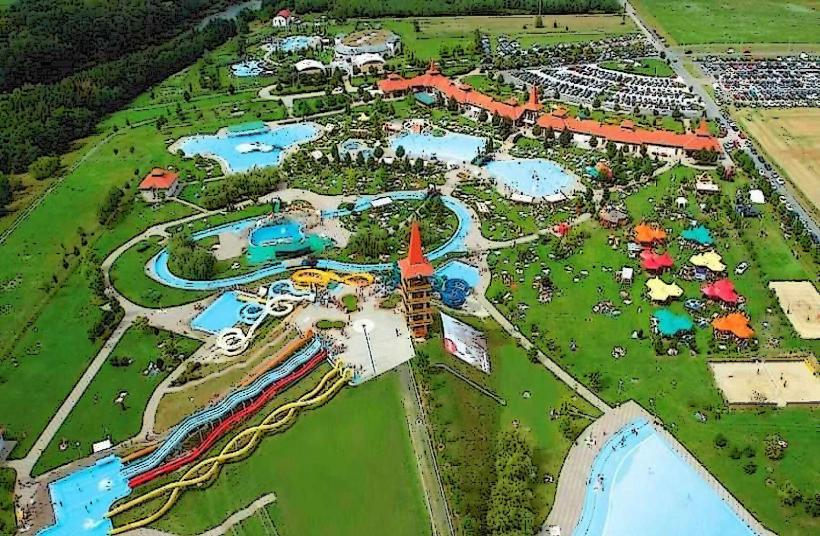
AquaCity Water Slide and Adventure Park – 1.2km Northwest
Zalaegerszeg TV Tower (Bazita) – 4.2km South
Lake Gébárti – 1.5km North
Göcsej Museum (Main Building) – 1.8km Southeast