Information
Landmark: Green BridgeCity: Vilnius
Country: Lithuania
Continent: Europe
Green Bridge, Vilnius, Lithuania, Europe
The Green Bridge (Žaliasis tiltas) is a concrete road bridge spanning the Neris River in Vilnius, Lithuania, connecting the city center with the Šnipiškės district.
Visual Characteristics
The bridge is constructed from concrete and is painted a distinct green color. It measures approximately 103 meters in length and 24 meters in width, accommodating both vehicular and pedestrian traffic. Its design is functional, characterized by a series of arches supporting the roadway, with minimal decorative elements following the removal of its original sculptures.
Location & Access Logistics
The Green Bridge is centrally located, approximately 0.7 kilometers north of Cathedral Square. It is a key crossing point over the Neris River. Access by foot is direct from Gediminas Avenue or Kalvarijų Street. Public transport is extensive, with numerous bus and trolleybus lines stopping at "Žaliasis tiltas" or "Operos ir baleto teatras" stops, including lines 1G, 3G, 6, 10, 11, 12, 14, 16, 17, 20, 21, 22, 23, 24, 25, 26, 27, 34, 35, 36, 40, 43, 46, 49, 50, 52, 53, 54, 56, 57, 73, 88, 89, 101N, 102N, 103N, 104N, 105N. Paid street parking is available on adjacent streets such as Rinktinės Street and Kalvarijų Street.
Historical & Ecological Origin
The current Green Bridge was constructed in 1952 during the Soviet era. It was designed by engineers I. E. Kharkevich and P. K. Bronznikov. Its original purpose was to facilitate traffic flow and connect the expanding parts of Vilnius across the Neris River. This bridge replaced earlier wooden and metal structures that had existed on the site since 1536.
Key Highlights & Activities
The bridge serves as a primary pedestrian and vehicular thoroughfare. Crossing the bridge offers views of the Neris River and the city's riverbanks. It is a point for observing river traffic and the urban landscape. The bridge itself is a functional crossing rather than a destination for specific activities.
Infrastructure & Amenities
There are no public restrooms directly on the Green Bridge. Shade is minimal on the bridge deck. Cell phone signal (4G/5G) is consistently strong across the bridge and in the surrounding central Vilnius area. Numerous cafes, restaurants, and convenience stores are located within a 100-meter radius on both sides of the river.
Best Time to Visit
The bridge is accessible 24 hours a day. For general crossing and city views, daylight hours are suitable. Evening hours provide views of the city lights reflecting on the Neris River. The months from May to September offer the most favorable weather conditions for walking across the bridge.
Facts & Legends
The bridge's name, Green Bridge, derives from its consistent green color throughout its various historical iterations. From 1952 until 2015, the bridge was adorned with four large socialist realist sculptures depicting Soviet workers, soldiers, farmers, and students. Their removal in 2015 was a significant event, sparking public debate regarding the preservation and interpretation of Soviet-era monuments in post-Soviet Lithuania.
Nearby Landmarks
- National Opera and Ballet Theatre: 0.3km South-East
- Gediminas Avenue: 0.1km South
- Cathedral Square: 0.8km South-East
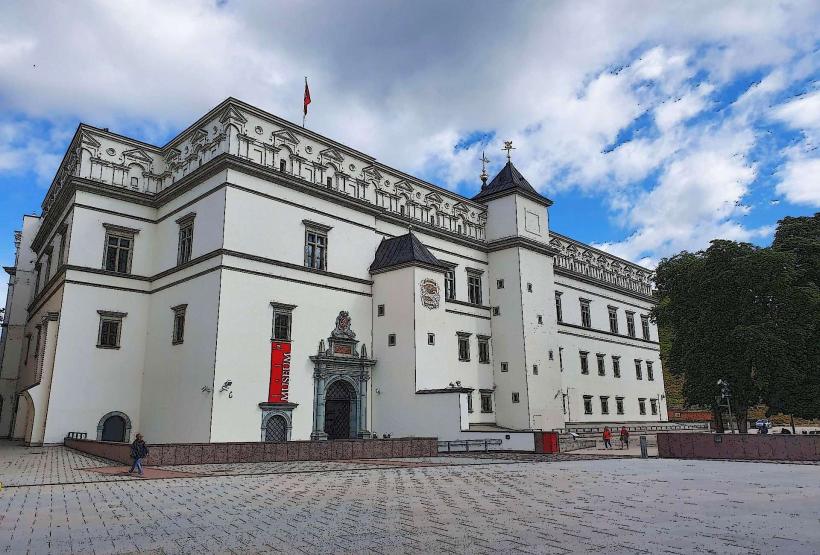
- Palace of the Grand Dukes of Lithuania: 0.9km South-East
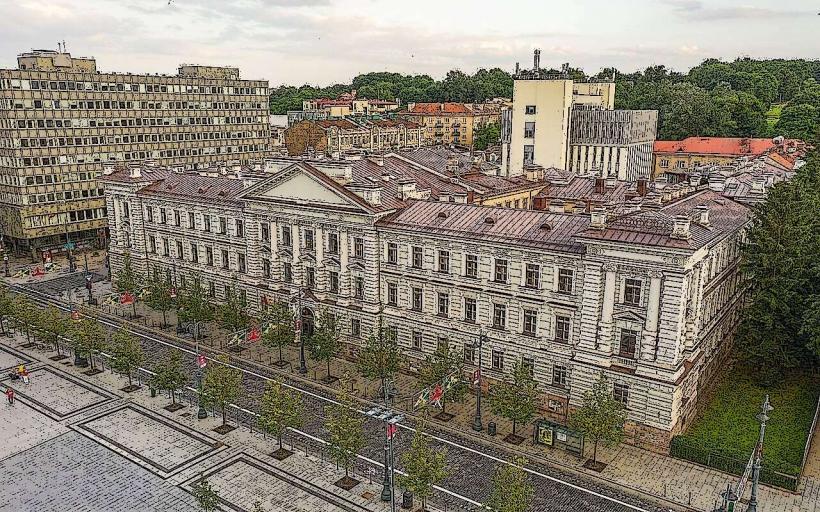
- Museum of Occupations and Freedom Fights (KGB Museum): 1.2km South-West