Information
Landmark: Hadum MosqueCity: Gjakova
Country: Kosovo
Continent: Europe
Hadum Mosque, Gjakova, Kosovo, Europe
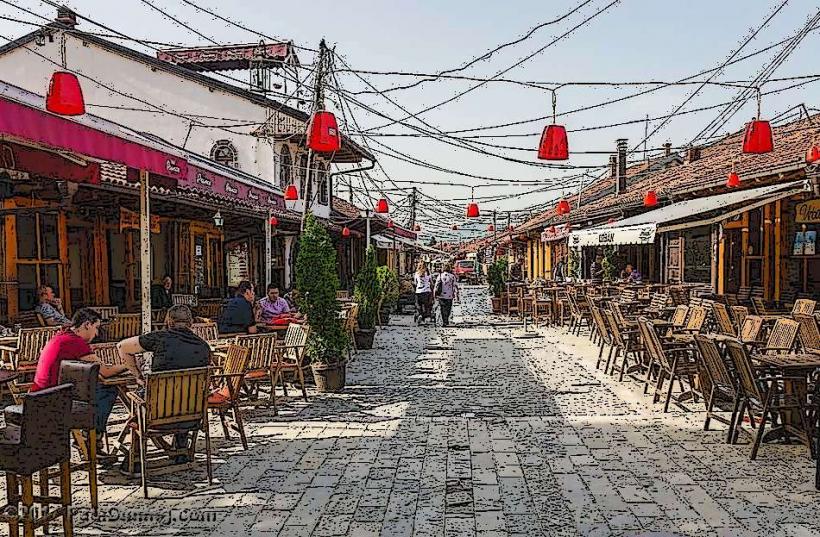
The Hadum Mosque (Xhamia e Hadumit) is a 16th-century Ottoman religious complex located in the center of the Grand Bazaar in Gjakova. Built in 1594, it remains the architectural centerpiece of the city’s historic commercial district.
Visual Characteristics
The mosque is a classical Ottoman single-dome structure built from rectangular hewn stone. The dome has a diameter of 13.5 meters and is covered in lead. The interior is noted for its "Islamic-Albanian baroque" murals, which include vibrant floral motifs, landscapes, and geometric arabesques. A slender stone minaret is attached to the southwestern corner, and a triple-domed portico (hajat) supported by stone pillars precedes the main entrance.
Location & Access Logistics
The site is located on Sylejman Hadum Aga Street within the Grand Bazaar (Çarshia e Madhe) in Gjakova. It is accessible via the R107 regional road; the drive from Peja takes approximately 45 minutes. The mosque is situated in a pedestrian-only zone, but municipal parking lots are available within 300 meters at the edge of the bazaar. Regular bus services connect Gjakova to Peja, Prizren, and Pristina.
Historical & Ecological Origin
Commissioned by Hadum Sylejman Efendia (Hadum Aga) and completed between 1594 and 1595, the mosque was built on land originally owned by Jak Vula. It was designed as the anchor for a larger complex (kulliye) that once included a library, a madrasah, and a hammam. The building was heavily damaged by fire and shelling in 1999 and underwent a complete restoration directed by international heritage organizations.
Key Highlights & Activities
Visitors can observe the 16th-century stone mihrab and the intricately carved wooden minbar. The surrounding courtyard houses an old library and a historic cemetery featuring elaborately carved Ottoman headstones (nisans). While the mosque is an active place of worship, non-Muslim visitors may enter between the five daily prayer sessions.
Infrastructure & Amenities
Public restrooms are located within the mosque courtyard and at nearby commercial establishments in the bazaar. Shade is provided by the wide portico and the trees in the cemetery. 5G cell phone signal is strong throughout the site. Numerous traditional restaurants, coffee shops, and artisan workshops are located within 50 meters of the mosque entrance.
Best Time to Visit
The best time for photography is during the late morning (10:00 – 12:00) when natural light illuminates the interior murals through the dome windows. May through September offer the most favorable weather for exploring the adjacent open-air bazaar. Visitors should check local prayer times to avoid arriving during Friday congregational prayers.
Facts & Legends
Local tradition suggests the name of the city, Gjakova, is a contraction of "Jak's field" (Jakova), referring to the original landowner Jak Vula. A unique architectural feature of the dome is the inclusion of small acoustic resonators-hollow clay pots embedded in the masonry-to amplify the voice of the prayer leader throughout the hall.
Nearby Landmarks
Grand Bazaar (Çarshia e Madhe) – 0.1km South
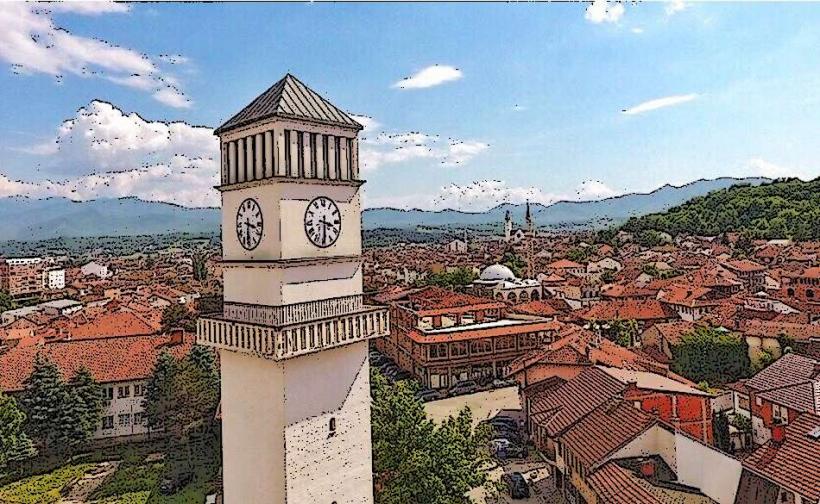
Clock Tower (Sahat Kulla) – 0.4km Northeast
Sheikh Emin’s Tekke – 0.5km North
Haraçija Inn (Hani i Haraçisë) – 0.2km West
Erenik River – 0.8km Southwest