Information
Landmark: Jangtaesan Recreational ForestCity: Daejeon
Country: South Korea
Continent: Asia
Jangtaesan Recreational Forest, Daejeon, South Korea, Asia
Jangtaesan Recreational Forest is a protected natural area situated in the western part of Daejeon, South Korea.
This forest offers a managed environment for outdoor recreation and ecological appreciation.
Visual Characteristics
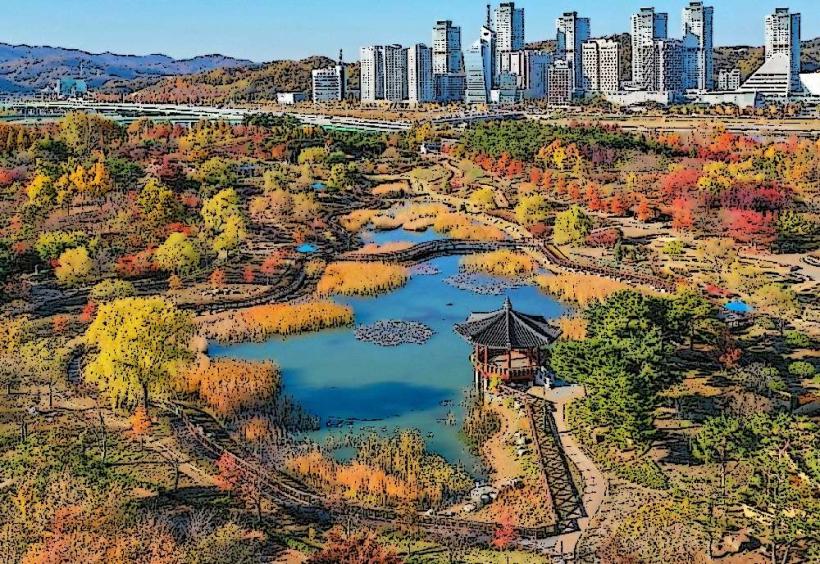
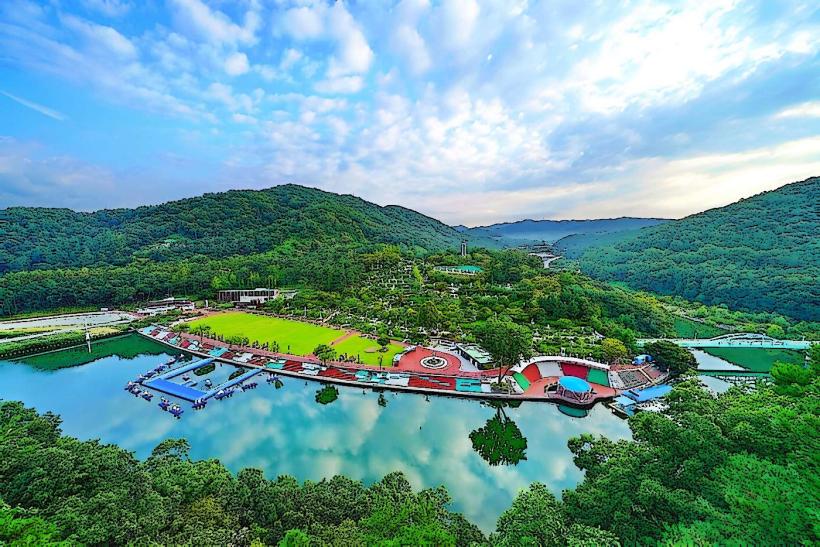
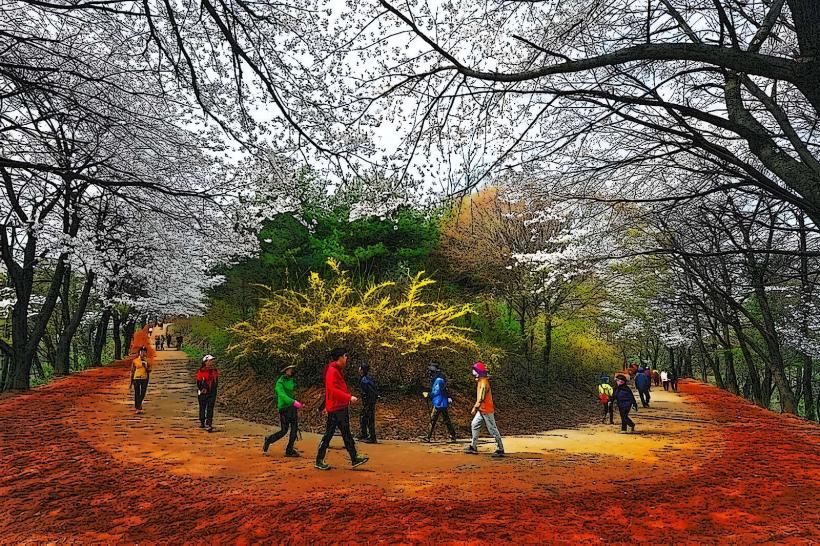
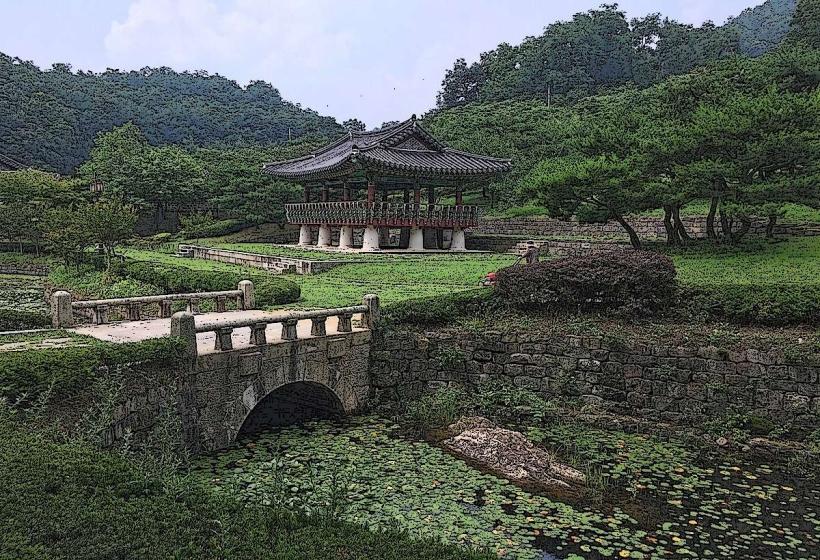
The forest is characterized by dense stands of pine and deciduous trees, with a significant presence of maple trees that display red and yellow foliage in autumn. The terrain includes rolling hills and a central reservoir, Jangtaesan Lake, which has a surface area of approximately 10 hectares. Walking trails are constructed with a combination of gravel and wooden boardwalks.
Location & Access Logistics
Jangtaesan Recreational Forest is located approximately 15 kilometers west of Daejeon city center. Access is primarily via National Route 4. From Daejeon Station, take Bus 108 which stops at the forest entrance. Driving directions involve following National Route 4 west and turning onto local road 12. Parking is available at designated lots near the main entrance and the lake, with a capacity for approximately 200 vehicles. Parking fees are applied.
Historical & Ecological Origin
The area was designated as a recreational forest in 1977. Its ecological origin is a temperate deciduous forest ecosystem, typical of the Korean peninsula, with a history of reforestation efforts following natural or human-induced disturbances. The reservoir was constructed for water management and aesthetic purposes within the forest.
Key Highlights & Activities
Activities include hiking on marked trails, such as the 3.5km loop around Jangtaesan Lake and the more challenging 5km ridge trail. Birdwatching is possible throughout the forest. Picnicking is permitted at designated areas. The forest also features a treetop walkway and an ecological learning center.
Infrastructure & Amenities
Restrooms are located at the main entrance and near the lake. Shaded areas are provided by the tree canopy and at picnic shelters. Cell phone signal (4G/5G) is generally available within the main recreational areas. No on-site food vendors are present, but convenience stores are located outside the main entrance.
Best Time to Visit
For autumn foliage, the months of October and early November offer peak color. For hiking and general recreation, spring (April-May) and autumn (September-October) provide moderate temperatures. The best time of day for photography, particularly of the lake and foliage, is during the early morning or late afternoon when sunlight angles are lower.
Facts & Legends
A local anecdote suggests that the specific concentration of maple trees was intentionally planted to create a vibrant autumn display, a practice common in the development of Korean recreational forests. The forest is known for its high concentration of pine trees, which contribute to its distinct scent.
Nearby Landmarks
- Daejeon World Cup Stadium (3.2km East)
- Gyeryongsan National Park (8.5km Southwest)
- Yuseong Hot Springs District (7.1km Northeast)
- Hanbat Arboretum (6.8km East)