Information
Landmark: Padurea Domneasca ReserveCity: Balti
Country: Moldova
Continent: Europe
Padurea Domneasca Reserve, Balti, Moldova, Europe
The Padurea Domneasca Reserve is a scientific nature reserve protecting a significant floodplain forest ecosystem along the Prut River in western Moldova. It is situated primarily within Glodeni District, approximately 40 kilometers west of the city of Balti.
Visual Characteristics
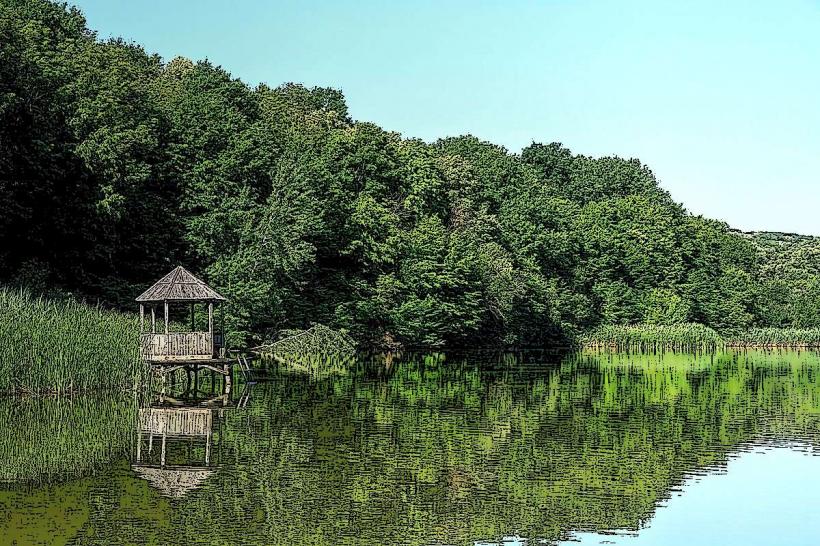
The reserve encompasses a diverse landscape dominated by ancient floodplain forests, primarily composed of pedunculate oak, ash, and hornbeam. The terrain features river terraces, numerous oxbow lakes, and marshy areas. The Prut River forms the western boundary, characterized by its meandering course and riparian vegetation. A unique geological formation known as "Suta de Movile" (Hundred Hills), consisting of hundreds of conical mounds, is also present within the reserve's boundaries.
Location & Access Logistics
The Padurea Domneasca Reserve is located approximately 40 kilometers west of Balti. Access is typically via local roads from the R16 highway, connecting through villages such as Cobani or Balatina in Glodeni District. There are no designated main entrances with visitor centers. Parking is informal, usually alongside the unpaved access roads near the forest edge. Public transport options are limited to infrequent local bus services to nearby villages; direct public transport to the reserve itself is not available.
Historical & Ecological Origin
Established in 1993, the Padurea Domneasca Reserve was created to preserve one of the largest and best-preserved remnants of Moldova's natural floodplain forests. It is classified as a scientific nature reserve, focusing on the protection of its unique biodiversity, including rare flora and fauna. The "Suta de Movile" formation is believed to be a relict of ancient coral reefs from the Sarmatian Sea, dating back millions of years.
Key Highlights & Activities
A primary highlight is the observation of European bison (wisent) within a dedicated enclosure, part of a reintroduction program. Birdwatching is possible along the Prut River and its oxbow lakes, offering opportunities to spot various waterfowl and forest birds. Informal hiking trails exist throughout the forest, allowing for exploration of the diverse ecosystems. Visiting the "Suta de Movile" geological formation provides a unique landscape viewing experience.
Infrastructure & Amenities
Infrastructure within the Padurea Domneasca Reserve is minimal. Formal restrooms are not available. Shade is abundant due to the dense forest canopy. Cell phone signal (4G) is generally present in open areas but can be intermittent or weak in deeper forest sections. There are no food vendors or shops within the reserve; visitors must bring their own provisions and water.
Best Time to Visit
The best time to visit is during spring (April-May) for lush vegetation and active birdlife, or autumn (September-October) for colorful foliage. Summer months can be hot and humid, with increased insect activity. Visiting during dry periods is recommended, as unpaved paths can become muddy and difficult to navigate after rainfall.
Facts & Legends
The Padurea Domneasca Reserve is the only location in Moldova where European bison (wisent) have been successfully reintroduced into a semi-wild environment, with the first individuals arriving in 2005. The "Suta de Movile" (Hundred Hills) formation is a geological enigma, with local legends sometimes attributing its creation to giants or ancient burial mounds, though scientific consensus points to natural geological processes.
Nearby Landmarks
- Suta de Movile (within the reserve, 0km)
- Prut River (borders the reserve to the West, 0km)
- Cheile Butești (Butești Gorges) (approx. 15km South-East)
- Plaiul Fagului Reserve (approx. 60km South-East)