Information
Landmark: Sheldonian TheatreCity: Oxford
Country: United Kingdom
Continent: Europe
Sheldonian Theatre, Oxford, United Kingdom, Europe
The Sheldonian Theatre is the official ceremonial hall of the University of Oxford, located in the city's historic center. Built between 1664 and 1669, it is the primary venue for the university's "Encaenia" (graduation ceremonies), matriculation, and public concerts.
Visual Characteristics
The theatre is a landmark of English Baroque architecture. Its most distinctive feature is the D-shaped floor plan, inspired by the ancient Roman Theatre of Marcellus. The exterior is characterized by classical columns and the "Emperor Heads" (herms) on the perimeter railings. The interior features a spectacular painted ceiling by Robert Streater, depicting the triumph of Truth and Religion over Ignorance.
Location & Access Logistics
The site is located at Broad St, Oxford OX1 3AZ. It is situated 1.0km east of Oxford Railway Station. Pedestrian access to the exterior courtyard is free, while entry to the theatre and its attic/cupola requires a paid ticket. The building is frequently closed for university ceremonies; checking the "Closures" page on the official website is mandatory before visiting.
Historical & Ecological Origin
The theatre was the first major work of Sir Christopher Wren, who was at the time the Savilian Professor of Astronomy at Oxford. It was commissioned by Gilbert Sheldon, the University Chancellor, to provide a secular venue for university business, which had previously taken place in the University Church of St Mary the Virgin. The building's revolutionary roof design utilized a "geometrical" timber truss system to span the 70-foot width without internal pillars.
Key Highlights & Activities
The Cupola: A small octagonal turret at the top of the building offering 360-degree panoramic views of the "Dreaming Spires" of Oxford.
The Painted Ceiling: A massive 17th-century canvas consisting of 32 panels, designed to give the illusion of an open-sky Roman theatre.
Emperor Heads: A series of 17 stone busts on the outer wall; the current statues are the third set, carved in the 1970s to replace weathered originals.
Concerts: The theatre serves as one of Oxford's premier venues for classical music performances due to its unique acoustics and circular seating.
Infrastructure & Amenities
The facility does not house a café, but its central location on Broad Street places it within 0.1km of numerous restaurants. A small gift desk is located at the entrance. Public restrooms are available for ticket holders. 5G signal is strong in the surrounding area. The ground floor of the theatre is wheelchair accessible, but the attic and cupola are only reachable via several flights of narrow, steep stairs.
Best Time to Visit
The theatre is typically open for visitors from 10:00 to 16:30. Mid-morning on weekdays provides the best lighting for the interior ceiling and the lowest visitor density. To see the building in its primary functional state, aim to visit during the weeks surrounding graduation ceremonies (though internal access will be restricted).
Facts & Legends
A local engineering fact is that Wren’s original roof was a marvel of its age, using a complex series of interlocking timbers to support a flat ceiling without a single supporting column. A specific tip for visitors is to look for the "Proctors' Chairs" within the arena, where university officials sit during formal proceedings to monitor for any "sighs" or protests from the student body.
Nearby Landmarks
Bodleian Library – 0.05km East
Museum of the History of Science – 0.02km West (Adjacent)
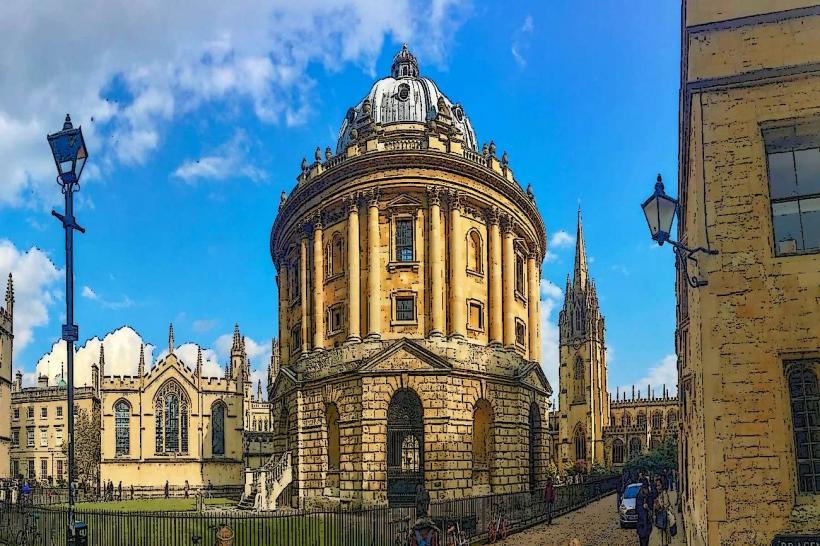
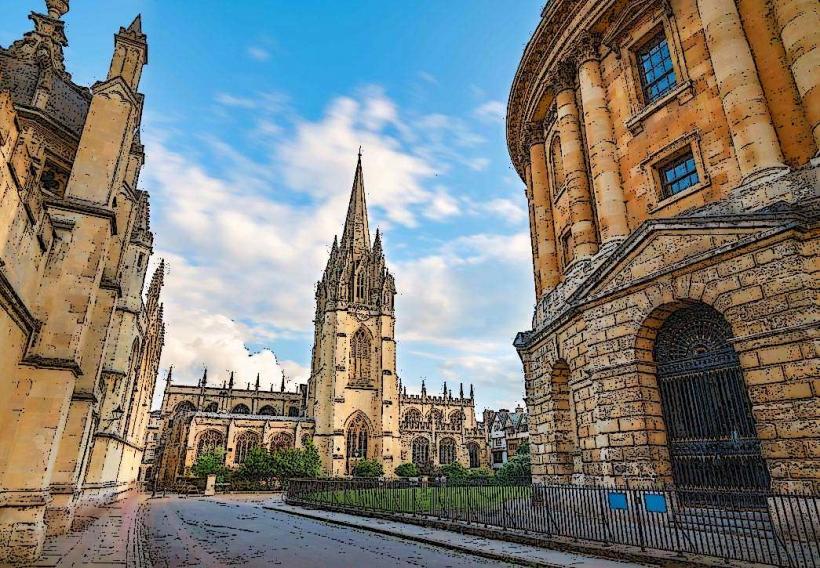
Radcliffe Camera – 0.1km South
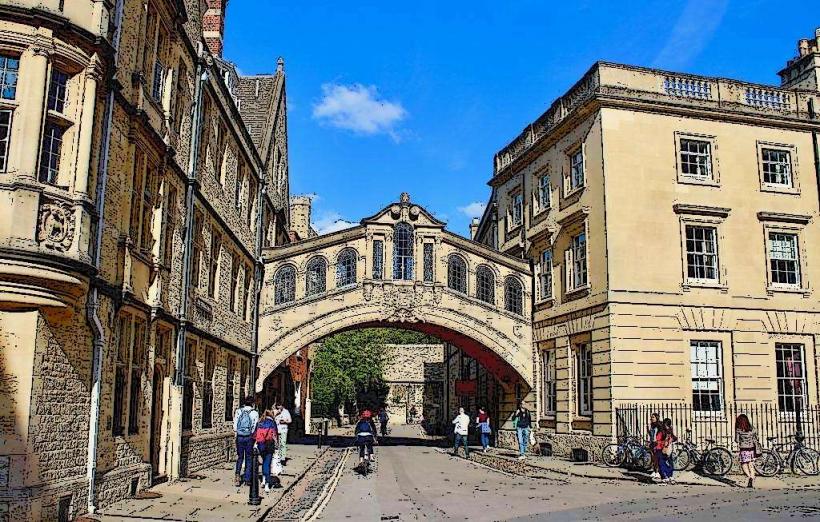
Bridge of Sighs – 0.1km East
Blackwell’s Bookshop – 0.05km North