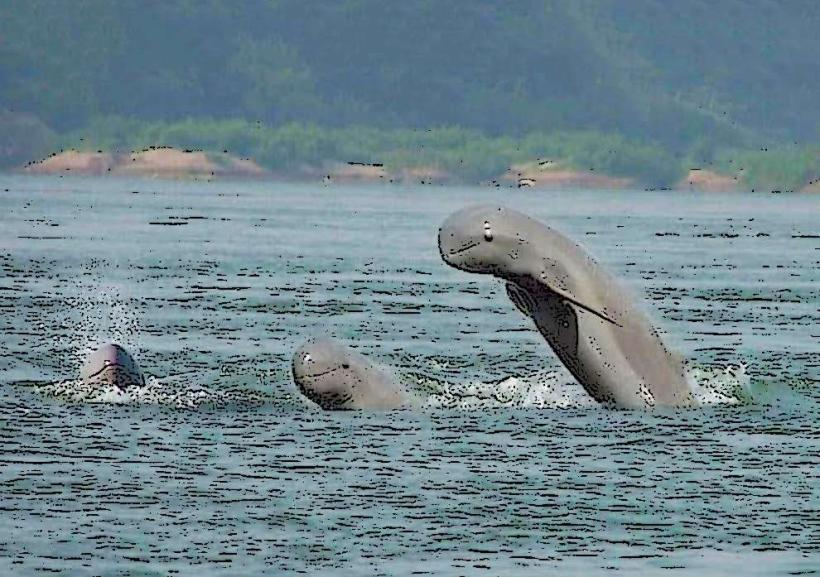
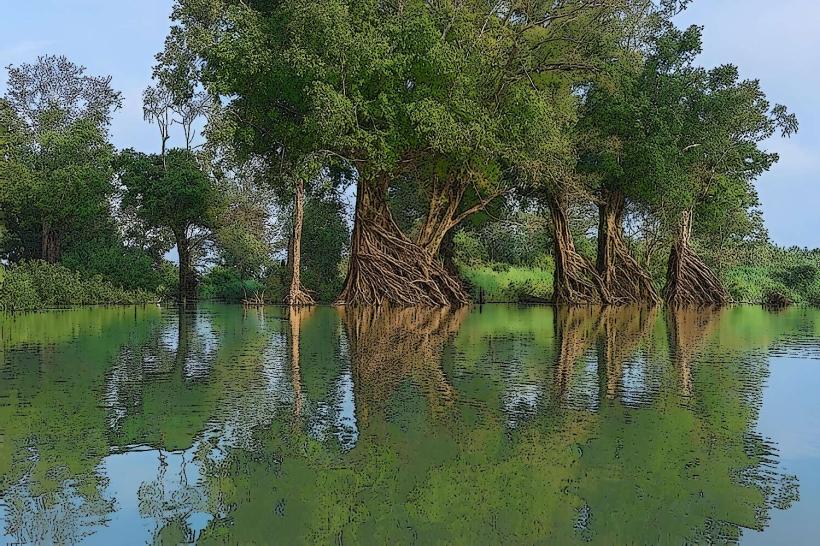
Information
Landmark: Sopheakmit WaterfallCity: Stung Treng
Country: Cambodia
Continent: Asia
Sopheakmit Waterfall, Stung Treng, Cambodia, Asia
Incheon International Airport (ICN) is a major international airport serving the Seoul Capital Area and is located on Yeongjong Island in Incheon, South Korea.
Visual Characteristics
The airport complex comprises two main passenger terminals, Terminal 1 and Terminal 2, and a cargo terminal. Terminal 1 is a large, multi-level structure constructed primarily of steel and glass, featuring a distinctive wave-like roof design. Terminal 2, opened in 2018, is also a substantial steel and glass edifice with a more angular architectural style. Both terminals are characterized by extensive use of natural light and open spaces. The airport grounds include extensive tarmac, taxiways, and parking facilities.
Location & Access Logistics
Incheon International Airport is situated approximately 48 kilometers west of Seoul's city center. Access is primarily via the Airport Railroad Express (AREX) line, with express trains reaching Seoul Station in 43 minutes and all-stop trains taking 56 minutes. Multiple highway connections, including the Yeongjong Bridge and the Incheon Bridge, link the airport to the mainland. Public bus services operate from various points in Seoul and surrounding cities. Extensive multi-story parking garages are available for private vehicles.
Historical & Ecological Origin
Construction of Incheon International Airport began in 1992 and it officially opened on March 29, 2001, replacing Gimpo International Airport as the primary international gateway for South Korea. The airport was built on reclaimed land, significantly expanding the landmass of Yeongjong Island. The project was designed to accommodate future growth in air traffic and cargo volume.
Key Highlights & Activities
Passengers can utilize a wide range of services including duty-free shopping, dining establishments, and lounges. The airport offers free Wi-Fi throughout its terminals. Visitors can explore the Korean Culture Street, a space showcasing traditional Korean elements. Information desks provide assistance with travel and local information. Automated baggage systems and efficient check-in processes are standard.
Infrastructure & Amenities
Restrooms are located on every level of both terminals. Significant shaded areas are available within the terminals and covered walkways. Cell phone signal (4G/5G) is consistently strong throughout the airport. Numerous food vendors, cafes, and restaurants are present within the terminals, offering a variety of cuisines. Medical facilities and pharmacies are also on-site.
Best Time to Visit
For optimal lighting for photography of the terminal architecture, early morning or late afternoon hours are recommended. The airport operates 24 hours a day, with peak travel times typically occurring during morning and evening hours. Weather conditions in Incheon are generally best during spring (April-May) and autumn (September-October), offering mild temperatures and lower precipitation.
Facts & Legends
Incheon International Airport has consistently ranked among the world's best airports for service quality and efficiency. A unique feature is its integrated transportation hub, allowing seamless transfers between air travel, rail, and road transport. The airport's construction involved extensive land reclamation, transforming a coastal area into a functional aviation facility.
Nearby Landmarks
- Wolmido Island (15km Southeast)
- Incheon China Town (20km Southeast)
- Jayu Park (22km Southeast)
- Incheon Metropolitan City Hall (23km Southeast)
- Songdo Central Park (25km Southeast)